
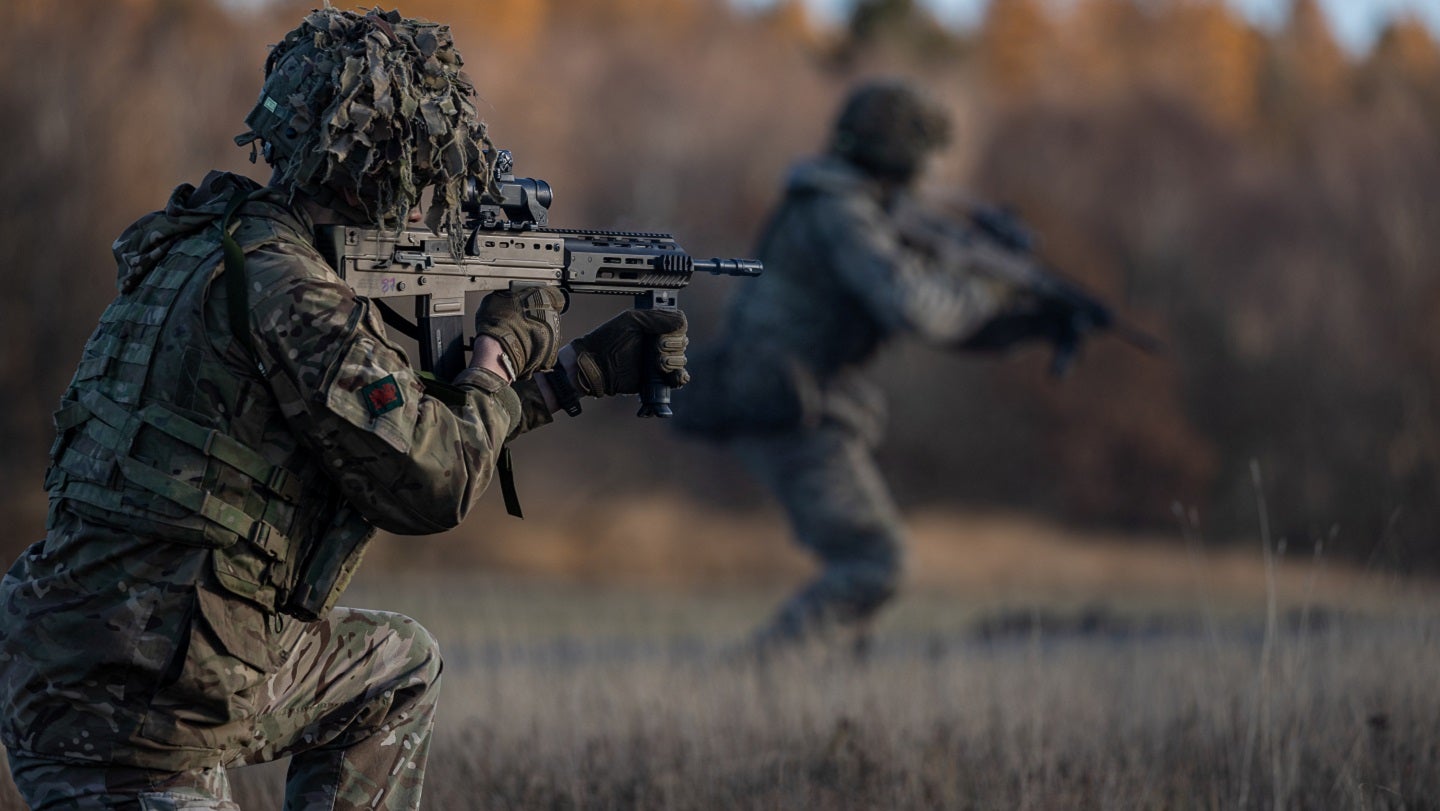
- Defence Readiness Minister Luke Pollard confirmed the MoD is still defining the scope, requirements, and procurement model for Project Grayburn
- With preliminary market engagement ongoing, any prospect for significant movement in 2027 is slim at best
- Despite upgrades to the SA80A3 standard, more than 130,000 older SA80A2 rifles remain in the UK inventory
The British Army’s replacement programme for its ageing SA80 infantry rifle remains in the concept stage, with the Ministry of Defence (MoD) still determining the requirement, scope, and procurement approach.


Detailed in a UK Parliamentary Written Response, the Minister for Defence Readiness at the MoD, Luke Pollard, said the SA80 replacement effort, being conducted under Project Grayburn, was still in its infancy.
“Project GRAYBURN remains in its concept phase, which is due to complete in Q2 2027. Until then, the [MoD] is at an early stage of developing the requirement, scope and approach to any future procurement and these remain subject to further development and approvals,” Pollard said on 2 November.
Further, Pollard said preliminary market engagement would “inform” the MoD’s understanding of the market and potential delivery models for the project.
“The supplier, product and contractual structure will be subject to the delivery model chosen,” Pollard added.
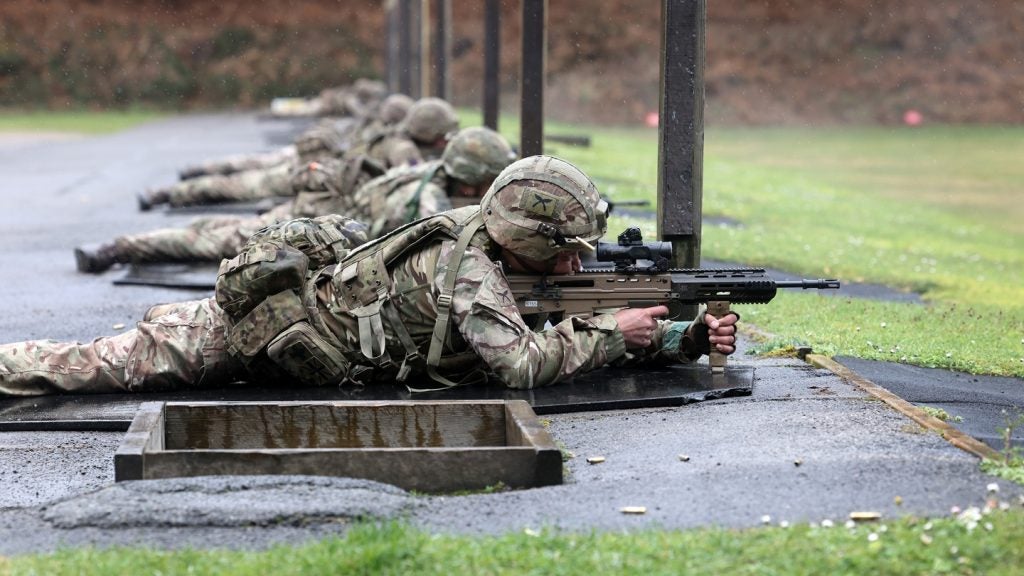
It was reported in 2025 that the plan to replace the British military’s SA80-series infantry rifle could be pushed to the right following confirmation from the UK Government that Project Grayburn remained in the concept phase.
UK defence procurement remains under severe pressure as equipment programmes face scrutiny to balance departmental budgets. The next most likely milestone for a significant defence announcement will be the UK Government’s Spending Review, likely due in H2 2027.
Delays to the replacement timetable
Speaking in May 2025, the then Defence Procurement Minister Maria Eagle said the programme remained in the concept phase, during which the “scope and complexity will be assessed and a timeline for delivery will be developed”, before being taken forward to assessment.
“Subject to the outcome of the Strategic Defence Review, Project Grayburn is due to enter the assessment phase in 2026,” Eagle said at the time.
Speaking earlier in January 2025, Eagle did provide a vague timeline for the replacement of the L85/SA80 rifle, which would take place “over the coming decade” through Project Grayburn.
Project Grayburn was thought likely to go on contract in the Q4 2026 – Q1 2027 timeframe, for around 150,000 weapons, deliverable in batches. However, with the concept phase still to run for several months, this earlier anticipated contract phase will not be achieved.
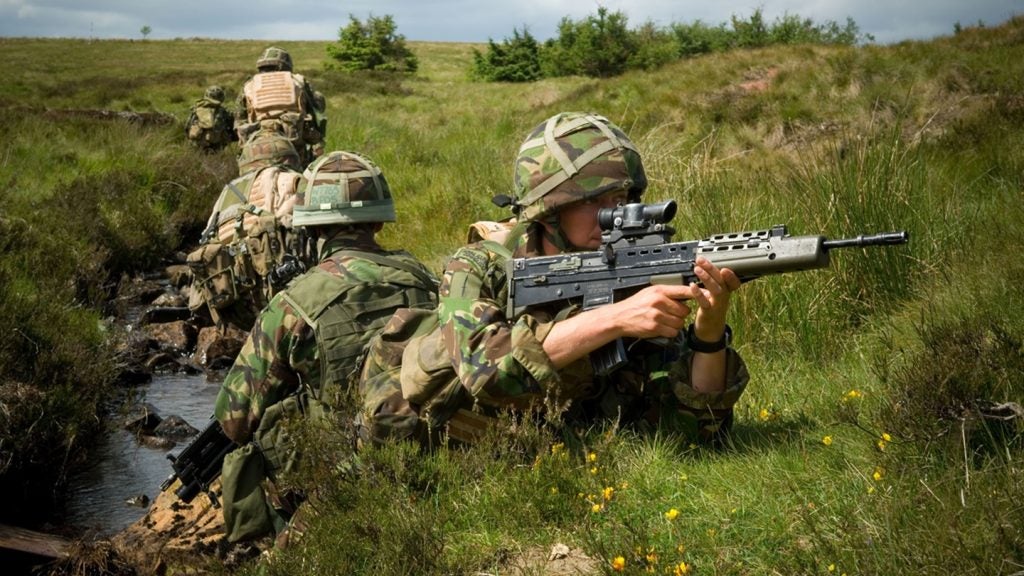
While the latest variant SA80A3 is not due to leave service until 2030, far more of the older SA80A2 models remain in service, according to 2022 figures, at 17,900 and 134,912 respectively.
As far back as 2018, the UK Government initiated the mid-life upgrade programme of the SA80 from the A2 to the A3 version with an initial £5.4m ($7.1m) contract award to Heckler & Koch for 5,000 units, which would see the rifle remain in service “until 2025 and beyond”.
The upgrades included making the A3 model 100g lighter than the A2, as well as the installation of a bracket to secure low-light sights and improvements to the gun barrel.
UK SA80: 40 years of service
The original SA80A1 model, introduced in 1985, has been widely criticised, including by serving military personnel.
With the SA80 and its variants reaching 40 years of service, the rifle has long since outlived its predecessor, the L1A1 Self-Loading Rifle (SLR), the British version of the FN FAL, which was used by the UK for a little over 30 years.
Prior to the SLR, the UK’s standard infantry rifle was the No 4 Lee-Enfield, the latest variant of a weapon operated since the late 19th century.


