
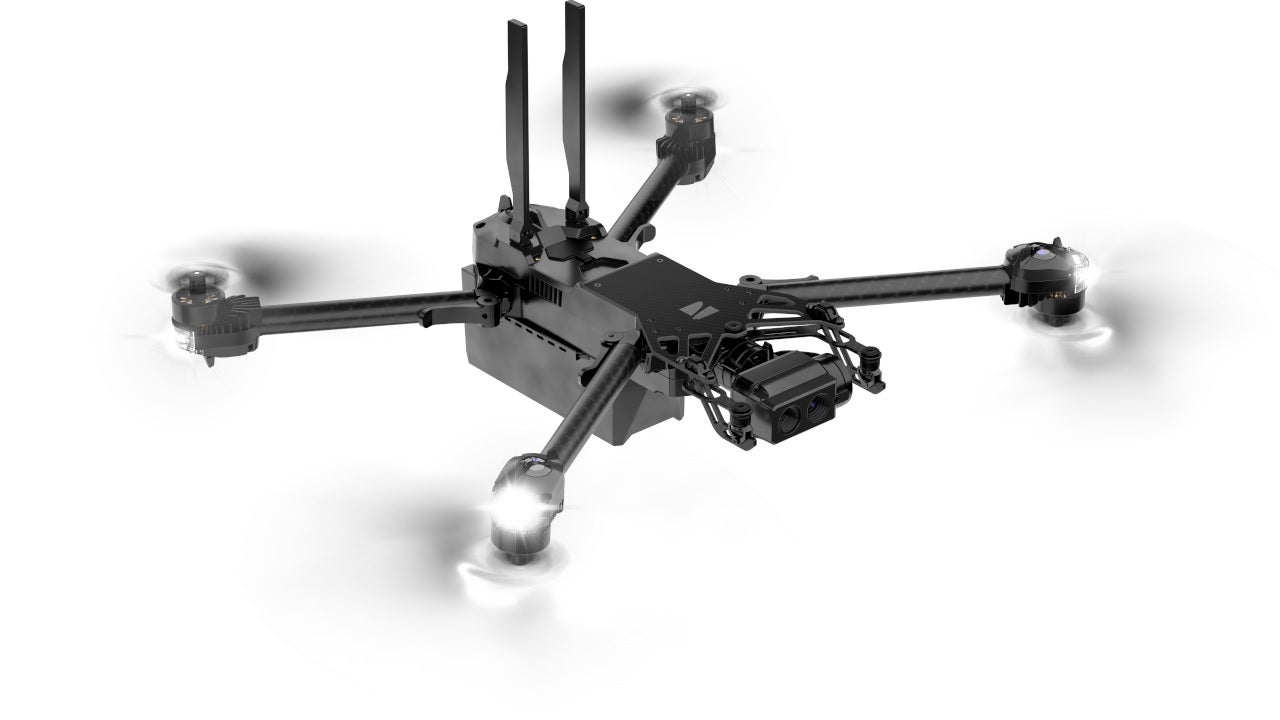
The Skydio X10D is a next‑generation nano‑class small uncrewed aircraft system (sUAS) designed for complex tactical environments.
Developed by autonomous drone manufacturer Skydio, the sUAS is optimised for intelligence, surveillance and reconnaissance (ISR) missions that are critical to defence and government agencies.
Recommended Buyers Guides

Skydio X10D, which began shipping to customers in 2024, is claimed to provide electronic-warfare resilience and enhance survivability on demanding battlefields.
The sUAS is part of the US Department of Defense’s (DoD) Blue UAS Cleared List, which contains approved drones that meet the government’s cybersecurity, data privacy and operational reliability standards.
Skydio X10D design and features
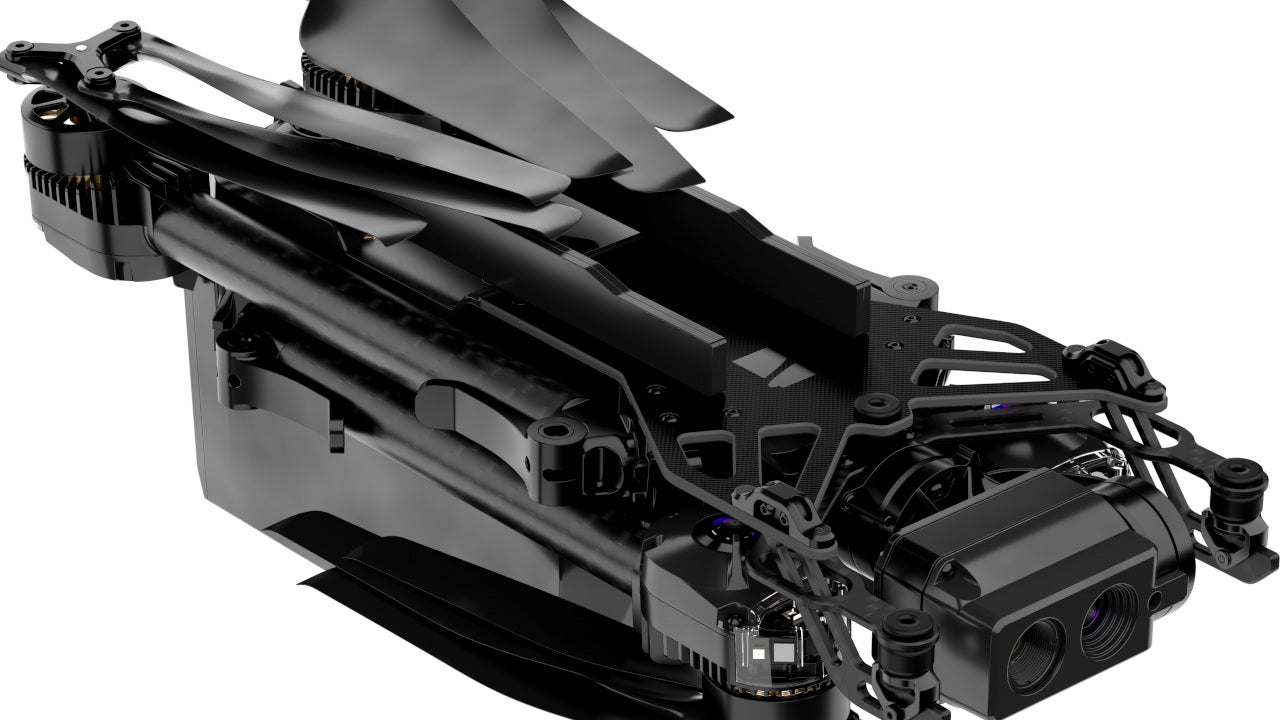
The Skydio X10D drone measures 79cm × 65cm × 14.5cm with its propellers unfolded while in its stowed configuration without the battery, dimensions reduce to 35.05cm × 16.51cm × 11.94cm.
The Connect SL version of the system, including batteries, weighs 2.11kg, while the Connect MH configuration weighs 2.14kg.
The sUAS has a maximum take‑off weight of 2.49kg and is IP55 certified against dust and water for almost all-weather operation. It is equipped with an 8419mAh rechargeable lithium-ion polymer battery.
The platform features four attachment bays, ready for additional payloads. It is equipped with enhanced AI flight assistance and obstacle avoidance, which reduces operator workload and cuts training time compared with traditional drones.
The system meets RAS‑A standards and uses an open MAVLINK interface that supports third‑party and government‑owned flight application software. It also features modular connector ports, enabling operators to change attachments quickly in the field.
Skydio X10D sUAS controller details
The Skydio X10D controller measures 26.7cm × 12.7cm × 7.62cm and weighs approximately 1,135g. It features a 6.6in Dynamic AMOLED touchscreen with a 120Hz adaptive refresh rate and a resolution of 2,340 × 1,080 pixels.
The display offers peak outdoor brightness of 1,750 nits and a pixel density of 392ppi. A 9,600mAh battery powers the device for an estimated five hours of operation.
The unit has an IP54 ingress protection rating and supports multi‑constellation global navigation satellite systems (GNSS), including GPS, Galileo, GLONASS and BeiDou.
The Skydio X10D can also be operated using third‑party controllers.
Payload of the Skydio X10D
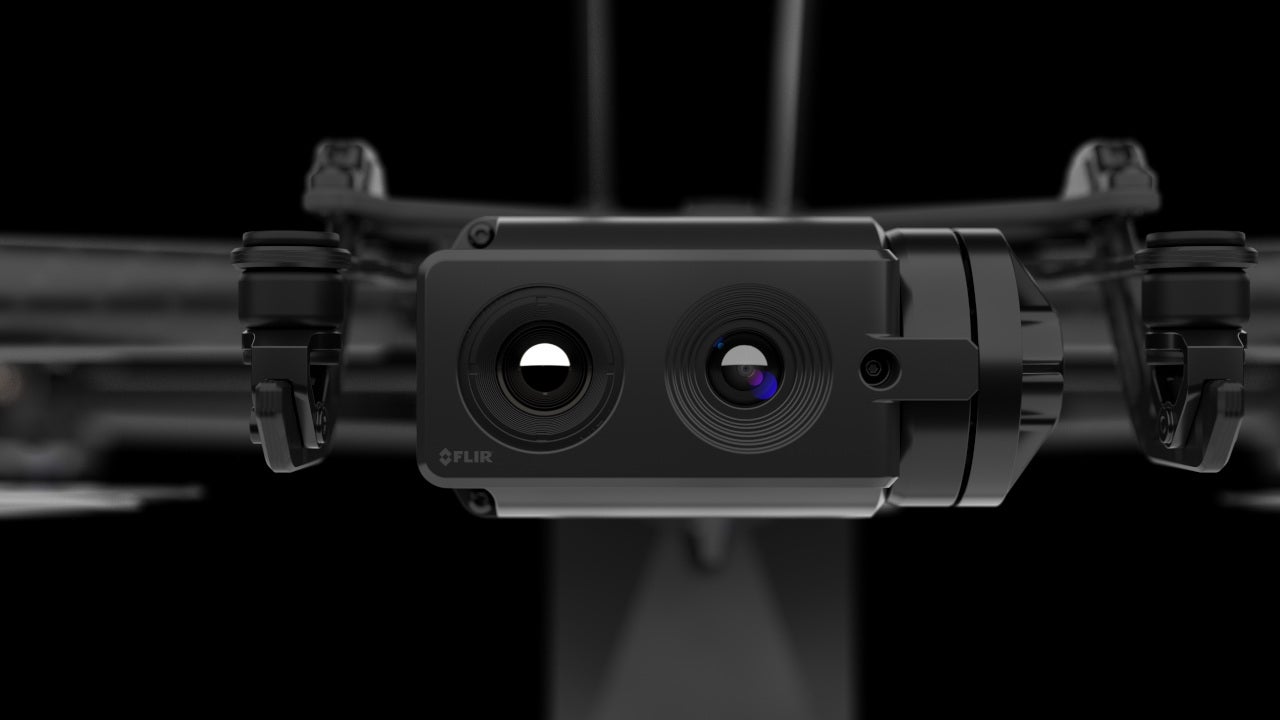
Skydio X10D is the first small UAS to integrate a Teledyne FLIR Boson+ sensor, providing high‑quality thermal imaging. With thermal resolutions up to 640 × 512 pixels and sensitivity down to ≤30mK, the X10D offers more accurate radiometric readings.
The drone’s VT300‑Z and VT300‑L sensor suites deliver high‑precision angular vibration measurement with a sensitivity of ±0.01°.
The Skydio X10D includes a telephoto camera with a 0.5in, 48‑megapixel CMOS sensor, providing a 13° diagonal field of view.
The wide‑angle camera uses a 1in, 50.3‑megapixel CMOS sensor with an 8mm focal length, delivering a 93° diagonal field of view.
The narrow‑field camera is fitted with a 1/1.7in 64‑megapixel CMOS sensor and an effective focal length of 10mm, offering a 50° diagonal field of view.
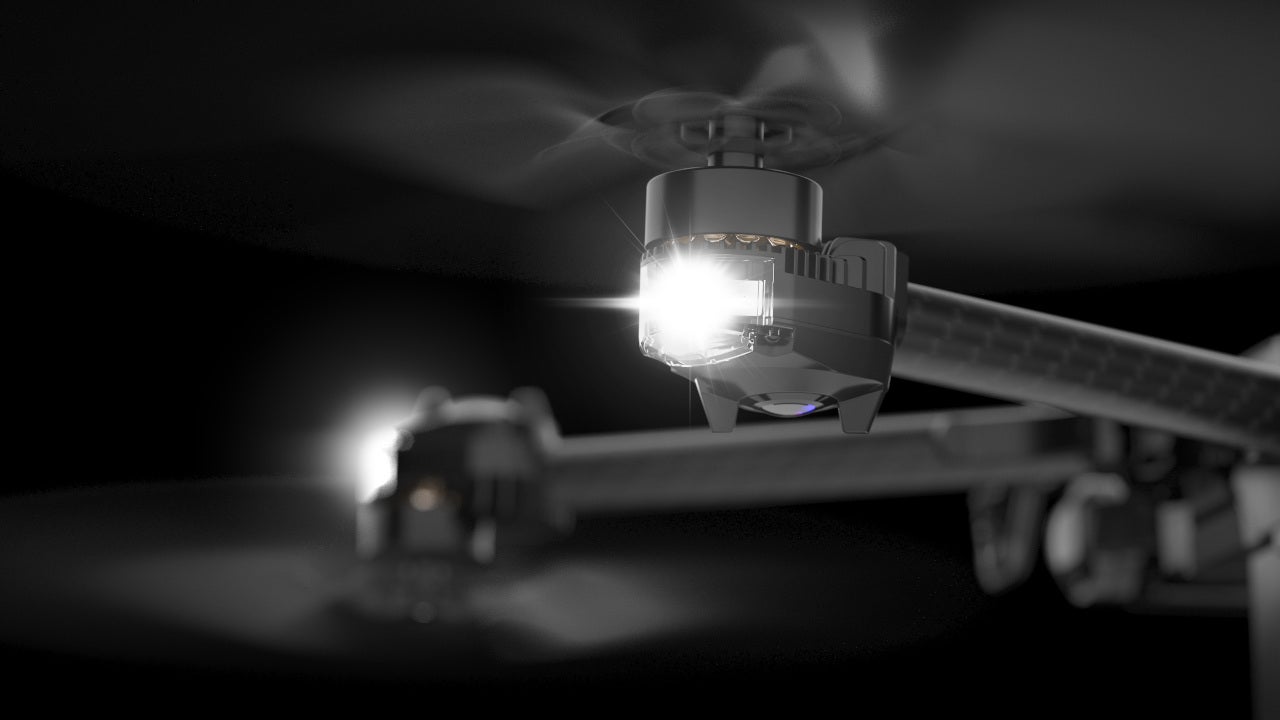
The drone features six custom‑designed navigation cameras in a trinocular arrangement, with three mounted on the upper surface and three on the lower surface, delivering 360° visibility and eliminating blind spots for confident flight.
Each camera uses a Samsung 1/2.8in 32 MP colour CMOS sensor with a 200° diagonal field of view and detects obstacles out to 20m.
Skydio X10D performance
The Skydio X10D’s maximum radio range depends on the chosen link, with Connect SL offering up to 12km, while Connect MH provides up to 10km.
It achieves start‑up in under 40 seconds and reaches speeds of up to 72.4km/h.
Mission capabilities of the Skydio X10D
Similar to its predecessor, Skydio X2D, Skydio X10D is capable of autonomous navigation and can return in GPS-denied scenarios by using Anchor Points, which place visual references onto the map.
It can place an entire operations area in focus for mission coordination using onboard cameras and can observe a target (personnel) from up to 1km to identify hostile activities or threats.
The system determines precise points of interest with Crosshair Coordinates, tracks persons of interest with subject tracking, and provides mobile overwatch using Scout. It can detect temperature differences even on hot days and identify a person on warm concrete in complete darkness.
The drone preserves connectivity even when GPS and communications are jammed and ensures mission success by dynamically changing frequencies via a robust multiband radio. It also demonstrates improved survivability in GNSS-denied or spoofed conditions by employing visual inertial odometry (VIO) that functions at high altitudes.
Powerful onboard computing accelerates and improves the accuracy of the drone’s core tasks.
The platform can also construct 2D maps and 3D models onboard in real time, removing the need for additional processing systems.
Systems upgrade of the X10
In January 2026, Skydio introduced a dedicated parachute safety attachment for its X10 drone platform, designed to connect directly to existing mounting points without interfering with autonomous navigation or sensor payloads.
The system is powered by a compressed gas mechanism and deploys either manually or automatically upon detecting preset failure conditions, allowing operators to trigger emergency recovery whenever necessary.
Pre-flight checks and visual readiness indicators allow operators to verify system status prior to flight through either handheld controls or remote management, and the hardware remains compatible with the Skydio Dock.
In August 2026, Skydio issued updates to the X10 platform aimed at upgrading camera functionality and image quality via the Draper software. The revisions deliver improved low-light capture, click-to-focus capabilities, more dependable autofocus mechanisms, and dynamic exposure calibration that adapts automatically to subject movement.
Orders and deliveries
Skydio was awarded a contract by Spain’s Ministry of Defence to supply autonomous sUAS technology to the Spanish Armed Forces in February 2025. Working in partnership with Paukner Group, a Spanish defence and security product distributor, Skydio is delivering Skydio X10D drones under a contract worth up to $18.7m.
In May 2025, Skydio announced the fulfilment of the first order under the US Army’s Short Range Reconnaissance (SRR) Tranche 2 programme, with delivery of X10D sUAS.
In July 2025, Skydio secured an initial tender valued at $9.4m to supply autonomous sUAS to the Royal Norwegian Ministry of Defence. In partnership with Oskar Pedersen, a Norwegian defence and security supplier, the company has begun delivering X10D systems to the Norwegian Armed Forces.
In August 2025, the NATO Support and Procurement Agency (NSPA) selected Skydio, alongside its European partner COBBS BELUX BV, under a new agreement to supply and support small ISR drones for Nato member nations within the Uncrewed Aerial Systems Support Partnership. COBBS BELUX BV will manage sales, distribution, training and life cycle support for the Skydio platform across Europe, in close coordination with Skydio to ensure responsive, locally delivered capability.
In October 2025, Skydio, in partnership with Science Applications International, secured a $7.9m order to deliver X10D sUAS under the SRR Tranche 2 Low-Rate Initial Production contract. The award increased Skydio’s total support for the SRR Tranche 2 programme to $12.3m in FY25.
In November 2025, Skydio, in partnership with ADS, announced two initial contract awards from the US Air Force (USAF) to expand the deployment of Skydio systems across several operational units. In May 2026, the company announced a follow-on contract expansion with the USAF to equip additional explosive ordnance disposal units with Skydio X10D systems.
In March 2026, Skydio announced an order worth more than $52m from the US Army for over 2,500 X10D drones.
