

- Armoured INEOS Grenadier EPV revealed for British Army LMV bid
- Bespoke armoured shell up to Nato STANAG 2 (not bolt-on)
- Built in France, converted in the UK across wide supply chain
Team Grenadier’s armoured variant of the INEOS Grenadier 4×4 has been revealed for the first time as the consortium prepares for the British Army’s Light Mobility Vehicle (LMV) programme, intended to replace the in-service Land Rover and Pinzgauer platforms.


As far back as June this year, Team Grenadier had publicly put itself forward to become the British Army’s Land Rover replacement, showcasing the INEOS Grenadier Multi-Role Light Vehicle (MRLV), which adapts INEOS Automotive’s Quartermaster variant for military use.
However, information revealed to invited media during an early-September visit to key industrial sites backing Team Grenadier – including SMT Defence and NMS UK – revealed an armoured Enhanced Protected Vehicle (EPV) variant, which incorporates a fully armoured shell up to Nato STANAG 2 levels.
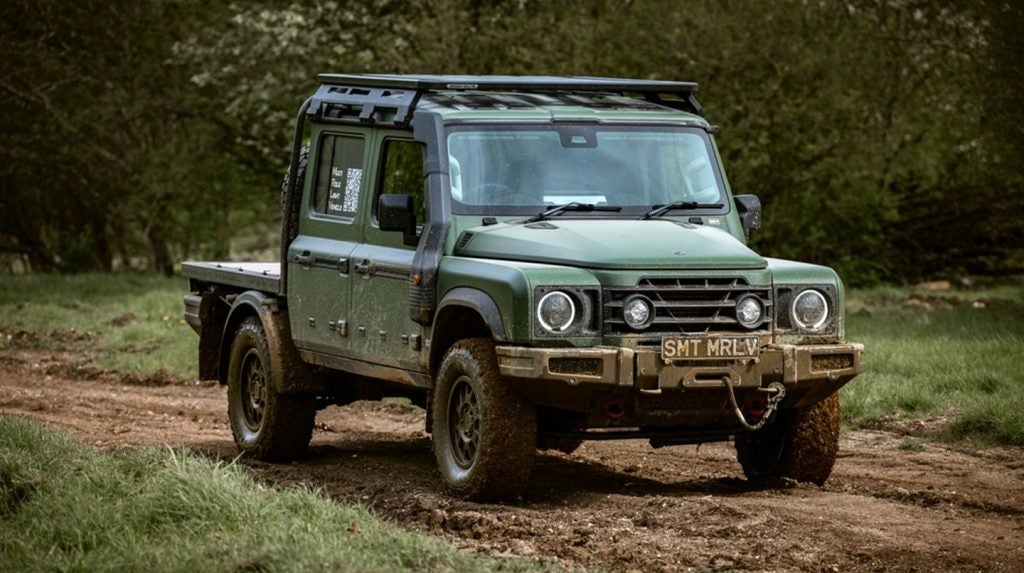
None of the LMV platforms are expected to operate in typical frontline roles, although variants like the ambulance, armoured, and weapons-mounted installation kit (WMIK) force recon could be forward-deployed.
The decision to develop the Grenadier EPV with a bespoke armoured cabin – rather than rely on integrating armoured inserts – offers enhanced protection for a variant that would typically be used for client/VIP protection details and has an advantage over so-called ‘bolt’-on’ armour.
For the EPV variant, NMS UK would take the lead in delivering the capability to the British Army, with other members of the Team Grenadier consortium responsible for other variants such as the WMIK (likely SMT Defence, given its Hereford location).
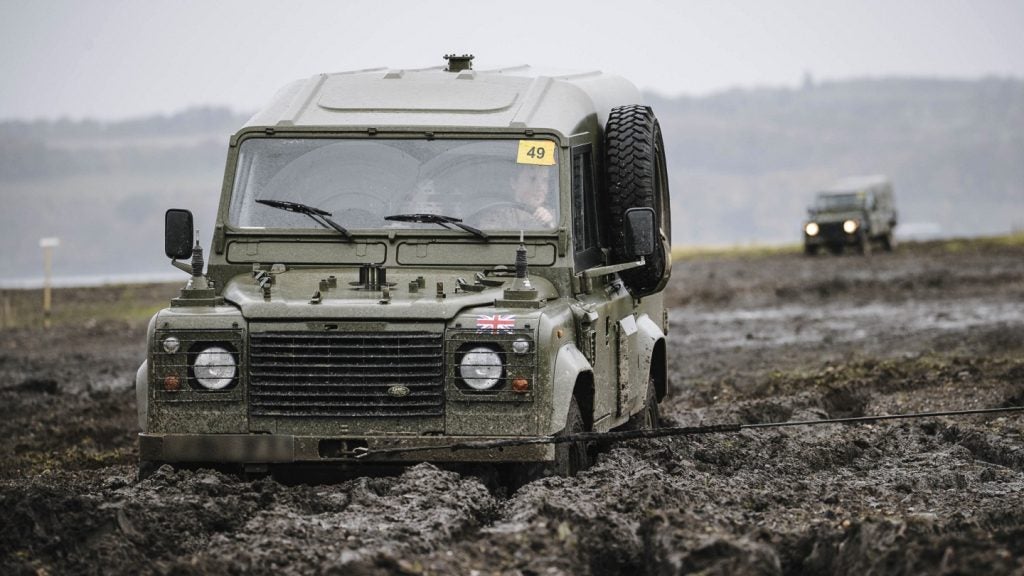
Providing a fully-armoured EPV variant for the LMV is a decision to highlight, given the British Army’s Land Rover fleet – when utilised in a combat-facing role in Iraq and Afghanistan in the 2000s – suffered significant casualties when struck by IEDs or mines.
Such was the inability of the so-called armoured ‘Snatch’ Land Rovers in absorbing roadside bombs that the vehicles acquired the nom-de-guerre of ‘mobile coffin’, given the likelihood of personnel surviving a blast.
A more recent threat can be seen on the battlefields of Ukraine, where first-person strike drones swarm the battlefields of the eastern front. Numerous videos circulate social media showing the lethality of such weapons against lightly-armoured 4x4s operated by Ukraine and Russia.
Securing a UK/European supply chain
All the baseline Grenadier platforms for the LMV would be initially manufactured at its factory in France, with the potential to scale production as required, before being shipped over to the UK for variant conversion.
Notably, two additional UK companies have joined Team Grenadier – Hobson Industries and TVS Supply Chain Solutions – with the former a specialist in vehicle reconditioning and end-of-life fleet support, also currently charged with the preparation of the British Army’s Land Rover fleet for sale into the civil and commercial sectors.
TVS Supply Chain Solutions provides parts and global supply chain management, with the INEOS Grenadier LMV bid keen to emphasise its supply chain being secured within Western Europe.
Team Grenadier states that UK industrial contribution includes the EPV armoured cabin, TMV structure, seats, electronic architecture, winch, body, suspension, and axles, while Western European countries provide the chassis (France), engine (Germany), transmission (Germany), and axles (Italy).
The militarised Grenadier vehicle will make its debut at DVD 2026 at UTAC Millbrook on 16-17 September.
The INEOS Grenadier has been acquired by a range of European parapublic organisations, including Germany’s GSG 9 counter-terror unit, Estonian border guard services, and the Italian Army.
LMV trials set to begin soon
The UK Ministry of Defence (MoD) had set an early-September deadline for industry to respond to its LMV bid, with initial testing of the general-purpose, ambulance, and utility variants from across industrial teams thought likely to occur around mid-to-late October.
With a budget of up to £2bn ($2.7bn), the LMV programme will narrow down to an expected top seven bidders for a post-PSW stage, with the scope including vehicle supply, UK trials, post-design services, and training.
Around 20% of the bid centres on social value, likely referring to the amount of UK workshare that each offer is able to secure. Given the UK parlous automotive industry, many bidders will be providing platforms manufactured overseas and then militarised in-country.
It is thought that eventual total acquisition of whichever platform secures the LMV contract will number in the thousands of vehicles, likely deliverable in batches.


