
TSS and Centigon France Put Lightweight Blast Protection in the Spotlight at Eurosator
Walk the halls at Eurosatory long enough, and you realise the big trends come and go. Counter-IED was all the rage a decade ago. More recently, it’s been autonomy, electrification and AI, and now much of the defence world is talking about high-intensity conflict again. One problem never really goes away, though: keeping the people inside the vehicle alive when things go bang underneath.
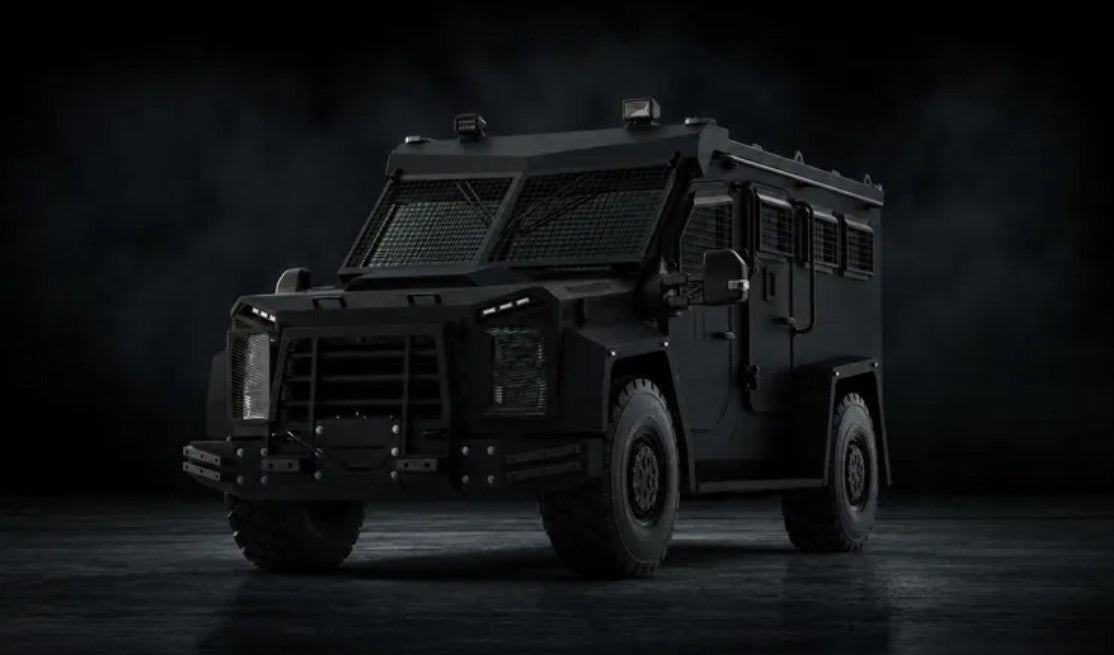
That’s the thinking behind the latest collaboration between TSS International and Centigon France, which they’re showcasing at Eurosatory 2026 in Paris. The pair have fitted SKYDEX blast mitigation technology into The RAVEN, an armoured Ford F600-based platform, a practical demonstration aimed particularly at the sort of civilian-derived armoured vehicles that don’t always get the full military treatment.
For TSS, it’s a logical step. The Dutch company has been a supplier to Centigon France for years.
“Centigon France is a long-standing customer of ours,” says Louis Huijzen, managing director of TSS International. “We’d been talking about other developments on the same platform, and the subject of blast protection came up. There wasn’t a formal requirement, but both sides saw the value in showing what was possible and getting the conversation started.”
For Centigon France, the integration sits comfortably alongside its longstanding focus on vehicle protection.
Léo Rohmer, president of Centigon France, continues: “For nearly 80 years, we have been transforming steel into protection. The RAVEN is the embodiment of this expertise: 10 tonnes of certainty for those who face the uncertain. The crews of the Internal Security Forces and the Armed Forces who risk their lives deserve a demanding platform. We have worked to meet that standard.”
That’s often how things happen in this business. Not every useful feature begins life in a thick procurement document.
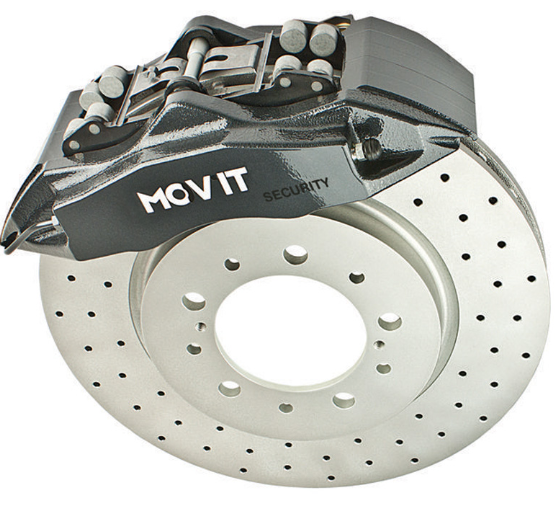
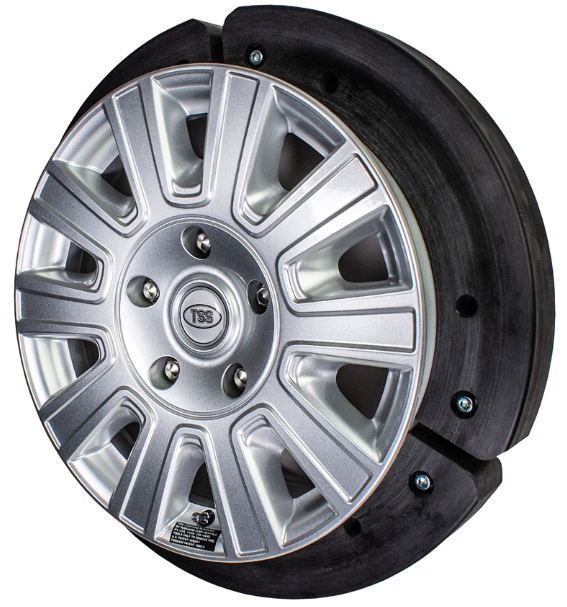
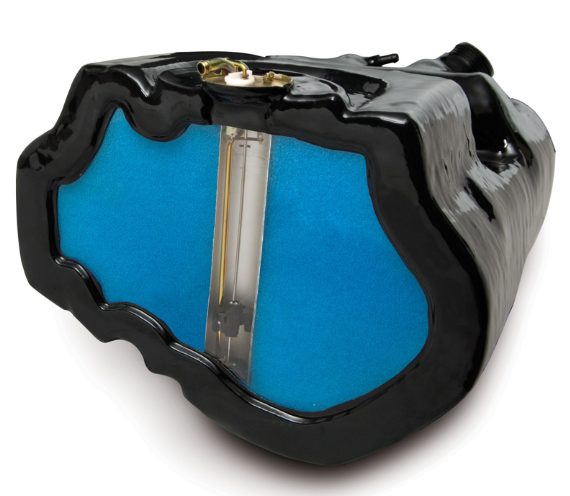
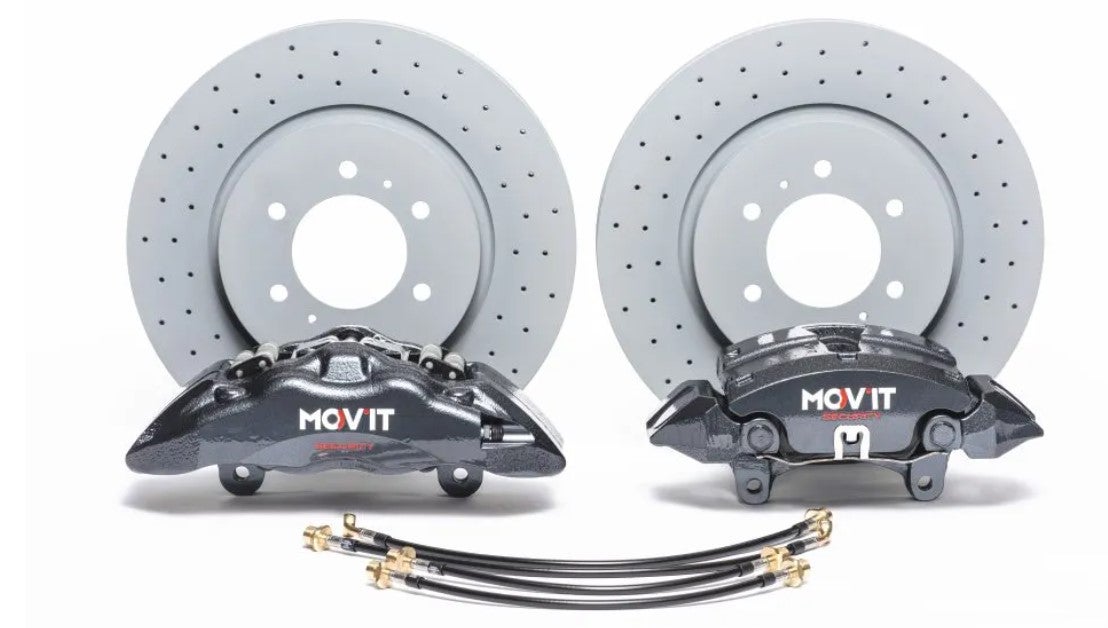
TSS has built its name on keeping armoured and special vehicles mobile. Since the 1980s, it has supplied run-flat systems, protected fuel tanks, heavy-duty wheels, heavy-duty brake systems, vehicle intercoms and, more recently, blast protection. While it has strong roots in the security and civilian armoured vehicle market, the line with defence work has become increasingly blurred.
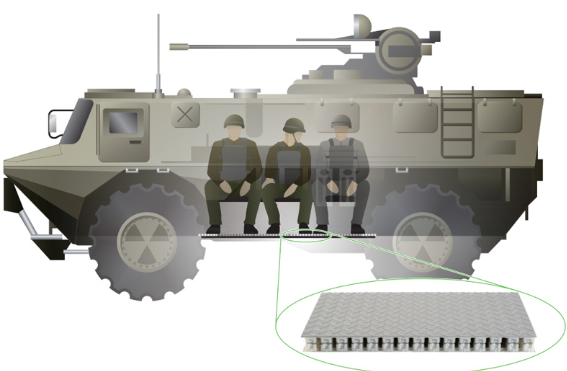
The RAVEN project came together fairly smoothly. Once the drawings were signed off, TSS delivered the blast protection package in a matter of days. Blast mats may not be the sexiest thing on the show floor, but they tackle a genuine issue. An underbody explosion can be stopped from punching through the floor, yet the energy still hurls the armoured deck upwards at frightening speed. That sudden movement is what wrecks feet, ankles and lower legs.
Purpose-built military vehicles often have V-shaped hulls, blast-attenuating seats and extra ground clearance to help. Many civilian-based armoured platforms don’t. As those vehicles are asked to deal with heavier threats, the gap starts to matter.
SKYDEX Convoy Deck mats, for which TSS is the official European distributor, sit between the floor and the occupants. When the blast hits, the material compresses and absorbs a substantial amount of the energy that would otherwise go straight into the crew’s legs.
“It provides an energy-absorbing layer,” Huijzen explains. “The floor stops the fragments, but it still gets driven upwards. The mat compresses and reduces what reaches the feet and lower legs.”
What vehicle builders like is that it’s low-profile, lightweight and relatively easy to fit without tearing the interior apart or adding serious weight. The mats come in modular sections tailored to the vehicle, which keeps installation straightforward. Once in, they’re pretty much fit-and-forget; a quick clean with water is usually enough.
TSS has worked alongside SKYDEX for many years, helping vehicle manufacturers, integrators and end users bring blast mitigation technology to a wide range of armoured platforms across Europe.
“TSS has played an important role in expanding SKYDEX blast mitigation technology across Europe, and they share our focus on protecting vehicle crews operating in demanding environments,” says Collin Metzer, COO of SKYDEX. “For nearly 20 years, SKYDEX has supplied blast mitigation solutions for armoured vehicle programmes around the world. Our approach has always been centred on survivability; reducing injuries, improving protection and helping personnel get home safely.”
The technology has seen extensive use on US military programmes, where it evolved in response to real-world IED threats. Over time, it has become lighter and more effective.
Huijzen notes that designers are now thinking about blast mitigation much earlier in the process, which helps. “It’s allowed better-performing materials that are still lighter and more practical than some of the old approaches.”
The RAVEN demonstrator provides a practical example of that shared focus. By combining TSS’s experience in vehicle mobility and protection systems with SKYDEX blast mitigation technology, the project shows how lightweight survivability enhancements can be integrated into modern armoured vehicles without compromising performance or mobility.
For TSS, the Centigon France project fits its wider approach: offering practical mobility and protection solutions that add value rather than simply ticking boxes. Many of its customers now operate across both security and defence markets, so the portfolio is evolving to match.
The RAVEN demonstrator on display in Paris will be a crowd pleaser, but is unlikely to draw the same attention as the larger combat platforms. It addresses an issue that vehicle designers have been grappling with for years. Survivability isn’t always about piling on more armour or building bigger vehicles. Sometimes it’s about finding smarter, lighter ways to protect the crew from the blast that gets through anyway. And that, at the end of the day, is what it’s all about.