

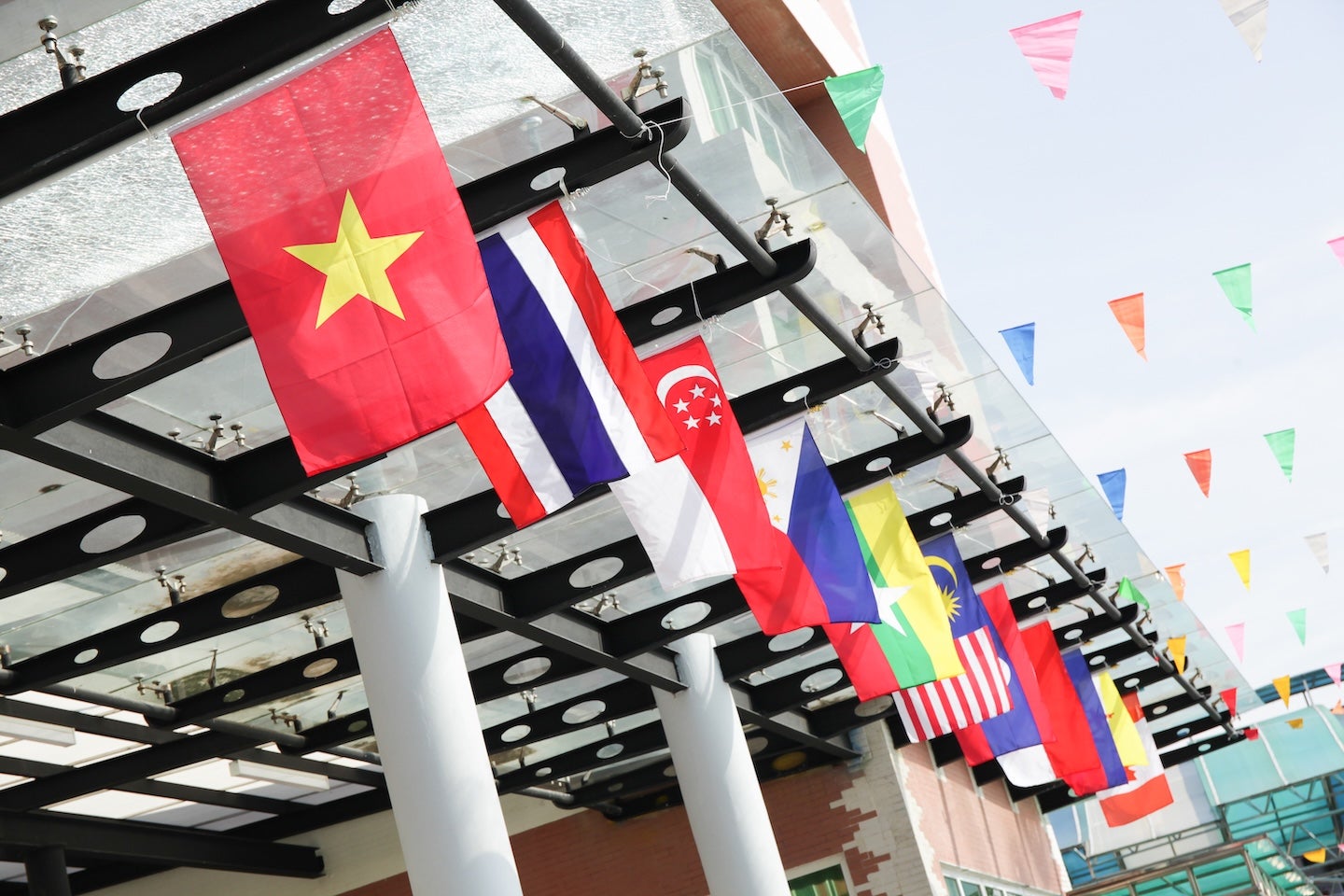
The Association of Southeast Asian Nations (ASEAN) currently rely on imports for the procurement of defence platforms. On account of relatively small defence budgets, in many instances, second-hand equipment has been opted for; examples include Indonesia’s acquisition of former Italian Navy Aircraft Carrier ITS Giuseppe Garibaldi and subsequently commissioned as the KRI Sriwijaya-100, as well as the planned transfer of five Abukuma-class destroyer escorts scheduled for retirement from the Japan Maritime Self Defense Force (JMSDF) to the Philippine Navy in 2027.
With the exceptions of Cambodia, the ASEAN member most aligned to China, and Myanmar, which continues to be embroiled in its civil war, ASEAN members tend to diversify their defence imports across a large multitude of foreign suppliers. There have been numerous reasons for this, first and foremost among them being to maintain a degree of non-alignment towards the great powers. While this varies between individual member states, with the Philippines being the most aligned to the US and others such as Malaysia pursuing a middle ground between Washington and Beijing, suppliers from several countries are present throughout ASEAN member states. In addition to major suppliers from the US and China, suppliers including France’s Dassault Aviation, Türkiye’s Aselsan, and South Korea’s Hyundai Heavy Industries (HHI) have seen substantial success in the overall ASEAN market.

Access deeper industry intelligence
Experience unmatched clarity with a single platform that combines unique data, AI, and human expertise.
Historically, Russia enjoyed a considerable presence within the defence markets of ASEAN member states, with its position being eroded following the US Countering America’s Adversaries Through Sanctions Act of 2017 and effectively collapsing as a result of the invasion of Ukraine in 2022. As a demonstrative case in point, the Royal Malaysian Air Force (RMAF) fields the US F/A-18 and the Russian SU-30MKM as its primary multirole combat capability. While both of these aircraft are approaching the end of their service life, it has been acknowledged by the RMAF that sanctions have made it difficult to maintain the fleet’s airworthiness. This includes sourcing components and being unable to execute financial remittances to Russian suppliers. Similarly, Indonesia dropped the Su-35 from its fighter jet procurement competition in 2021, before ultimately opting to primarily procure Dassault’s Rafale F-4, in addition to potential procurement of the Chinese J-10 and participation in the development of Korean Aerospace Industries’ KF-21 Boramae.
There are several disadvantages in diversifying defence procurement. Purchasing from several countries, oftentimes opposed to each other, means managing a myriad of supply chains from geographically distant countries, in addition to maintaining distinct inventories of spare parts and maintenance procedures for each individual platform. Combined with this, operators, engineers and maintenance personnel must be trained on each individual system, with this often included in the cost of the procurement contract. This duplicates training and infrastructure requirements, resulting in increased life-cycle costs.
This is also the issue of interoperability, although there are instances of interoperability of Russian and US equipment, including RMAF SU-30MKMs refuelling from a US Air Force KC-135 tanker; this took place in 2024, approximately 18 years after the aircraft entered Malaysian service in 2007 and is a relatively rare occurrence. As such, interoperability issues remain, both in terms between service branches of a nation’s armed forces, and between ASEAN members. Overall, platforms from different, often opposing nations, are likely to be unable to fully integrate with each other and wider command and control and to share secure data.
ASEAN members have recognised the disadvantages of procuring from outside Southeast Asia and have taken steps towards strengthening the capabilities of domestic defence suppliers. A unifying trend across ASEAN is legislation and regulations that mandate localised production and technology transfers. The Indonesian Ministry of Defense Regulation No.6/2024 mandates that a minimum of 85% of the total contract value of a foreign defence procurement must be fulfilled through either an offset, participation of Indonesian suppliers, or countertrade schemes. In addition, Malaysia’s National Defence Industry Policy (NDIP) requires a minimum of 30% of components to be manufactured within Malaysia, in addition to all maintenance, repair, and overhaul (MRO) work after the initial warranty period to be carried out by domestic firms. Similarly, the Philippines’ Self-Reliant Defense Posture (SDRP) Revitalization Act of 2024 mandates a preference for domestic suppliers, and that importing can only be carried out if platforms and materiel cannot be manufactured within the Philippines. Also, any foreign procurement must include the intention of technology transfers to allow for domestic manufacture in the future.
There are already clear indications that individual member states are seeing improvements in their domestic defence industries as a result, which are in turn lucrative for foreign suppliers. In the case of Thailand, following the procurement of the JAS-39 E/F Gripen, Saab has announced plans to expand investment in the country with the intention of exporting aircraft across the Southeast Asia region. While there are no plans to establish a complete aircraft assembly line in Thailand, the Swedish firm intends to create original equipment manufacturing (OEM) partnerships with local firms in addition to establishing an R&D centre in the country as part of the offset agreement within the Gripen’s procurement contract.
Looking ahead, ASEAN is moving towards a level of regional cooperation in defence procurement. The first meaningful step in this regard was the non-binding ASEAN Defense Industry Collaboration (ADIC) initiative signed in 2011. This was spearheaded by Indonesia to curb the region’s acute reliance on external arms suppliers, reduce unit costs through aggregated demand, and insulate member militaries from foreign supply-chain disruptions. By encouraging cross-border industrial ventures, the framework sought to leverage pooled procurement and shared engineering resources to overcome the small, fragmented domestic order volumes that routinely undermine Southeast Asian defence enterprises.
The operational focus of ADIC centres on four principal lines of effort: pooling maintenance, repair, and overhaul (MRO) facilities to lower life-cycle sustainment costs for common equipment; establishing cross-border supply chains for consumables such as small arms and ammunition; promoting dual-use technological research; and cataloguing national defence-industrial capabilities through an ASEAN-wide industrial directory to improve transparency and identify joint-venture opportunities.
As tensions in the South China Sea drive an increase in defence spending across the majority of ASEAN member-states, regional cooperation has once again come to the fore. In February 2026, members’ defence ministers discussed cooperation in research and development as well as methods to standardise procurement regulations among member states.
However, constraints on regional procurement within ASEAN remain entrenched. ADIC has not been refined since its creation in 2011, with regional procurement constrained by structural asymmetries and economic nationalism across the 10 member states. Industrial capabilities across ASEAN diverge sharply, separating advanced systems integrators, such as Singapore, and mid-tier platform producers, including Indonesia and Thailand, from Cambodia and Laos, which have negligible defence manufacturing capacity and remain reliant on China.
Conclusion
ASEAN defence procurement is entering a transitional period. Member states will remain dependent on foreign platforms in the near term, but the commercial and operational costs of fragmented sourcing, particularly supply-chain vulnerability, high sustainment costs, and limited interoperability, are increasing the case for domestic industrial development and regional cooperation.
Ultimately, ASEAN is likely to opt for incremental cooperation rather than a fully integrated defence market comparable to the European Union. ADIC serves as a foundation for regional cooperation, with potential for a basic level of shared procurement procedures and regulations, but further progress will depend on reconciling divergent member-state priorities and industrial capabilities. Of ASEAN’s members, Singapore, Indonesia, and Thailand are positioned to take leading roles, while less-developed members may remain reliant on external suppliers from China, the US, Türkiye, and South Korea.
