

- MoD is still weighing what, if anything, replaces Challenger 3 in the 2040s
- Challenger 3 upgrades are set, but schedule delays put the 2027 target in doubt
- Only 148 tanks will be bought; any successor is likely via a US/European programme
The UK Ministry of Defence (MoD) has said that it continues to “consider” what capability should replace the incoming Challenger 3 main battle tank (MBT), as questions regarding the programme and any future successor continue to mount.


The Challenger 3 is intended to replace the in-service Challenger 2 MBT through a series of iterative upgrades including a new turret and new 120m smoothbore main gun and the installation of the Trophy active protection system, manufactured by Israel’s Rafael Advanced Defense Systems.
Responding to a UK Parliamentary question on 18 September, UK Minister for Defence Readiness Luke Pollard stated that the MoD had assessed that “there remains an enduring requirement for the capability provided by a main battle tank”.
However, Pollard declined to confirm how the British Army’s MBT capability would be sustained in the long-term, post-Challenger 3.
“No decisions have yet been taken on a specific successor programme,” Pollard said.
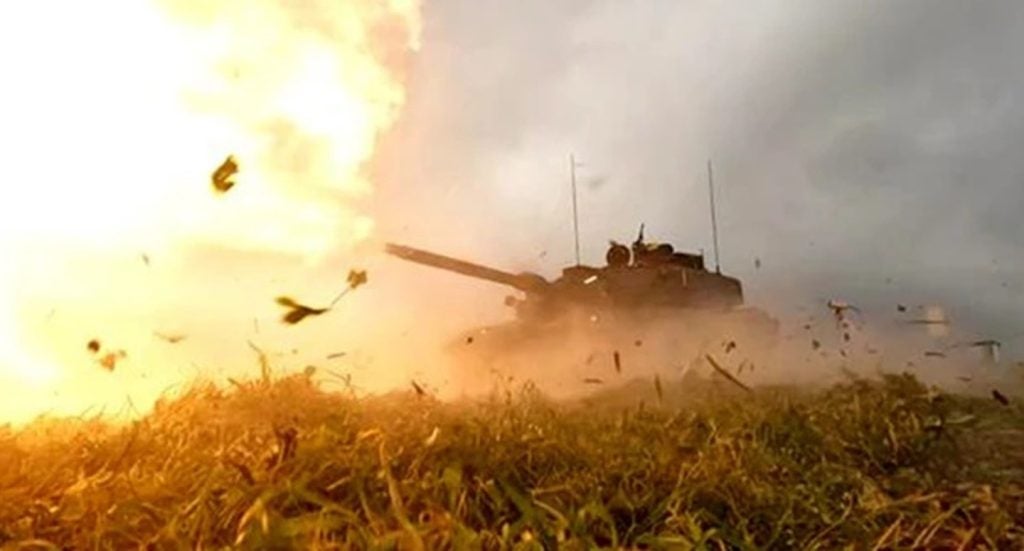
Progress for the delivery of the platform remains slow, with its 2027 in-service date in question amid reports that issues have been found with the turret gear mechanism. The 2027 timeline for initial operating capability is itself a delay from the originally intended introduction of 2025.
The UK Government foresees the Challenger 3 MBT serving through the 2030s.
Earlier in September, programme delays forced Pollard to state that the British Army’s Armour Main Battle Tank Programme was “subject to an ongoing review” regarding performance and a related reapproval process.
Under current plans, reapproval is expected during Financial Year 2026-27.
End of the line: Challenger 3 MBT
Only 148 Challenger 3 MBTs are being acquired, including eight prototype vehicles, with the reduced number forcing the development of a new armoured formation – known as the Type 44 – in the British Army, effectively fielding fewer vehicles in a combat formation.
With the Type 44 blueprint, this permits a reduced force of three regiments to form a single UK armoured division with a maximum of 44 tanks, compared to the 56 or 59 MBTs with the respective Type 56 and Type 59 compositions.
Aligned to this formation, 132 of the 148 Challenger 3 MBTs will be technically assigned to active formations, with the remainder held in reserve. However, availability will be significantly reduced, perhaps around 65%, with around 100 units operational.
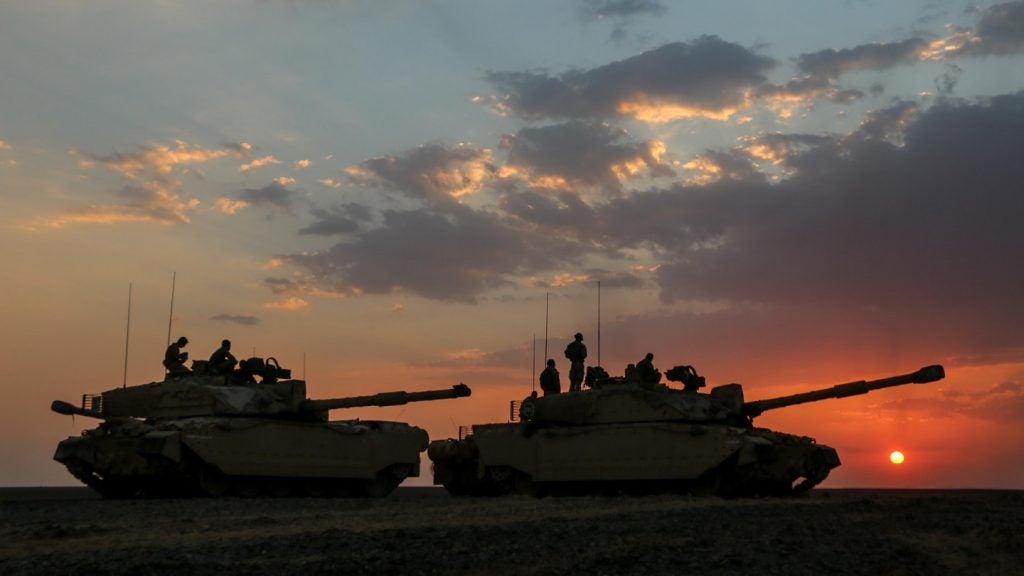
In the 1990s and early 2000s the British Army fielded hundreds of MBTs as a capable, armoured force, but this has subsequently dwindled to, at best, a couple of hundred serviceable platforms today.
Indeed, the UK MoD says it has a far larger inventory of Challenger 2 MBTs than are actually available and remarkably claims to have increased the number of tanks in the past year despite having no active production line.
Even worse, the British Army has been told to cease live-fire exercises for its MBTs, as MoD funds, predictably, run dry amid a growing fiscal crunch in Main Building.
With the UK having virtually no indigenous tank design and manufacturing capability it is almost certain that any post-Challenger 3 MBT – should there be a like-for-like replacement – will be acquired via joining a US- or European-led programme.


