
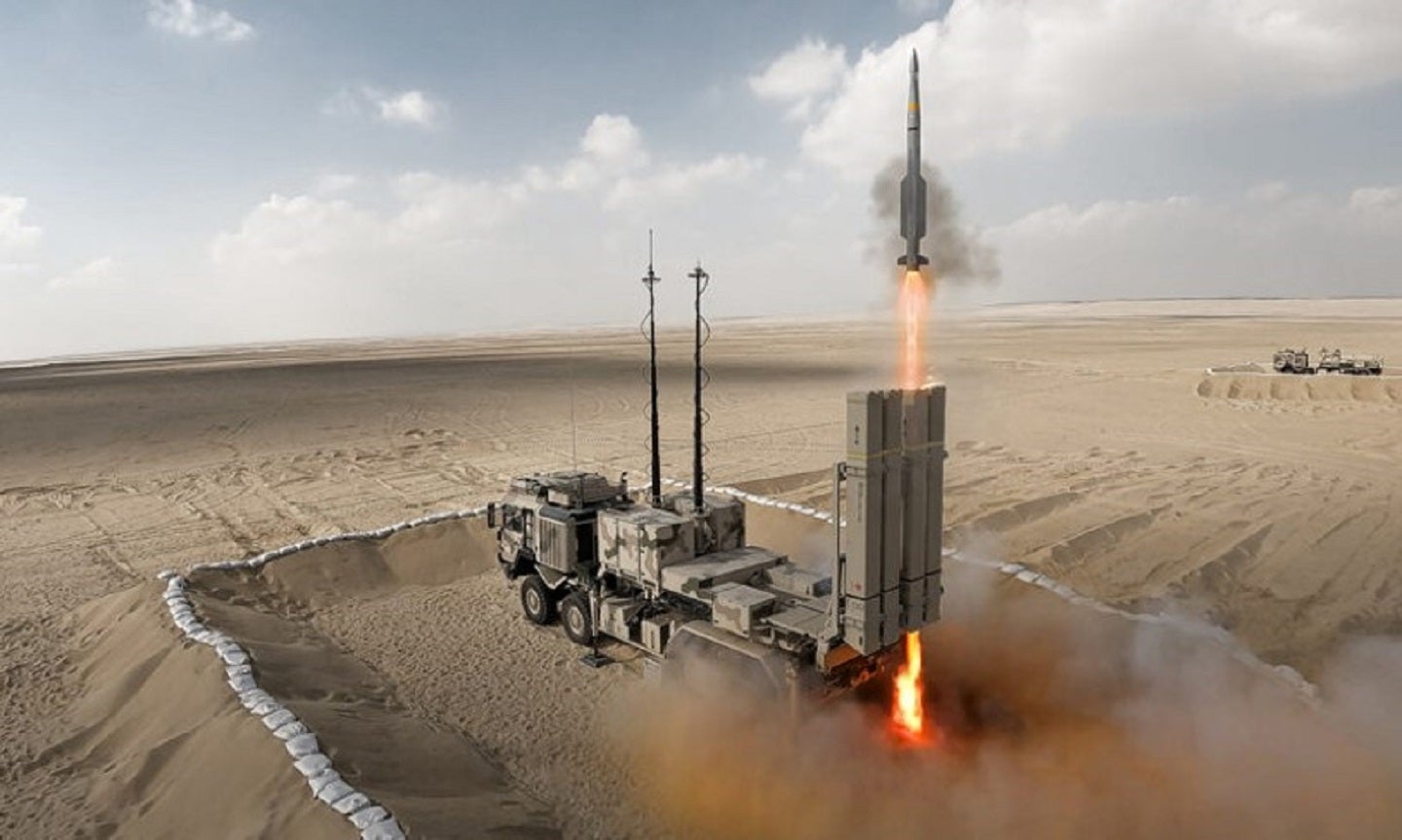
Estonia and Latvia have entered negotiations with the German equipment manufacturer, Diehel Defence, to procure the Iris-T surface-to-air, medium-range launched (SML) air defence system.



The Iris-T missile has served as a standard missile for nearly twenty years. Austria was the first export customer at end of 2005. The German programme sought to replace the AIM-9 Sidewinder in use by some Nato members.
The missile has mostly been used as an air-to-air guided missile. South Africa adapted them to its Gripen fighters in 2008 and Saudi Arabia to its Tornados and Typhoons in 2009.
The original equipment manufacturer, Diehel Defence, first tested its short-range surface-to-air (SLS) variant for the first time in 2014. The company fielded the SLM in 2022. In October 2022, Diehel announced it delivered the Iris-T SLM to Ukraine.
The system provides 360 degree protection against aircraft, helicopters, cruise missiles, and guided weapons.
It enables simultaneous engagement of multiple targets. It operates at short to medium-ranges (distances of 40km) within extremely brief reaction times (reaching Mach 3).
the system can integrate multi-function radar systems and it suits both mobile and stationary deployment.
Interoperability
Diehel Defence particpated in Nato’s Joint Project Optic Windmill (JPOW). The exercise integrated air power and missile defence in the Netherlands between 22-29 March 2023. Diehl Defence’s Iris-T SLM system took part in the exercise as a “future system” under the command of the German Air Force.
Nato demonstrated the interoperability of Iris-T SLM, testing its connectivity, time synchronisation and air situation exchange in the network. The achievement of this milestone in the programme’s history will help expedite its procurement by the Bundeswehr.
This demonstration reinvigorates the Baltic nations that signed a letter of intent for the joint procurement of the system in June 2022, at the Nato Summit in Madrid.
The Estonian Ministry of Defence expects the system to arrive in 2024.
“For selecting the winning bidder, we looked at evaluation criteria such as the technical capacity of the system, the total cost of the system, the life cycle cost for the coming 30 years, the delivery time and the involvement of the local industry,” said the head of the communications and radar category at RKIK, Priit Soosaar.
The final cost of the investment will be determined during contract negotiations. The capability includes the medium-range air defence system, but also the infrastructure, personnel, training, equipment and other related costs.


