

- Fedorov: drones now deliver 95%+ of combat strikes in Ukraine
- Ukraine launching “Army of Robots”, building on “Army of Drones” programme
- Kyiv prioritises air defence as Russia ramps up drone attacks and spending
Ukraine’s ousted former defence minister Mykhailo Fedorov has said drones are accounting for more than 95% of combat strikes in the country’s war against Russia, as he outlined a new approach to furthering the use of robotics in warfare.
It had previously been reported by Army Technology in 2025 that four out of five combat casualties were being caused by drones in the Ukraine-Russia war, with the latest figure indicative of the furthering of military roboticisation.
Go deeper with GlobalData


Discover B2B Marketing That Performs
Combine business intelligence and editorial excellence to reach engaged professionals across 36 leading media platforms.
Speaking over the weekend, Fedorov said that Ukraine was launching the “Army of Robots” programme, a development from the 2022 Army of Drones initiative to revolutionise the use of uncrewed systems on the battlefield.
“In 2022, we launched the Army of Drones. Back then, few people could imagine just how profoundly unmanned systems would change warfare,” Fedorov said, posting on social media.
Fedorov added that drones today “account for more than 95% of strikes”, and that Ukraine had more than 700 individual UAV manufacturers in its evolving defence ecosystem.
“But technological warfare does not stand still. We need the next breakthrough. Our bet is on the robotisation of warfare,” Fedorov stated.
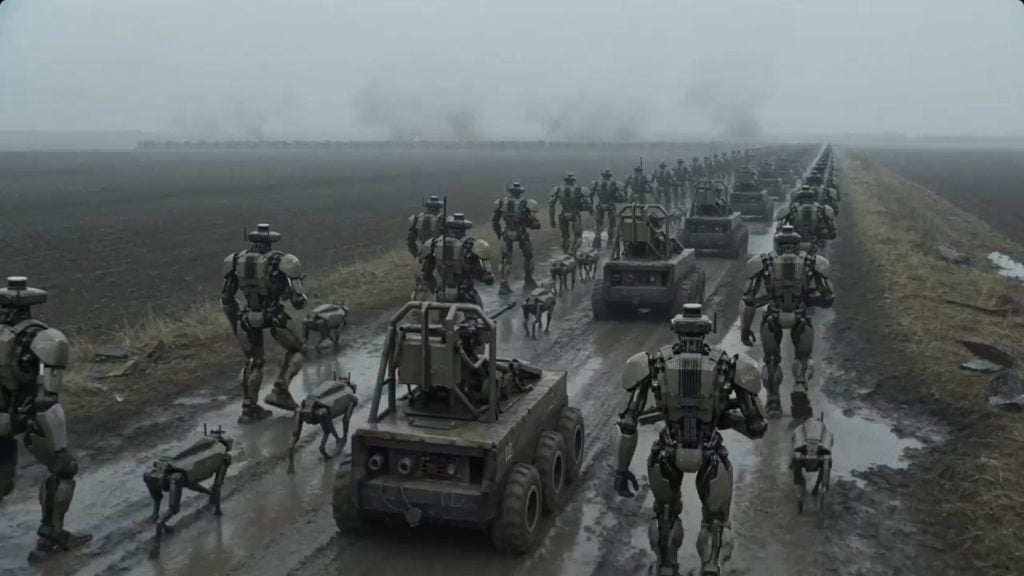
Such a vision includes the use of “humanoid robots” performing a range of logistics and non-combat roles, as well as the more usual reconnaissance and strikes functions.
However, Russia had since adapted to the full-scale use of drones in warfare with what Fedorov detailed as “the ability to rapidly copy and scale military technologies”, with the need to stay one step ahead in the development cycle critical.
Since being removed from office he has been highly critical of incumbent President Volodymyr Zelenskyy, while also touring investment funds and defence companies in the US in a bid to secure funding for an as-yet unspecified “defence tech company”, with Fedorov potentially at its helm.
In a social media post in early September, Fedorov revealed discussions with Alex Karp, CEO of Palantir Technologies, who will become the unnamed company’s “first lead investor”.
This indicates a focus on robotics and automation, although such details are necessarily speculative at this stage.
Air defence critical for Ukraine
Meanwhile, the Deputy Minister of Defence of Ukraine for European Integration Sergiy Boyev has outlined air defence, drones, and long-range artillery as key procurement priorities for the rest of the year.
Addressing delegates at the Operational Force Development Framework (OFDeF) conference over the weekend, Boyev said the provision of air defence systems would determine whether Ukraine “emerges from this winter stronger or weaker”.
Movement along the frontline between Ukraine and Russia has remained relatively static through 2026, with Russian forces gaining small tactical gains but not threatening, in the short term, to break through the fortress belt of defence cities along the H-20 Kostyantynivka-Slovyansk highway.
However, Russia has conducted relentless drone strikes at sites across Ukraine and will likely step up attacks on power and energy infrastructure as winter draws close.
Ukrainian President Volodymyr Zelensky stated on 26 September that Russia plans to spend $12bn on the production of jet-powered drones and loitering munitions, seen by Moscow as the most likely way to force a shift in the war.


