

- EU redirects €1.4bn in profits from frozen Russian assets to Ukraine, bringing the total to about €8bn
- Most funds will support Ukraine’s loan/financing needs via EU and G7 mechanisms
- War update: strikes continue and July saw higher combat intensity and record Russian aerial munition use
The European Union (EU) received its latest tranche of funding generated by frozen Russian financial assets as part of the bloc’s ongoing financial support of Ukraine, with windfall profits now amounting to €8bn ($9.2bn).


Detailed in a 5 August press release from the European Commission, the latest tranche is the fifth of its kind, following the delivery of a previous payment in March 2026, and covers revenues accumulated during H1 2026.
The funding is generated by profits accrued through immobilised assets of the Central Bank of Russia (CBR) held by the EU’s Central Securities Depositories (CSDs).
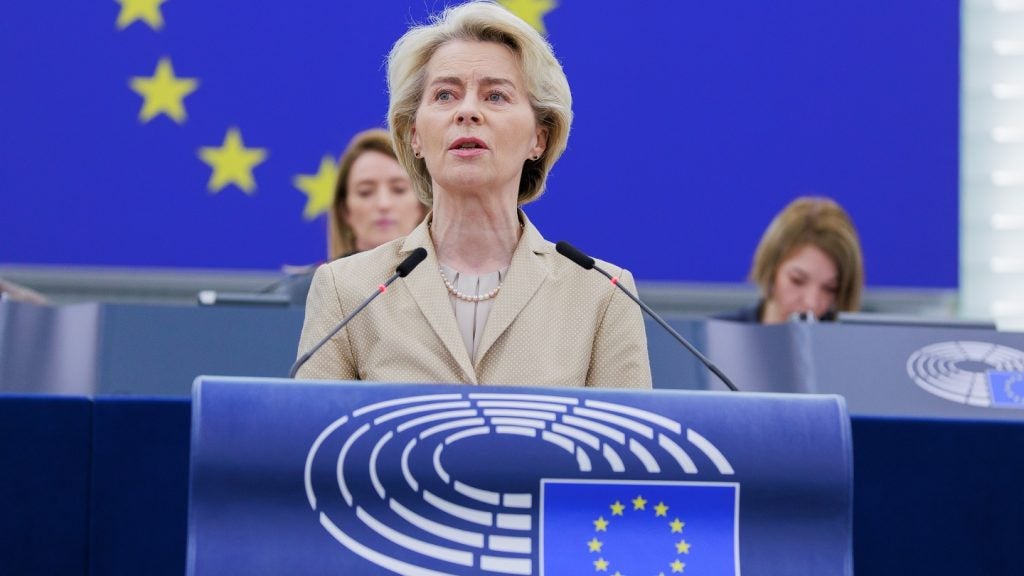
In the release, European Commission President, Ursula von der Leyen, said that Russia “must pay for the destruction” it has caused to Ukraine.
“We are using the proceeds from the immobilised Russian assets to make sure it does. We are making a further €1.4 billion of them available to Ukraine,” von der Leyen said.
The EU contends that while the CBR assets themselves remain immobilised, the interest on the cash balances does not belong to Russia, with these profits now redirected to pay for loans that are being run up by Ukraine.
According to the EU, 95% of the proceeds will be used to support Ukraine via the Ukraine Loan Cooperation Mechanism (ULCM) and 5% via the European Peace Facility (EPF).
The ULCM provides non-repayable support to assist Ukraine in repaying the EU’s macro-financial assistance loan disbursed throughout 2025, as well as loans provided by G7 bilateral lenders under the G7 Extraordinary Revenue Acceleration (ERA) initiative.
Total support under the ERA loans amounts to €45bn as of August 2026.
EU funding to Ukraine: in data
According to data published by the EU Delegation to the United States in January 2026, the bloc is Ukraine’s largest supporter, surpassing funding provided by the US, UK, or other donors.
Since the start of the Ukraine-Russia war in 2022, the EU and its Member States have made available over $226bn in financial, military, humanitarian, and refugee assistance, comprised of 65% in grants or in-kind support and 35% in concessional loans.
In April this year, European leaders agreed an additional loan of $104bn to meet Ukraine’s needs in 2026-2027. Of this, nearly $70bn was earmarked for military assistance with over $34bn for budgetary support.
Defence support to Ukraine from the EU now exceeds $90bn, comprising loans, donations, and military equipment provided either granted-in-kind or as a platform sale.
Notably, detailed in April, $2.2bn of interest accrued on immobilised CBR funding has been directed to “joint procurement” and the delivery of an additional one million artillery rounds with over $500m dedicated to boosting EU defence industry munitions production capacity.
In effect, elements of the interest built on seized Russian assets are being used to boost European ammunition production while also paying its own industry via funding given to Ukraine.
Ukraine-Russia war: update
Both Ukraine and Russia continue to bombard each other’s military and sites of critical national infrastructure, with multiple strikes in recent days causing civilian casualties.
According to the Institute for the Study of War, Ukraine’s Security Service (SBU) announced on 4 August that it had conducted at least 100 strikes against Russia in an initial 40-day operation against a series of targets, including the defence industrial base, air bases and air defence assets, command posts, warships, tankers, oil refineries, and transport and military logistics.
Russia meanwhile has intensified strikes against Ukrainian cities, including a wave of missile and drone attacks overnight on 4 August against the Kyiv, Kharkiv, and Donetsk regions, leaving at least 21 people dead, according to local authorities.
Ukrainian President Volodymyr Zelenskyy has been calling for the provision of more air defence missiles to protect key sites in Ukraine, amid an apparent shortage in supply potentially caused, in part, by the vast expenditure of munitions in the ongoing US-Iran conflict.
Combat operations along the frontline in eastern and southern Ukraine also continued, with the Ukrainian Ministry of Defence reporting on 4 August that in July, the Russian army used in excess of 8,300 aerial munitions fitted with universal glide and correction modules in strikes during the month. This is the highest monthly figure recorded to date, the MoD stated.
Land-based operations also saw an increase in July, with 7,922 combat engagements across the month, compared to 7,316 in June. Through July, Russian forces carried out almost 97,000 attacks, including more than 1,300 involving multiple launch rocket systems.
Russia is seeking to create conditions for a breakthrough in the so-called Ukrainian Fortress Belt towns of Kramatorsk, Slovyansk, Druzhkivka, and Kostyantynivka.


