
- Strong doubts the UK can afford its defence spending targets amid fiscal pressures, a missing Equipment Plan, and a £16.9bn shortfall from 2023
- Reaching the 2.6% goal needs roughly an extra £9bn by 2027–28; more ambitious targets would create much larger, unspecified funding commitments
- Despite spending promises, UK operational capability has eroded, and future doctrine shifts favour uncrewed/expendable systems over traditional platforms
Scepticism is growing of the UK Government’s stated ambitions to increase defence spending to a 2.6% of GDP by 2027 and 3% in the next parliament, as fiscal headwinds and an autumn budget of tax increases and spending cuts loom large.



Publishing its Chair’s First Annual Report on 15 October, the chair of the multi-party Committee of Public Accounts, Conservative MP Sir Geoffrey Clifton-Brown, stated that since 2024, the committee had conducted “53 public evidence sessions and published 45 reports”, scrutinising a vast range of areas where the UK Government seeks to spend UK taxpayer’s money.
Among these areas are digital technologies, local government reforms, and crucially, defence spending, an area where the UK Government has invested significant political capital amid an ongoing war between Ukraine and Russia.
In his introduction Clifton-Brown said he was “highly sceptical” that the commitments made by the UK Government in its 2024 Strategic Defence Review (SDR) were “affordable”.
Compounding a lack of clarity in defence spending targets, the lack of any Defence Equipment Plan since 2023 – due to be replaced by the more opaque-sounding Defence Investment Plan later this year – adds further to the uncertainty over how planned equipment purchases will be afforded and what inventories will remain.
“Given the current fiscal situation, government will need to set out how it plans to finance the enormous increases in the defence budget, and the Committee must be allowed to ask the right questions to investigate these sensitive areas,” Clifton-Brown stated.
It should be noted that the 2023 Equipment Plan, published in the final chaotic period of the previous government, had a shortfall of £16.9bn ($22.57bn), which was “the largest deficit in the Plan”, since it was first published.
Analysing the state of the UK’s accounts, the Chair reported that, looking at cash figures for 2025-26, the current Ministry of Defence (MoD) budget for 2025-26 was £62.2bn, corresponding to around 2.2% of GDP.
“For government to reach the required 2.6% of GDP by 2027–28 — setting aside the fact that the MoD budget does not quite align with the NATO definition of defence spending — the MoD’s spending review settlement shows that it will have to spend around £71 billion in 2027–28,” Clifton-Brown stated.
According to Clifton-Brown, this requires another £9bn in defence funding in the next two years, if GDP stays the same. Should the UK continue its ambition to reach 3% in the next Parliament, the defence budget would need to rise of around £85bn in current prices.
The UK government went further still, taking its lead from the US administration under President Donald Trump, who demanded a 5% defence spend benchmark for Nato members, claiming plans to spend “3.5% or around £100 billion on core defence and 1.5% or £40 billion on resilience”, meaning total spending would be £140 billion, according to the Chair’s report.
“These will of course increase as GDP increases, creating extremely large expenditure commitments without clear plans for how government will pay for them,” Clifton-Brown wrote.
UK defence: unaffordable in 2023, what about now?
Already, the UK Government has sought to rob from Peter to pay Paul, cutting the Foreign Aid Budget, itself a source of considerable soft power, in order to ‘fund’ defence spending plans.
It was reported by Army Technology earlier in 2026 that the 2.6% target would only be achieved by the unique inclusion of the Single Intelligence Account, effectively the budget for Mi5 and Mi6, into the MoD’s own figures.
More than two years have passed since the last, unaffordable, Equipment Plan was published, with little indication as to how claims of 3%, 3.5%, or even 5%, will be made good.
And, amid the claims for defence expansion and the economic prosperity it will bring, the UK’s defence capabilities have actually worsened since that time, with dozens of military helicopters, the Royal Navy’s entire amphibious assault fleet, and vast tracts of the British Army’s kinetic ability donated to Ukraine.
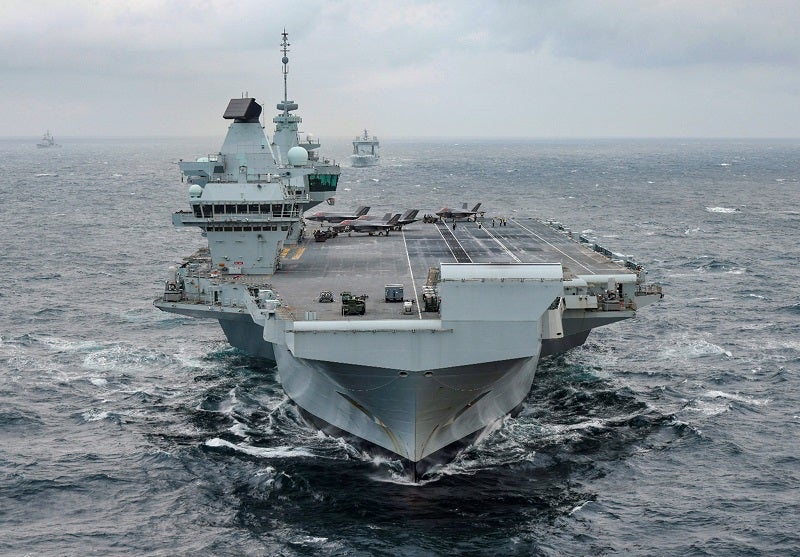
Possible losses include the mothballing of one of the two Queen Elizabeth-class aircraft carriers, with HMS Prince of Wales now on the return leg of its deployment. With such missions taking place once every four or five years, the decision to keep a carrier in reserve and freeing up its crew to fill gaps elsewhere in the Royal Navy is distinctly probable.
Concepts such as the Type 32 frigate, intended as a mothership to uncrewed mine countermeasure systems, will be on thin ice, a poor state of affairs given the abandonment of the UK’s crewed MCM vessels, the Hunt and Sandown classes.
The British Army’s espoused 20-40-40 doctrine will see just 20% of capability delivered from traditional platforms like main battle tanks, fortunate given the plan to obtain just 148 of the next-generation Challenger 3 MBTs, with 40% from expendable one-way attack drones (as with Russia’s Shahed-136/Gerand), and the remaining 40% deliverable from reusable, high-end uncrewed or autonomous platforms.
This will not require hundreds of tanks, infantry fighting vehicles, and massed artillery, rather the ability to deploy tactical formations to conduct hit-and-run attacks. Think counterinsurgency against a peer, or in the UK’s sense, post-peer adversary.
FAQs: UK defence spending plans
Q: Why is there scepticism about the UK hitting its 2.6% (2027) and 3% (next parliament) defence spending targets? A: The scepticism stems from deteriorating fiscal conditions, impending tax rises and spending cuts, and a lack of transparent long-term plans. The Committee of Public Accounts notes the absence of an updated Defence Equipment Plan since 2023 (to be replaced by a less-detailed Defence Investment Plan), a large £16.9bn shortfall in the 2023 Equipment Plan, and unclear accounting practices (such as folding intelligence budgets into defence totals). Together these factors make the affordability and credibility of the targets doubtful.
Q: How much extra money would be needed to meet the stated targets? A: Based on the Committee chair’s analysis, the MoD’s 2025–26 budget of about £62.2bn equates to roughly 2.2% of GDP. To reach 2.6% by 2027–28 would require roughly an additional £9bn (around £71bn total in 2027–28, assuming GDP is unchanged). Hitting 3% in the next parliament would require spending of roughly £85bn in current prices. More ambitious benchmarks proposed in some quarters (e.g., 3.5% or 5%) would demand considerably larger increases.
Q: What is the Defence Equipment Plan, and why does its absence matter? A: The Defence Equipment Plan (last published in 2023) sets out planned equipment procurement, costing, and programme funding across the MoD. Its absence matters because it removes a key, transparent mechanism for understanding what will be bought, when, and how much it will cost. Replacing it with a Defence Investment Plan could increase uncertainty what capabilities the UK will actually retain or lose.
Q: Are defence accounting changes affecting reported spending figures? A: Yes. The government has at times included other budgets—most notably the Single Intelligence Account (covering MI5/MI6)—within headline defence numbers to boost totals. This kind of accounting choice can make it harder to compare with Nato’s standard definition of defence spending and can obscure whether additional core defence capacity (personnel, platforms, munitions) is actually being funded.
Q: If spending targets are met, will UK military capability necessarily improve? A: Not necessarily. The report highlights that UK operational capability has declined in some respects since 2023: equipment transfers to Ukraine have reduced inventories, and some major platforms face mothballing (e.g., risks to a Queen Elizabeth-class carrier). Planned procurement has been scaled back in areas and doctrine is shifting toward a 20-40-40 mix that places heavy emphasis on expendable and uncrewed systems. Without clear, ringfenced investment in specific capabilities, higher headline spending could still result in capability trade-offs.


