

- The US Army has selected Georgia Tech Research Institute as weapons integrator for the CAML programme
- The mobile and optionally crewed launcher is currently in the prototyping stage; it will replace many existing Army missile launchers, such as the Typhon Mid Range Capability
- Selecting a university affiliated institute will overcome corporation bias
The US Army has selected Georgia Tech Research Institute (GTRI) to serve as the weapons integrator for the prototype development of the Common Autonomous Multi Domain Launcher (CAML).
Weapons integration will involve systems engineering, interface integration, modeling and simulation and integrated testing across CAML prototype components.
Go deeper with GlobalData


Discover B2B Marketing That Performs
Combine business intelligence and editorial excellence to reach engaged professionals across 36 leading media platforms.
GTRI will lead the technical integration of the modular components over an estimated three year period. Subsequent awards are scheduled over the coming months, including a contract for the autonomous mobility platform and modular munitions pallets.
Picking a university affiliated research centre is a highly strategic move. The selection demonstrates the new procurement practices that will allow the government to retain greater control of the CAML programme, preventing a single company from locking them into a specific design.
CAML requirement
Now in prototyping, the Army has pursued the CAML programme for over a year.
In August 2025, the autonomous missile launcher technology moved from the lab to the Rapid Capabilities and Critical Technologies Office for high-priority, rapid prototyping.
At the time, the original project – called AML (Autonomous Multi-Domain Launcher) – was officially renamed CAML to reflect its expanded role.
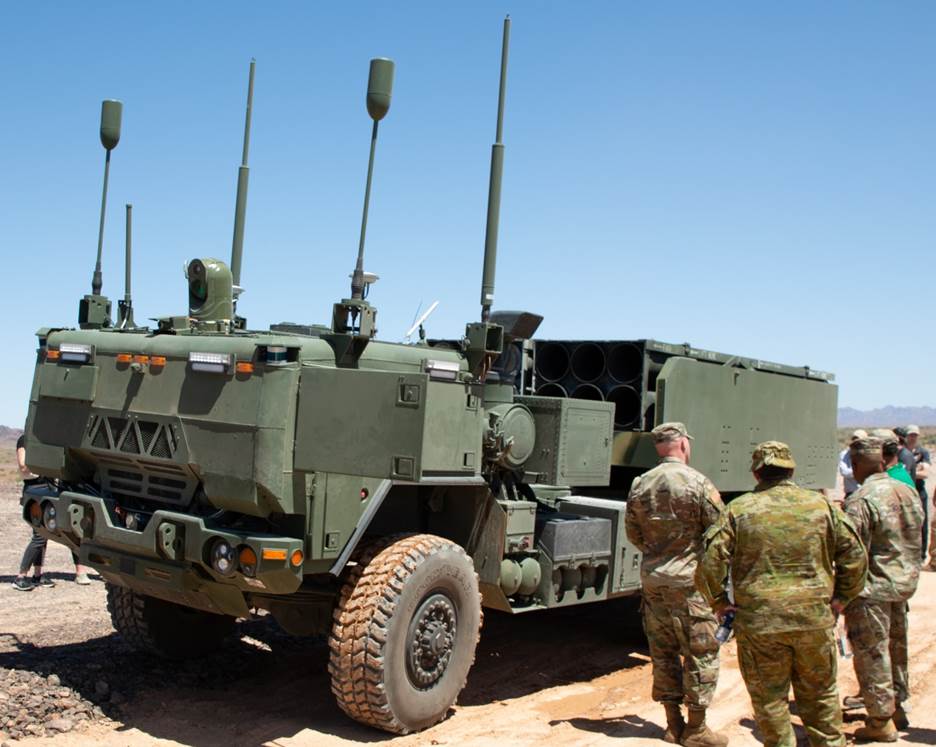
The Army has also expanded the single prototype idea into two distinct versions: a medium variant (CAML-M) for lighter rocket systems and a heavy variant (CAML-H) for much larger, long-range missiles like the Tomahawk and Patriot.
CAML is intended to replace numerous existing Army launchers, including the Typhon Mid-Range Capability, which a Congressional Research Service report suggests is too large to operate on the battlefield and is constrained by its vertical launch set-up.
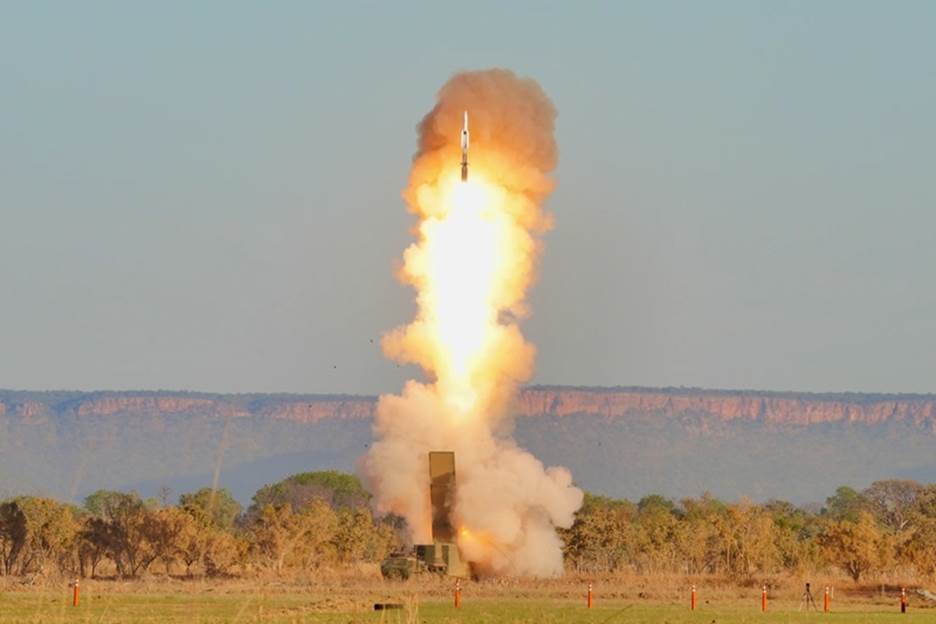
New dynamics
During AUSA 2025 in Washington DC, this reporter spoke to Raytheon, Oshkosh and Forterra about its jointly developed, newly unveiled, optionally crewed and modular DeepFires platform, which operates offensively and defensively using Patriot interceptors besides Tomahawk cruise missiles.
While Raytheon serves as integrator and launcher builder, Oshkosh contributes the FMTV A2 vehicle while Forterra provides the brains of the system using its autonomy stack.
Capabilities in the DeepFires concept would be “leveraged” for a CAML tender, an RTX executive suggested at the time, while disinclined to confirm whether DeepFires itself will be put forward as a solution for the CAML requirement.
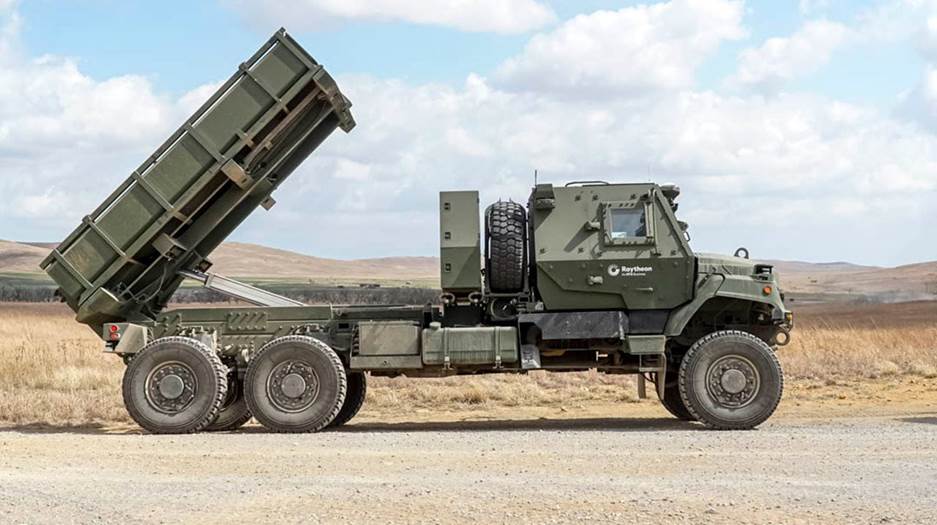
But this could point to fissures as the new procurement protocols, enshrined in the War Department’s Acquisition Transformation Strategy (ATS), issued a month later in November 2025, could strain primes working together on a design.
A Modular Open Systems Approach (MOSA) will separate contractors for CAML components. The ATS describes MOSA as “paramount” for promoting interoperability, competition, technology insertion, performance improvements and reducing life cycle costs. But crucially, it reads, “avoiding vendor lock.”
Raytheon declined to respond to questions from Army Technology related to the DeepFires partnership or CAML since the programme is ongoing.
With GTRI as the weapons integrator, the academic institution will secure intellectual property rights to software in the public domain, which would otherwise be retained by a corporation.
In an Army release dated 31 August 2026, the service stated:
“By decoupling the launcher’s mobility platform from its munitions payloads, the Army intends to assess… technologies intended to increase tactical flexibility, improve survivability and expand commanders’ options across the multi-domain battlefield.”


