

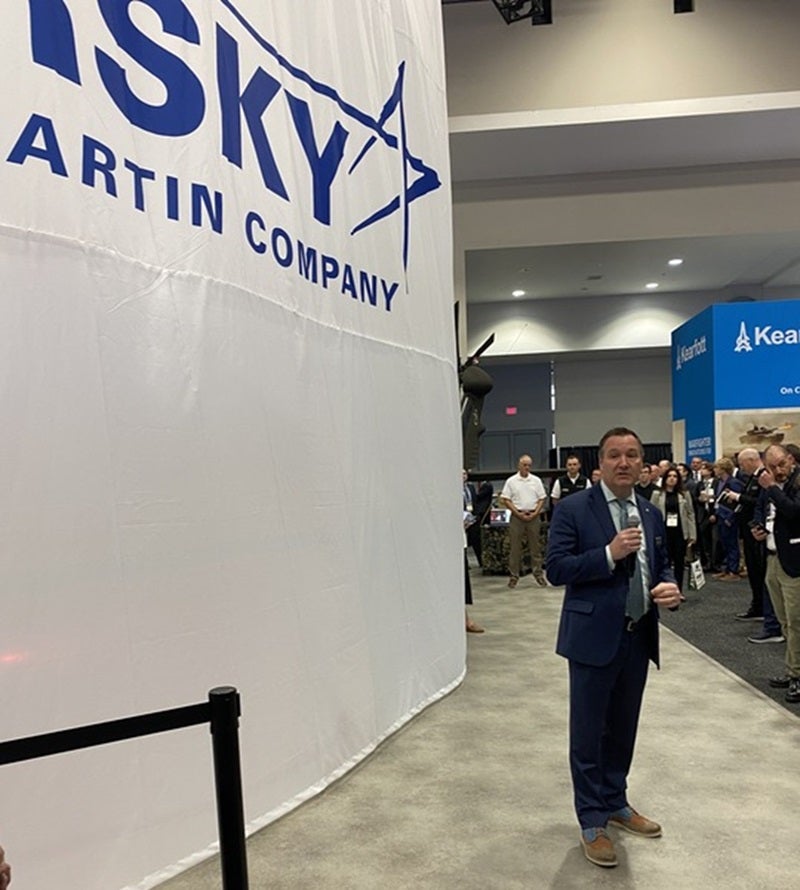
Sikorsky, a Lockheed Martin helicopter builder, kicked off the AUSA exposition in Washington DC by showcasing its new S-70 UAS – also known as the ‘U-Hawk’.



As the name suggests, the fully autonomous uncrewed aerial system (UAS) is derived from a converted UH-60L Black Hawk airframe. The first flight is expected sometime in 2026.
The paltform was brought “concept to concrete in 300 days,” or ten months, noted Rich Benton, vice president and general manager at Sikorsky.“And while it’s a prototype, it’s all built on proven technology.”
Toward full autonomy
The move to fully autonomise the Black Hawk builds on Sikorsky’s optionally crewed concept of the UH-60M at the request of the US Defense Advanced Research Projects Agency back in 2022. This optionally piloted platform now has up to 700 flying hours, said Benton as he outlined the helicopter’s autonomy transition.
Since then, the company continued to test the Matrix autonomy stack across several exercises. Almost exactly a year ago, Sikorsky made headway in demonstrating the concept in a $6m endeavour.
The stack ultimately enables utility helicopters to resupply forward forces with no human pilots or crew on board.
Only four months ago, another Sikorsky executive spoke to Army Technology about the flexibility of the Matrix stack during an exclusive briefing at the Paris Air Show 2025.
“It flies on fixed wing aircraft. You can put it on ground vehicles. You can put it on rotary wing aircraft. It’s something that’s adapted for basically everything. It’s not about the platform anymore. It’s really about what they can carry and what they can do,” the executive said.
“World of possibilities”
The U-Hawk, Benton claimed, is “the world’s first and only air assault helicopter delivering tactical vehicles to the front line.”
Sikorsky offered a demonstration of the autonomous utility rotorcraft at work.
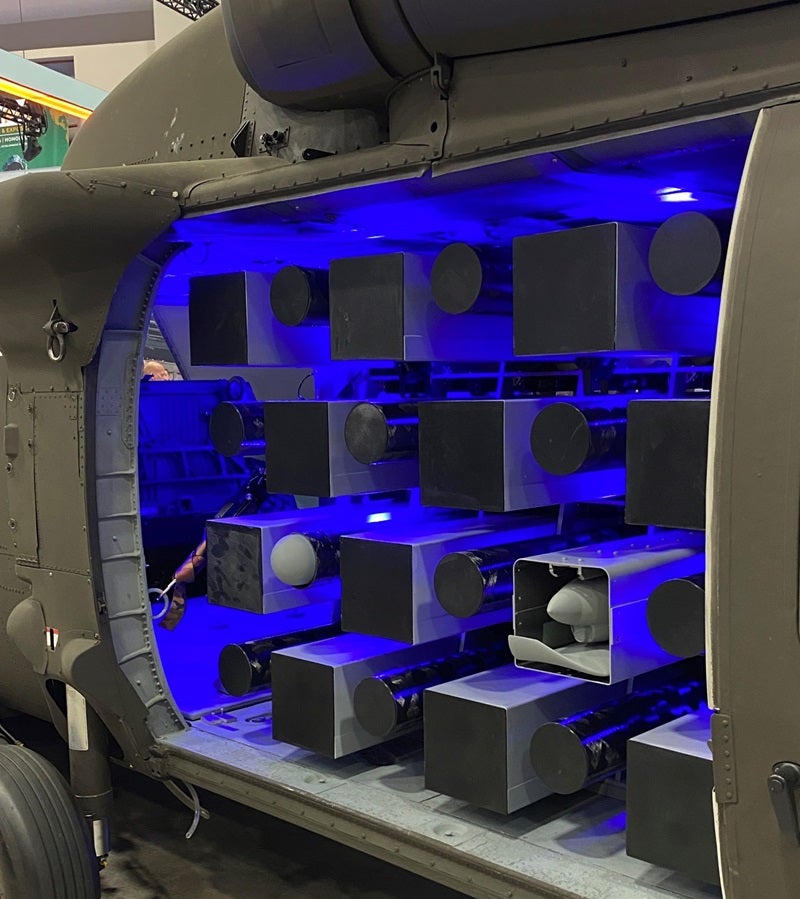
Due to the uncrewed aspect, the U-Hawk has 25% usable cabin space which Benton stated is intended to deliver ammunition, launched effects, and supplies to the front line on a constant, 24-hour basis.
“That ramp opens up a whole world of possibilities. In addition to UGVs, we can put a HIMARS rocket in there, medium sized launch effects, or a hundred small launch effects,” Benton listed.
It must be noted, however, that the military user has still yet adapt to full autonomous capabilities when it comes to culture and doctrine.
There are other rotary autonomy projects too, such as Leonardo’s PROTEUS for Royal Navy anti-submarine warfare missions, but it seems remotely controlled solutions tend to be preferred in the current climate.
Milrem Robotics, for example, fit this mold as its THeMIS UGVs are predominantly remotely controlled in Ukraine, however the company also offer the Milrem Function Integration Kit to reduce the cognitive load of operators if needed, representing a half-step toward autonomy.



