

While European governments modernise and procure more military resources, prompted by direct threats from Russia and the ongoing war in Ukraine, industry is left to swat at the bait of contracts that are just out of reach.


During DSEI 2025 in London on 9 September, Supacat’s head of sales Toby Cox presented such a picture as he delved into the company’s strategy for the Jackal 3 High Mobility Transporter (HMT). In an interview with Army Technology, Cox laid out plans to keep production going with little surety of future UK orders.
“We have at considerable expense… set up the production line. We want to make sure that [this new capacity] continues to get utilised,” he said.
Babcock built a new production facility in Devonport when Supacat initially subcontracted the supplier to deliver 62 out of 70 4×4 Jackal 3 units in February 2024. These vehicles will be delivered before the end of 2025.
Babcock has also begun construction of a further 53 ‘Extenda’ 6×6 Jackal 3 vehicles. When asked about the continued use of the new production lines after this second tranche is delivered in early 2026, only months away, Cox reflected:
“Should that work not carry on, there may be threats to jobs,” he acknowledged, unable to confirm or comment on other potential revenue streams of Jackal 3 suppliers.
Meanwhile, Supacat is known primarily for the Jackal family of vehicles, but besides this the company also build other HMTs, including an armoured closed cab, a lightweight recovery vehicle, a light mobility vehicle, and an all-terrain mobile platform.
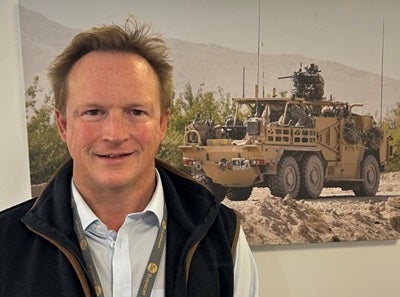
Jackal 3 is the latest iteration in its family of vehicles; the first of these first entered service with the British Army in 2008.
Mark 3 includes improved crew protection and increased gross vehicle mass for greater load carrying. A new suspension system will improve off-road performance, with the vehicle able to be reconfigured from its current 4×4 configuration into a 6×6 variant to increase load carrying capacity.
The Jackal is a “premium vehicle”, Cox described, “and with that comes a price tag, and as a result not every nation can afford the the vehicle,” which he admitted does limit Supacat’s marketplace.
LMP too far out, but there is promise with the Czech deal
Production of Jackal 3 coincides with the British Army’s Land Mobility Programme (LMP) to reduce 16 vehicle types down to five. Cox confirmed Supacat’s interest in the programme, but he suggested that LMP is too far away with nothing left in the short-term.
The LMP team, he said, has just been formed in the UK’s defence procurement arm, Defence Equipment & Support. “It is going to be a number of months or years for that programme to start delivering anything… It’s a long way from now when industry starts getting paid for that sort of work in any volume.”
Army Technology recently assessed the out-of-service dates of British Army vehicles which are fast approaching. It is clear, for example, that the planned 623 Boxers will not replace the in excess of 1,500 vehicles the service will be retiring from service by the end of the decade.
Although the UK is left to meet the pace of industry, this does not detract from Supacat’s prospects abroad. It was widely reported in early September that a government-to-government contract with the Czech Republic for 18 Extenda units is being finalised.
When pressed for a timeline, Cox would only state he anticipates the first vehicles to be delivered in 2026. Besides a six-month lead time to get the supply chain warmed up, he continued to disclose, revealing that the majority of items are already in production.
“We’ve got to do the transition back to a left hand drive vehicle rather than the right hand drive vehicle, and there will be some customer specific changes which need to be made, but the majority of the vehicle will just be able to be put onto the supply chain to follow on behind the UK [order for 53 6×6 vehicles].”
Refurbishing Jackal 1s
There are still alternative solutions to maintain the productivity of the Jackal workforce, Cox considered. One way is to refurbish the first iteration of legacy Jackal vehicles.
While there is no precise number for the original iteration of Jackal units that remain in service, GlobalData intelligence suggests the British Army still operate 431 Jackal 2 vehicles.
“What we are starting to see [are] some discussions around [the] disposal of the Jackal 1 fleet, but that in itself, creates opportunities for us to recondition, remanufacture, refurbish those vehicles and then provide them [as] second life vehicles to other nations, but without that [high level] cost… of a new vehicle,” he stated.
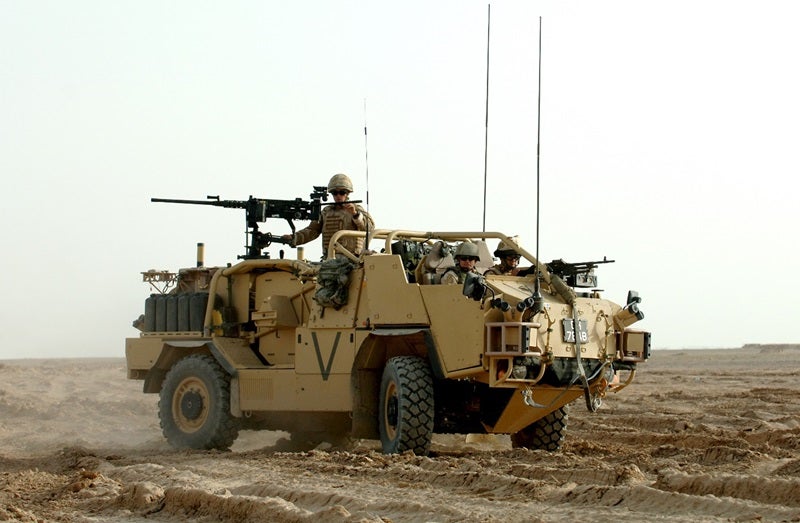
Supacat are in early discussions to that end. “We’ve got a potential lead customer on that,” Cox claimed, without giving up any detail.
“We’ve been having conversations with them. We’ve been having conversations with with the authority about disposal, so we’re just progressing that along slowly to understand the authority’s exact appetite and timeline for this disposal.”
This would span changes from making the platform a left hand drive vehicle, depending on the customer, to updating the seating to the Jackal 2 configuration.


