

Both India and Pakistan have announced conventional missile capability advancements throughout the winter holiday period as the two vie for military dominance in South Asia.


The regional arms race comes off the back of a confrontation involving mutual strikes and aerial clashes in May 2025, when both sides claimed successes in the contested Kashmir region. While drawing considerable interest as two of the world’s nine nuclear powers, the exchange was obscured by disinformation on both sides.
However, the recent weapons tests indicate that the competition is hardly a bilateral one, at least for India, whose missile capabilities indicate a more complicated strategic context as the Modi government balances its arsenal across two fronts, stretching across its northern reaches against Pakistan and China.
India: SLBM
Operation Sindoor, what India refers to as the conflict last year, though short, was one of the most intense military operations, with over 100 combat aircraft on both sides participating in aerial combat. While details are still scarce, GlobalData intelligence suggests the exchange saw a severe erosion in the qualitative military edge with respect to Pakistan.
Therefore, in late December 2025, Indian forces tested a number of missile capabilities including the Pralay quasi ballistic missile and Pinaka long range guided rockets. Foremost among them however was a submarine-launched ballistic missile (SLBM) from Arihant Class SSBNs.
Widespread reporting suggests the service tested the K4 SLBM, which is nuclear capable and has a range of 3,500 kilometres.
Commentary from Chatham House alluded to three delays in the run up to the K4 test, which was said to be due to the increased presence of Chinese research vessels (thought to be equipped with sensors) in the northern and central Indian Ocean at the time.
A total of four Arihant Class nuclear-powered ballistic missile submarines (SSBNs) are planned, two (S2 and S3) are in active service and the remaining two (S4 and S4*) are undergoing sea trials.
S2 and S3 feature four vertical launch system (VLS) tubes and can carry either 12 K-15 (750–1,500 km range) or four K-4 SLBMs. S4 and S4* have double the number of VLS tubes, meaningthey can carry either 24 K-15 or eight K-4 SLBMs.
India also seems to be developing longer range K-5 SLBMs with a range between 5,000 and 8,000 km. Such missiles will equip the upcoming S5-class SSBNs, which are scheduled to be inducted by the mid 2030s.
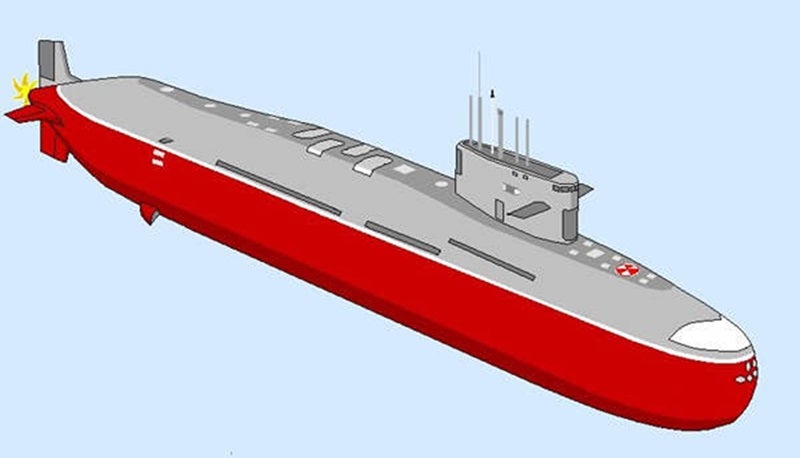
Of course, such a range far exceeds that of its smaller rival Pakistan. Indeed, GlobalData defence analyst Tushar Sudesh Mangure argues “Pakistan is already fully covered by India’s land based nuclear missiles”, as demonstrated by its Agni I at 700 to 900 km and Agni II at 2,000 to 2,500 km, supported by airborne options like Su 30MKI and Rafale. “Sea based missiles instead focus on China” he maintained.
“Due to their shorter range, the K-15 equipped SSBNs have to operate in shallow waters of the Arabian Sea, making them susceptible to detection by Pakistan Navy’s MPAs naval ships. With the K-4 and K-5 SLBMs, Indian Navy’s SSBNs can operate much farther, beyond the range of maritime patrol assets of Pakistan Navy and People’s Liberation Army Navy.
“The Indian Navy will be able to cover the entire Pakistan and most of China by deploying the K-4 equipped SSBNs in the Bay of Bengal. This area is optimal for deployment of SSBN mainly due to deep waters and proximity to Indian Navy’s Eastern Naval Command (Visakhapatnam).”
Pakistan: ALCM
The most recent announcement came from the Pakistan Air Force (PAF), which said it tested the Taimoor Air-Launched Cruise Missile (ALCM) for the first time on 3 January 2026.
Following their ostensible success in supposedly destroying a Rafale fighter jet using Chinese-designed PL-15E missiles last year, the PAF is now looking to build their own sovereign airspace capabilities. The ALCM was built by the state controlled company, Global Industrial and Defence Solutions (GIDS).
Taimoor is a precision-strike cruise missile capable of engaging enemy land and sea targets at a range of 600 kilometres with a conventional warhead. The ALCM flies at very low altitudes, “enabling it to effectively evade hostile air and missile defence systems” the PAF said.
The weapon utilises two wings and three fins during its flight time after launch, in the same way as the Western Storm Shadow counterpart.
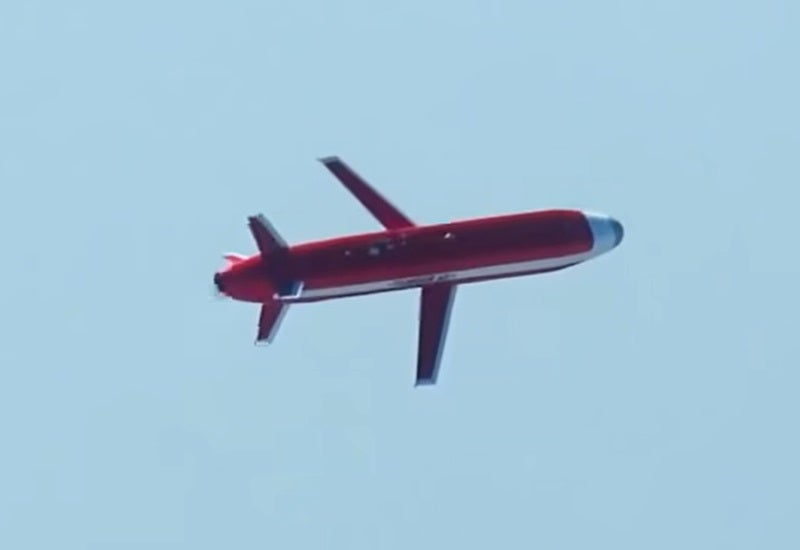
Likewise, Taimoor can also engage targets at sea which is necessary given the considerable Indian naval threat. However Mangure was less optimistic in conversation with this reporter, upon considering the prospective timeline for delivery.
“Even if we consider a highly optimistic four-to-five year timeline for the development and testing of the missile, the operational deployment may not happen before 2028,” he maintained.
“At that point in time, it does not seem to offer any incremental threat to the Indian Navy, which has inducted advanced frigates and destroyers equipped with Barak-8 anti-missile systems, specifically designed to intercept supersonic BrahMos class missiles” such as the CM-302, which is an export variant of Chinese YJ-12 anti-ship/land attack cruise missile.
This speaks to Pakistan’s limited capability compared to India. Doubtless, the PAF will continue to utilise and build off of China’s advanced weapon systems, but in the short to medium term the country will be playing catch-up.
“Pakistan’s Taimoor ALCM is a conventional stand off weapon that marginally improves precision strike options, it does not offset India’s advantages in strike depth, layered air defence, or overall deterrence stability,” judged another GlobalData defence analyst Kandlikar Venkatesh.
It is telling that the Chief of the Air Staff, Air Chief Marshal Zaheer Ahmed Baber Sidhu lauded the fact that Taimoor further “enhances conventional deterrence”, which is important for Pakistan to exercise all possible military means before having to resort to the nuclear option.


