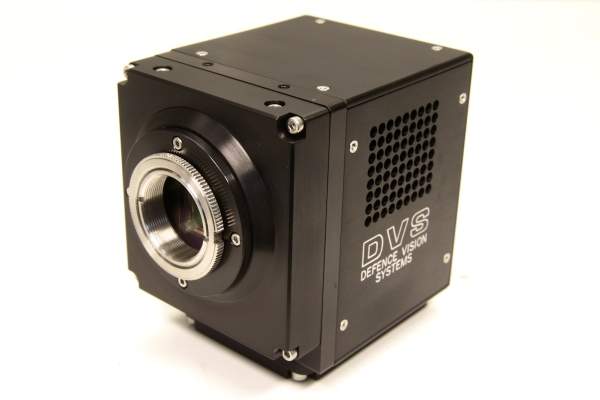
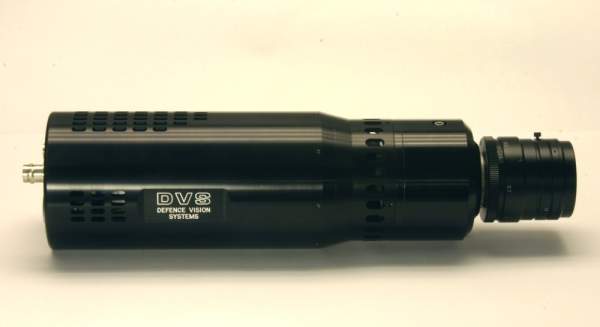
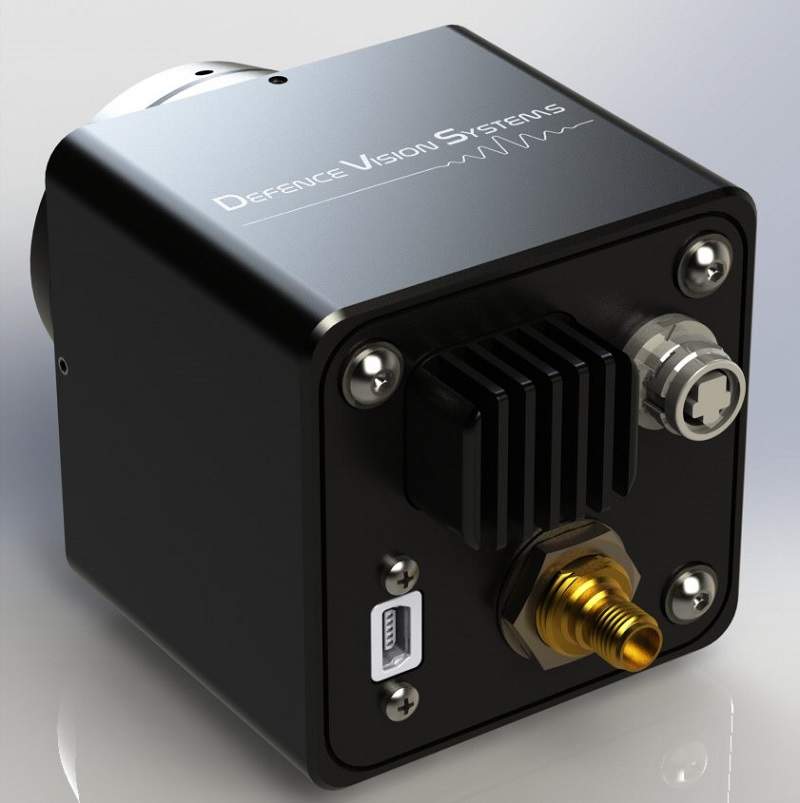
Established in the early 1990s, Defence Vision Systems, (DVS) has expanded greatly since its inception when it began selling small, low-signal input cameras of high-quality, which it designed, developed and manufactured on-site to the defence sector.
A group of 30 dedicated scientists and engineers with an in-depth knowledge and experience in the field of cameras in the defence market, work for Defence Vision Systems in a secluded woodland area in Robertsbridge, East Sussex.
Ruggedised military-standard cameras
The DVS site has modern facilities, including vibration testing equipment and environmental ovens. Defence Vision Systems offers a comprehensive range of standard cameras and a highly successful custom service.
Low-maintenance cameras and camera systems
The company has created a family of low-light cameras and camera systems applicable to those projects that require COTS (commercial-off-the-shelf) devices.
Both the COTS and customer-specific systems are designed in accordance with either the applicable defence standards or customer-specified conditions for shock, vibration and temperature.
Military surveillance applications include:
- Armoured ground and air vehicles
- Airborne and ground gimbals
- Ground force surveillance and target ranging
- Helmet-mounted
- Border surveillance
- MULTISPECTRAL solutions available for all above applications
MULTISPECTRAL camera range for military use
The Defence Vision Systems range now includes:
- Intensified CCD cameras for surveillance applications, offering fast-gated intensified cameras for use with laser illuminators
- SCMOS cameras, both monochrome and colour, which provide a wide range of selectable functions
- Current Defence Vision Systems developments include SWIR (InGaAs), Intensified CCD, and a 360° panoramic viewing system
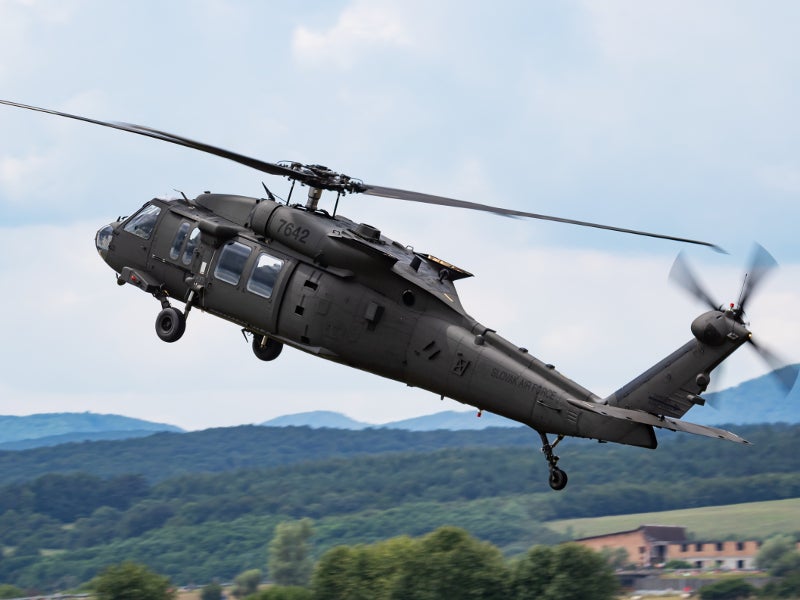
DVS’s night vision and surveillance system applications have been installed in armoured and airborne vehicles supported by defence forces in Europe and North America.
Defence Vision Systems maintains a constant development overview to ensure all their products remain at the forefront for performance, reliability and value. Here is a quick overview of the development:
- The high-resolution intensified camera using third-generation intensifier coupled to a 1.4MP sensor. When used in conjunction with a suitable auto iris lens provides the optimum image from full sunlight down to starlight, it has been available since June this year
- The 2MP sCMOS camera, operating from full Sunlight down to clear Starlight, available now
- The 4MP sCMOS camera, providing very high-resolution images from full Sunlight down to clear starlight, available mid-2013
- SWIR cameras, both standard and high-resolution for use with 1064nm and 1550nm lasers and for general surveillance, available now
- Laser ranging system, working at 1550nm, providing the user with the ability to not only obtain the range to target, but to actually see the laser spot on the target, available March 2013
- Laser illuminator system, working at 1550nm, providing the user with the ability to see the illuminated area on the target, available now
- Laser spotter providing the user with the ability to see lasers working in the wavelength of 1064nm and 1550nm, available mid-2013
Automatic plug-and-play cameras
All Defence Vision Systems cameras are designed to be fully automatic, plug-and-play, providing the optimum image over the full 24-hour period.
Choose Defence Vision Systems for high-quality cameras and camera systems at competitive prices.
DVS driving system
The DVS driving system is a bolt-on upgrade to existing or new vehicles and is simple to fit with the sensor package mounted onto the outside of the vehicle. The only item penetrating the armour is the cable carrying the power and images, with the driver viewing the image via a pair of head-mounted spectacles. The system operates over the range of 900nm to 1,700nm, provides a wide field of view and, according to the system specified, may be from 120° up to 180°. The field of view is distortion-free even at the edges of the image.
The 120° field of view system consists of two short wave infrared (SWIR) cameras with the images edged matched to provide a continuous distortion-free image. The imager is in real time and allows the vehicle to be driven at the speeds compatible with the terrain. Wider fields of view are available using three or four cameras. A four camera system provides a full 180° of vision thus also helping with perimeter surveillance.
The use of SWIR provides a full 24hr operation from full sun to starlight. In situations where the scene illumination falls below starlight there are two 1,550nm head lights, fitted in place of the two IR headlamps. These provide illumination over the field of view up to a range in excess of 200m.The 1,550nm wavelength at which these operate means they are invisible to existing battle field sensors, such as standard direct view systems, image intensified goggles or similar, MWIR and LWIR. Therefore using the 1,550nm head lights still enables the vehicle to remain covert.