
The US Army Research Laboratory (ARL) scientists have developed a novel lab scale test methodology for comprehensive assessment of personal protection equipment (PPE) to develop improved troop pelvic protection systems.
Developed in collaboration with the Program Executive Office Soldier (PEO-S), Natick Soldier Research, Development and Engineering Center, Joint IED Defeat Organization and the UK Ministry of Defence, the tool will allow validation of PPEs against a broad spectrum of secondary debris threats.
Go deeper with GlobalData


Discover B2B Marketing That Performs
Combine business intelligence and editorial excellence to reach engaged professionals across 36 leading media platforms.
Secondary debris, which represents soil particulate from flying rocks and bomb fragments ejected after buried improvised explosive device (IED) detonation, is capable of causing severe contamination and wounds debridement, and potentially irreversible medical damage to soft tissue.
ARL Weapons and Materials Research Directorate mechanical engineer Tyrone Jones said the tool had been designed to quantify debris-resistant performance of combat fabrics, including Kevlar and jersey knitted silk, to approve their integration into existing PPE within a highly controlled environment.
"The scientists will be able to understand and efficiently identify the penetration mechanisms of the secondary debris into a prospect material," Jones added.
ARL first started the development in 2010 for efficient reproduction of soil conditions from buried IEDs, also called surrogate soils, to support development of protection solutions to eventually increase troops’ survivability.

US Tariffs are shifting - will you react or anticipate?
Don’t let policy changes catch you off guard. Stay proactive with real-time data and expert analysis.
By GlobalDataSecondary debris testing include a comprehensive analysis of live-fire blast data and soil mechanics, followed by sand-cannon tests, involving the surrogate soil load being fired using a 25.4mm smooth-bore barrel gun into a ballistic gelatin block, simulating a body surrogate.
Candidate PPEs are placed in front of the gelatin block, and the amount of soil cloud retained by it, following passage through the materials, and the depth of penetration provides measure of damage that can be caused by secondary debris.
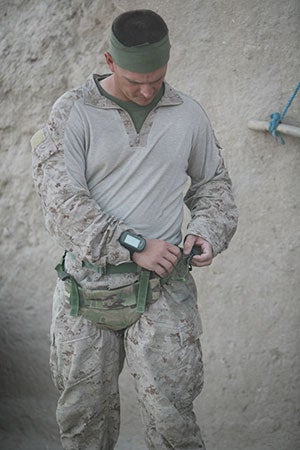
The tool has already helped ARL during testing of NSRDC-provided test materials, and its subsequent improvement into ballistic boxer shorts, dubbed the Pelvic Protection System, in 2011 to prevent groin injuries, and is also expected to support future army ballistic research programmes.
Image: A US Marine adjusts his Tier 2 Pelvic Protection System as he readies for a patrol in Helmand province, Afghanistan. Photo: courtesy of Cpl Christopher M Paulton.



