Winning the First Fight: Elevated Sensor Infrastructure for the Modern Battlefield
The character of warfare is undergoing rapid and profound change. Observations from
ongoing conflicts in Eastern Europe and the Middle East, Combat Training Centers, and
U.S. Army modernization efforts reveal a battlefield dominated by persistent observation,
unmanned systems, electronic warfare, and expanding data requirements. Traditional
assumptions regarding concealment, command post survivability, reconnaissance, and
communications are increasingly obsolete.
Future Army formations must achieve information dominance by seeing first,
understanding first, and acting first. Elevated sensor infrastructure—capable of supporting
surveillance, counter-UAS, electronic warfare, and communications—provides a decisive
advantage in this environment.
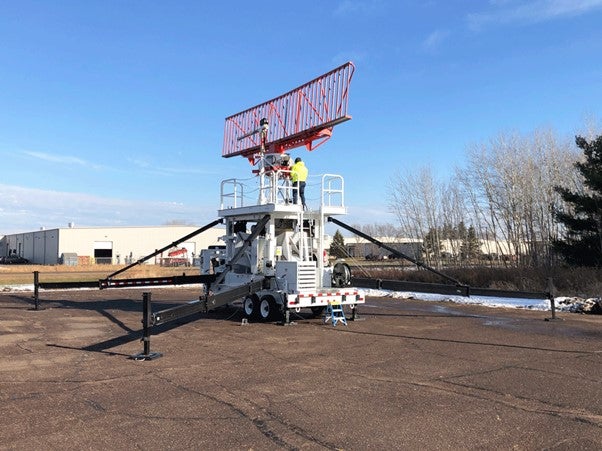
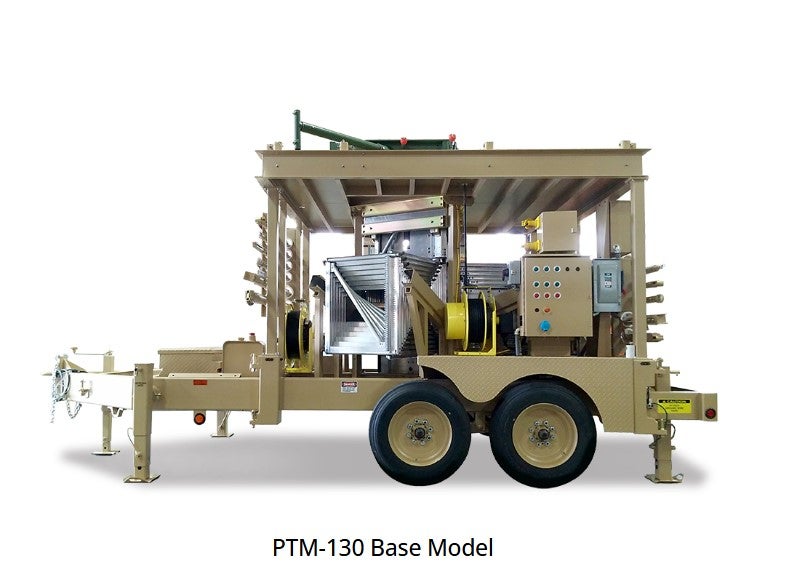
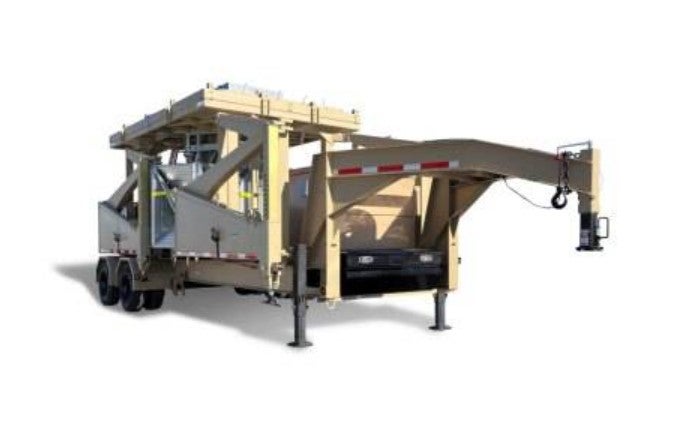
Tower Solutions delivers rapidly deployable, high-capacity elevated platforms that enhance
sensing, communications, and survivability across geographically dislocated formations.
These systems directly support emerging mission requirements for reconnaissance,
security, counter-UAS, electromagnetic spectrum operations, dislocated command and
control, and human-machine teaming.
Background
Modern conflicts demonstrate that terrain, distance, and concealment no longer guarantee
protection. Current conflicts consistently show entrenched troops, hidden armor, and
dispersed units being detected by cheap UAVs and struck with precision fires. In Ukraine,
trenches and forest positions are routinely found by quadcopters and hit within minutes; in
Nagorno-Karabakh, armored vehicles concealed in mountain valleys were still located and
destroyed by Azerbaijani drones; in Syria, rebel positions buried in dense urban terrain were
identified by persistent UAV surveillance and targeted with guided munitions; in Gaza,
fighters moving through rubble or tunnels are monitored by overhead drones and ground
sensors; and even ships are tracked and targeted with precision missiles. These cases
show how sensors, drones, and precision fires have transformed the battlefield into a
continuously observed and contested environment during both Large Scale Combat
Operations (LSCO) and Counter Insurgency (COIN).
Problem Statement
Reconnaissance units, command posts, and communications networks face increasing
vulnerability due to persistent surveillance, electronic detection, and long-range fires. The
Army requires new methods to achieve persistent situational awareness while maintaining
mobility and survivability.
Purpose and Scope
This white paper outlines the operational requirement for elevated sensor infrastructure and describes how Tower Solutions systems enable reconnaissance, security, counter-UAS, electromagnetic spectrum operations, and distributed mission command.
Discussion
The Modern Battlefield Problem. Recent operational observations highlight several defining
characteristics of contemporary conflict:
• Continuous drone surveillance
• Long-range sensing
• Electronic warfare detection
• Automated target recognition
• Rapid precision fires
These conditions strain traditional reconnaissance and command post operations. The emerging operational requirement is persistent situational awareness, the ability to detect, identify, and understand threats before the enemy can act.
1. The Requirement for Elevated Sensors
Most military sensors are limited by line-of-sight. Elevation dramatically improves detection range, visibility within a defilade, communications coverage, and target tracking. Many legacy elevation systems suffer from complex deployment, low stability, limited payload capacity, slow setup times, and poor mobility Tower Solutions systems overcome these limitations through rapid deployment, high
stability, and substantial payload capacity.
2. Counter-UAS and Airspace Dominance
Counter-UAS has become a foundational requirement for all formations. Effective
C-UAS requires layered capabilities:
a. Detection
• Radar
• RF sensing
• Passive detection
b. Identification
• EO/IR confirmation
• Target tracking
c. Engagement
• Kinetic systems
• Electronic attack
Elevation enhances each layer. Tower Solutions towers provide stable, mobile platforms capable of supporting integrated C-UAS payloads.
3. Distributed Command Posts and Distributed Networks
Modern command posts must be smaller, more mobile, and consistently receive accurate intelligence and reconnaissance to remain survivable. Dislocated command and control nodes require resilient communications networks. Elevated platforms enable:
• Tactical radio relay
• Long range surveillance
• Counter-reconnaissance
• SATCOM extension
• Early Warning
• LTE/private cellular networks
• Mesh networking
• Data transport infrastructure
Elevation increases network reach while reducing reliance on fixed infrastructure.
4. Human-Machine Teaming and Autonomous Systems
Future Army concepts rely heavily on unmanned and autonomous systems. These capabilities require robust sensing and communications networks.
Elevated platforms serve as critical nodes for:
• Autonomous sensor gateways
• Drone operations
• Robotic reconnaissance
• Distributed ISR architectures
Tower Solutions provides the physical widget enabling human-machine teaming at scale.
5. Supporting Electromagnetic Spectrum Operations
Electronic warfare is again a decisive factor in large-scale combat. Elevation enhances:
• Electromagnetic support
• Electronic attack
• Spectrum awareness
• Signature management
Tower Solutions systems support EW payloads while maintaining mobility and rapid deployment.
6. Designed for Expeditionary Operations
Tower Solutions self-erecting towers provide push-button rapid deployment in minutes, high payload capacity (radar, EO/IR, EW, communications), minimal personnel requirements, reduced logistics footprint, and proven reliability.
These attributes support dispersed operations in contested environments.
Recommendations
To achieve information dominance and enhance survivability, Army formations should:
• Integrate elevated sensor platforms into reconnaissance, security, and mission
command architectures.
• Employ elevated infrastructure as a core component of C-UAS, EW, and
communications networks.
• Field mobile, rapidly deployable towers to support distributed command posts and
autonomous systems.
• Expand experimentation with elevated platforms in Combat Training Centers and
modernization initiatives.
• Develop multi-domain sensor networks leveraging elevation to maximize coverage
and reduce vulnerability.
Conclusion
Modern conflict demands persistent awareness, rapid decision-making, and survivable
infrastructure. Elevated sensor platforms provide a decisive advantage by extending
detection, enhancing communications, supporting counter-UAS operations, and enabling
human-machine teaming.
Tower Solutions delivers rapidly deployable, high-capacity elevated systems that help
formations see first, understand first, and act first. On the modern battlefield, the force
that wins the first fight sets the conditions for victory. Elevated infrastructure makes that
possible.
References
• U.S. Army Multi-Domain Operations Concept
• Observations from Combat Training Centers (CTCs)
• Center for Army Lessons Learned
• Contemporary conflict reporting (Ukraine, Israel, Middle East