

Standardised HF Waveforms are Important, but not Sufficient
The issue at hand.
As allied militaries look to implement new applications and functionality in their deployments, they will run into compatibility issues with waveform and standards support across their radio networks.
HF vendors have been good about following waveform standards. Historically, MIL-STD-188-110B and STANAG 4285, moving onto newer ones, in particular STANAG 4539 and STANAG 5069 (equivalent to MIL-STD-188-110C/D). The issue comes from older radios not supporting the newer waveforms and is likely going to disproportionately affect Army and Airborne systems rather than Naval systems. This is due to the differences in standard network requirements.
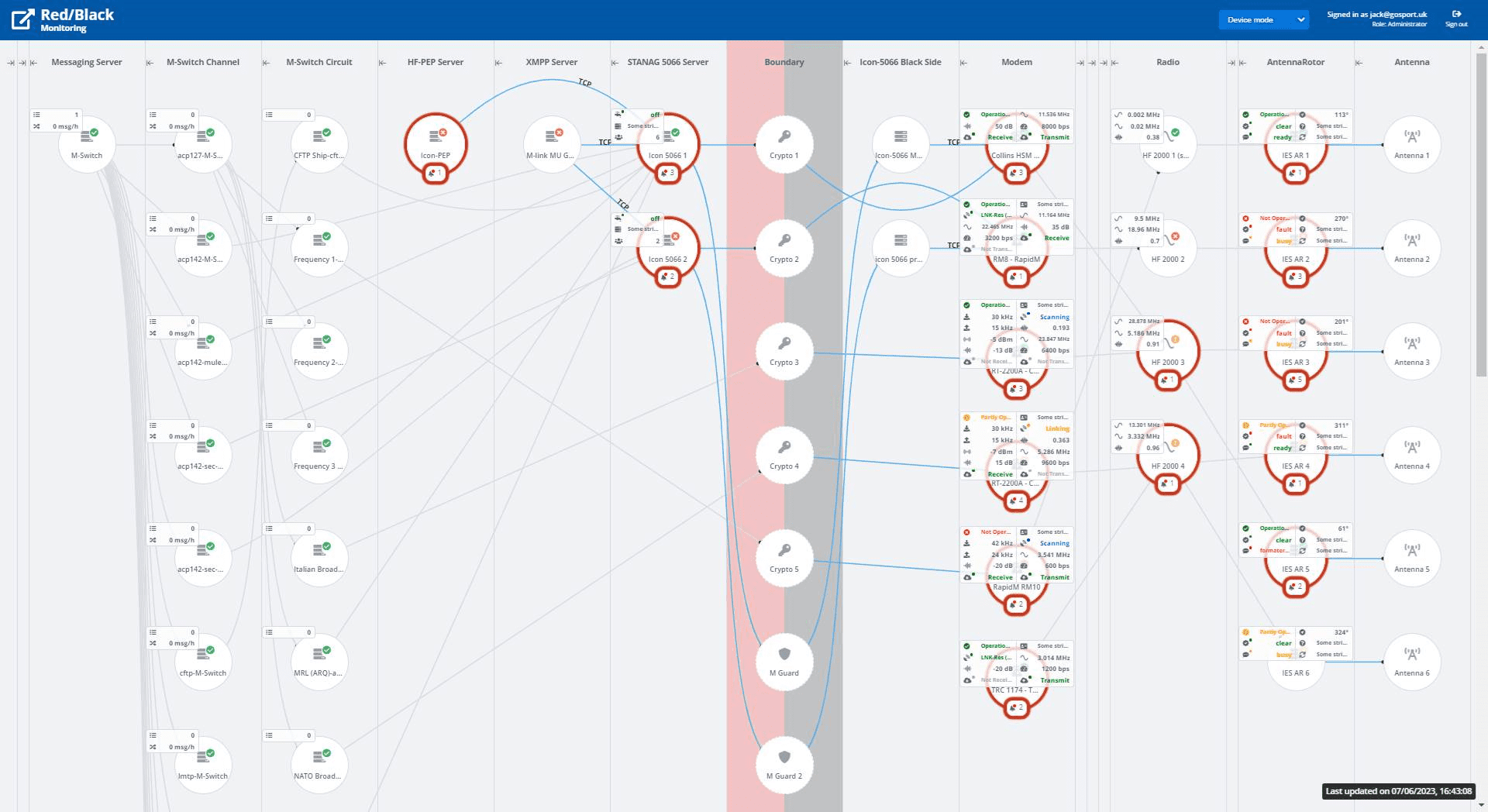
Naval systems have widely deployed STANAG 5066, which is the standard HF link layer over the modem. This is used in conjunction with stream crypto boxes. Initially, this was to support ACP 127 military messaging, but it gives a clean migration to the new NATO BRE1TA applications and all the things Isode supports. You can read more about this here.
Once you have STANAG 5066, you are open to a wide range of applications.
Many army and airborne systems have not tracked 5066, which means they are either voice-only or use data applications with proprietary stacks. This prevents application interoperability and is the root cause of the problem we’re running into.