

- Sweden have bought and tested two copies of Russian drones
- MACE is equivalent to the Russian Lancet, while STORK shares features of the Orlan-10 and Supercam S350
- Ukrainian troops tested both drones at a new UAS testing facility in Karlsborg
In a unique move to get inside the head of the adversary, Sweden have purchased copies of Russian drones from the Ukrainian drone builder UAC to replicate and understand the tribulations of the unceasing Russian drone tactics.
“We have purchased two types of drones that correspond to Russian capabilities,” confirmed Anders Hedman, head of the FMV’s test and evaluation ground area.

Discover B2B Marketing That Performs
Combine business intelligence and editorial excellence to reach engaged professionals across 36 leading media platforms.
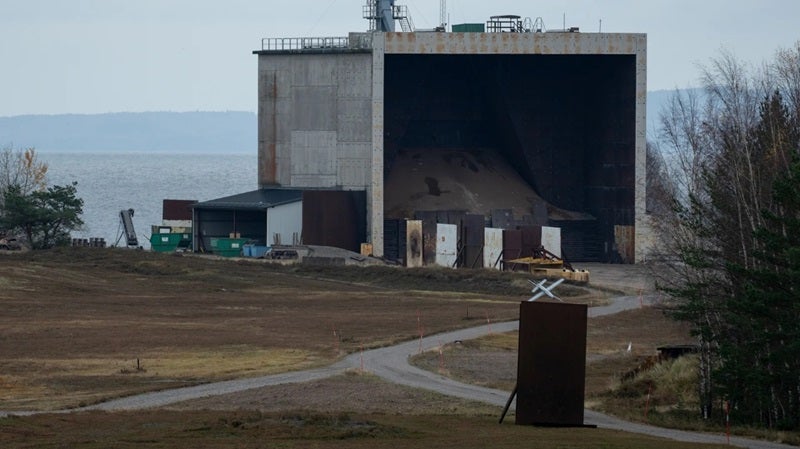
It was at the FMV’s newly established UAS testing facility in Karlsborg, which lies on the shore of lake Vättern, where Ukrainian troops taught their Swedish counterparts how to fly the system on the ground, but also in some limited cases, in a maritime space.
“By purchasing copies of Russian systems, we can train against the threat we ourselves risk facing,” argued Michael Ledenius, head of the technical unit at FMV for testing and evaluating land systems.
Loitering munitions
The MACE one-way attack drone is a dual X-shaped wing system that is launched from a pneumatic catapult and powered by an electric motor. The uncrewed aerial system (UAS) has a runtime of up to 60 minutes and has a cruising speed of 100 kilometres per hour, but with a top speed of 300kmph.
It appears the loitering munition shares the same features as Russia’s ZALA Lancet system.
Experts from the London think tank, the Royal United Services Institute (RUSI), found that the destruction of a target might be reasonably accomplished by launching two or three Lancet-3M systems per target from different axes.
While there is no cost breakdown available for the MACE system, the RUSI report indicates that the cost of a single Lance-3M is around $30,000 compared to just one air-to-ground munition, such as the AGM-179 Joint Air-to-Ground Missile, which can cost up to $319,000 per missile.
With their 35km range, Lancets are known to have been used as part of Russia’s hybrid salvos comprising various missile and drone types against Ukrainian infrastructure to compensate for their slow territorial gains. Now, Ukraine is realising some success in kind by targeting Russian oil fields by the same means.
It is said that Ukrainian long-range drone attacks have struck oil refineries as far afield as Ryazan, Saratov, and Volgograd in the west of the country and even Tyumen in Siberia, as well as fuel depots, pumping stations, and other logistical hubs.
ISR drones
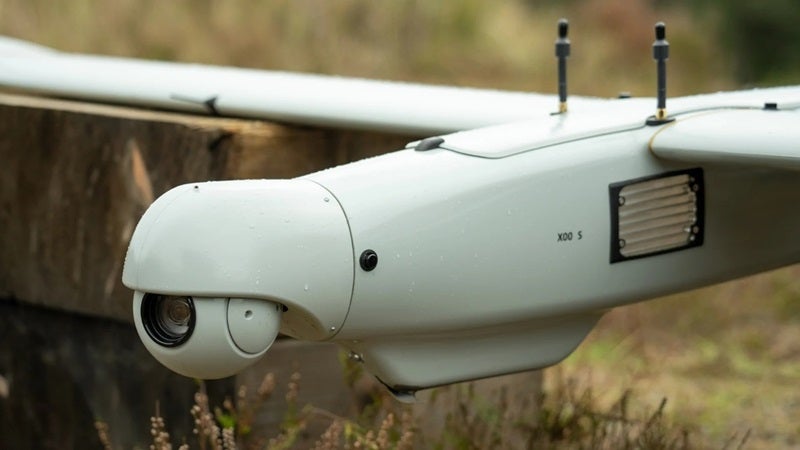
The second system, manufactured by the same company, is the STORK LR reconnaissance drone.
Among other uses, the electric-powered, fixed-wing system is used to map terrain and adjust artillery fire much like Russia’s Orlan-10 or Supercam S350 systems used for intelligence, surveillance and reconnaissance (ISR).
Tactical strike and reconnaissance drones pose a deadly threat in the so-called ‘kill zone’ as the systems map movements below across the frontline.
But interestingly, as Russian patrol drones are likely deterred from conducting ISR by Ukraine’s short range air defences, they have been repurposed in some recent cases this year.
In August 2025, the Institute for the Study of War reported that Ukrainian forces shot down an Orlan drone that functioned as a mothership and carried two first-person-view UAS for the first time. Orlan-10s have, therefore, allowed Russia to significantly increase the range of its drone strikes in the near rear.


