

The US has opened an ‘Aegis Ashore’ site, a ballistic missile interceptor facility, strategically located in northern Poland overlooking the continent and the Baltic Sea.
It is the second base of its kind within a wider Nato air defence network. Its sister opened in 2016 and is situated in the town of Deveselu, southern Romania, approximately 1,880 kilometres away.
Go deeper with GlobalData


Discover B2B Marketing That Performs
Combine business intelligence and editorial excellence to reach engaged professionals across 36 leading media platforms.
Nato Ballistic Missile Defence (BMD) manages this so-called “missile shield” network that protects European populations, territory and forces against its namesake threat. First conceived at the Lisbon Summit in 2010, the BMD shield also comprises US Navy destroyers out of Spain and early warning radar in Kurecik, South Eastern Türkiye.
According to Nato, Aegis Ashore are purely defensive; around 200 military personnel are stationed at the two interceptor sites in Poland and Romania.
The missile defence site in Poland can defend against short-to-intermediate range ballistic missiles. Aegis Ashore is a key component of Nato’s BMD “Enhanced Operational Capability” declared by allied Heads of State and Government at the Washington Summit.
Responding to Russian ballistic missile strikes
“This is an important step for transatlantic security and Nato’s ability to defend against the growing threat of ballistic missiles,” Nato Secretary General Jens Stoltenberg stated. “Ballistic missiles have been widely used in conflicts in Ukraine and the Middle East.”
Ukraine is facing an enduring problem when it comes to air defence. A top priority for member states attending the present Nato summit in Washington will be to increase the number of missile defence systems needed for Ukraine to secure its people, infrastructure and territory from indiscrimate Russian strikes, such as the one against a children’s hospital in Kyiv on 9 July 2024.
“As a defensive alliance we cannot ignore that threat. Missile defence is an essential element for Nato’s core task of collective defence”, Stoltenberg added.
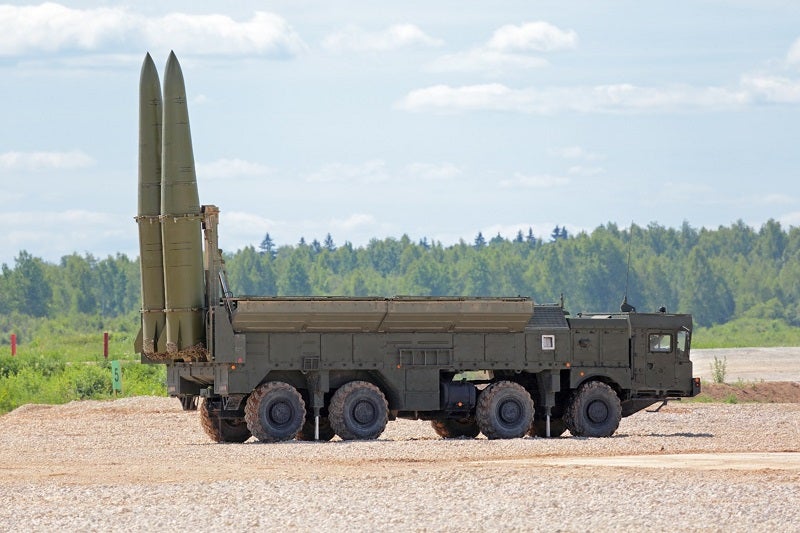
GlobalData intelligence also indicates that Europe will witness the highest cumulative spending on missiles and missile defence in the next decade. The Eastern European conflict has led to increased regional security concerns, and highlighted the need for seamless coordination and joint efforts in defending against ballistic missile threats.
This is symptomatic of Russia’s burgeoning war machine, which has begun to source a range of weapons, particularly missiles, from similarly nefarious states, such as North Korea, that flout international law.
In April, Russia vetoed a draft UN Security Council resolution to renew the mandate to uphold the global non-proliferation regime. This decision will allow Russia to breach and evade UN sanctions to get arms and ammunition from North Korea for its illegal invasion of Ukraine.
Such a partnership will push Nato to bolster continental airspace further. The opening of the Polish Aegis Ashore has finally come after it was originally anticipated to open in 2018, according to a fact sheet from the military alliance back in 2016.


