

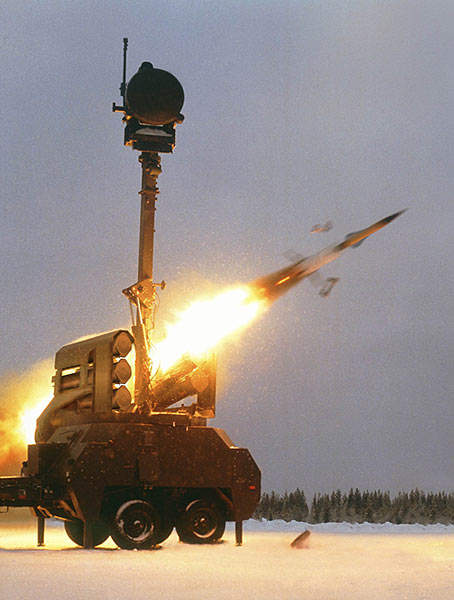
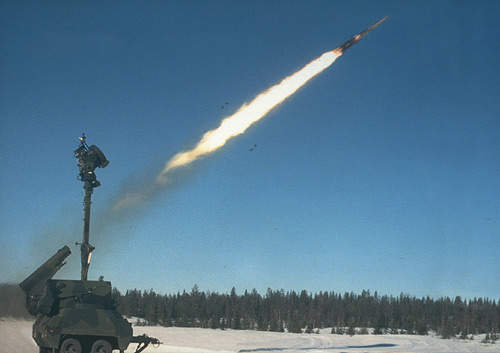

Saab Bofors Dynamics’ Bamse all-weather, all-target, air defence missile system is deployed to protect fixed and mobile assets. It can be used against a range of threats including fixed and rotary-wing aircraft, unmanned aircraft, stand-off missiles, cruise and anti-radiation missiles and guided bombs.
Recommended Buyers Guides
Bamse is effective against very small and very fast targets such as air-to-surface attack missiles. The system has all-weather capability and a target range that exceeds the stand-off distance of electro-optically controlled weapons. The system provides a target range of more than 15km and coverage to an altitude up to 15,000m.
Bamse air defence missile system development
Bofors (later to become Saab Bofors) and Ericsson (now Saab) Microwave Systems completed the project definition phase in 1991 and the engineering development programme began in 1992.
In 1993 the Swedish Government placed a contract on the then Bofors Missiles and Ericsson to carry out the full-scale development of the Bamse system.
The Bamse system has successfully completed a series of performance trials carried out by the Swedish Defence Forces, Forsvarets Materielverk (FMV, the Swedish Defence Materiel Administration) and the FOA Research Institute of the Swedish National Defence (FOA).
In 2000, the Swedish Defence Materiel Administration awarded Saab a production contract for the system. BAMSE demonstrator system entered service with the Swedish armed forces in 2005.
In May 2008, the first production system was delivered and the Swedish Armed Forces trained their first unit and brought the system into operation in late 2008.
Bamse air defence missile system firing battery
The Bamse firing battery includes a surveillance coordination centre and three missile control centres. The missile control centres are towed to position by a cross-country vehicle, which also carries a store of missiles for reloading. The system can be deployed and prepared for firing in less than ten minutes.
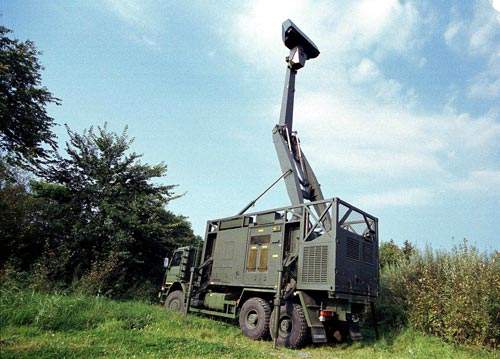
Surveillance control centre of the all-weather, all-target missile system
The surveillance control centre is installed in a truck-mounted 20ft standard container, which is armoured to provide protection against fragmentation and in nuclear, biological and chemical warfare environments.
The surveillance control centre is equipped with the Ericsson Microwave Systems Giraffe AMB (agile multi-beam) 3D surveillance radar with a 12m-high mast which operates at C-band (5.40GHz to 5.90GHz).
The Giraffe AMB uses a ‘stacked beam’ antenna arrangement, with one wide beam for transmission and multiple narrow beams for simultaneous reception. This provides a target update rate of one a second, with elevation coverage of more than 70°. The IFF transmit and receive units are mounted on the radar antenna.
The surveillance control centre, operated by a crew of one or two, carries out real-time threat evaluation and combat coordination with target acquisition, identification, tracking and prioritisation.
The surveillance control centre automatically selects the optimum missile control centre to engage the target and hands over the target data.
One surveillance coordination centre can coordinate up to four missile control centres. The distance between the surveillance control centre and the missile control centres is typically 10km, and between missiles control centres, 20km.
Both the missile control centre and the surveillance coordination centre are equipped with embedded simulators allowing training and mission planning using a large library of simulation scenarios.
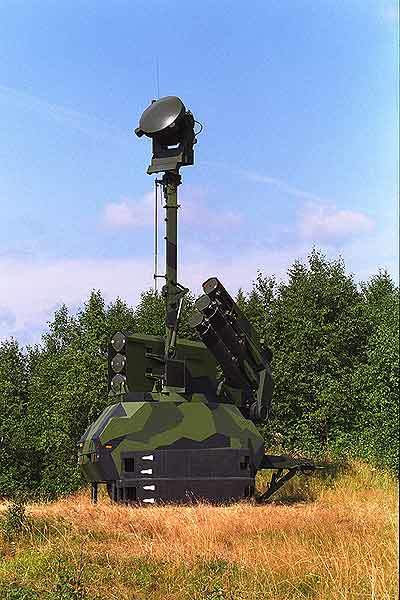
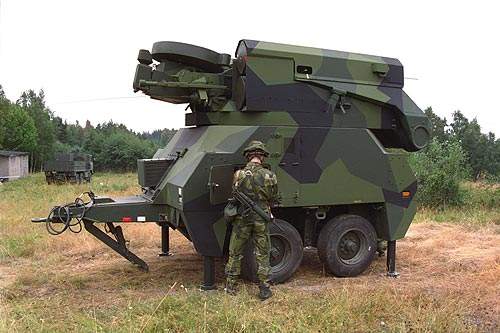
Missile control centre of Saab Bofors Dynamics’ Bamse system
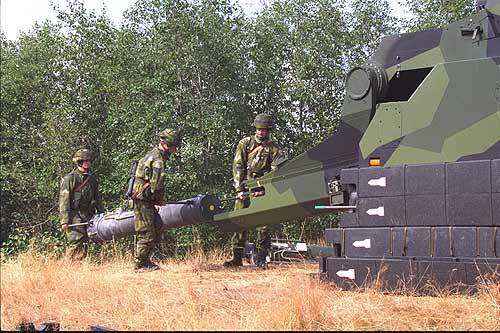
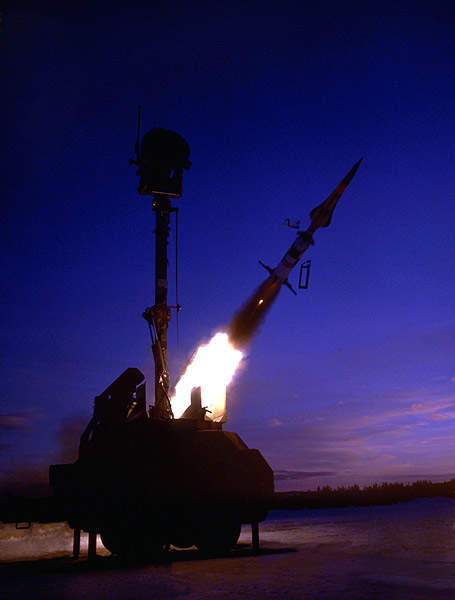
The missile launcher with six ready-to-fire missiles is installed on the roof of the missile control centre. The centre, which is fragment-protected and nuclear, biological and chemical warfare (NBC) protected, houses two computer stations and is operated by one or two crew.
The missile control centres are linked by cable or by radio data communications to the surveillance control centre. The radio data link has a maximum range of 15km. For the Swedish Armed Forces the BAMSE uses the TS 9000 tactical radio net.
The missile control centre initiates the target engagement sequence either autonomously or on receipt of a signal from the surveillance control centre.
The missile control centre is equipped with a variant of the K-band 34GHz to 35GHz Eagle fire control radar developed by Ericsson, a suite of weather sensors, an information friend or foe interrogator and a thermal imager.
The sensors are mounted on a mast that can be raised to eight metres in height. The elevation arm of the mast is installed between the missile launch tubes to protect the radar against obstacles while the vehicle is in transit.
The ability of the sensors to look over obstacles near the deployment site gives the missile control centre improved capability to acquire and track low flying hostile targets. After firing the launcher is reloaded in less than four minutes. The missile control centre is also used to carry out threat evaluation and engagement planning.
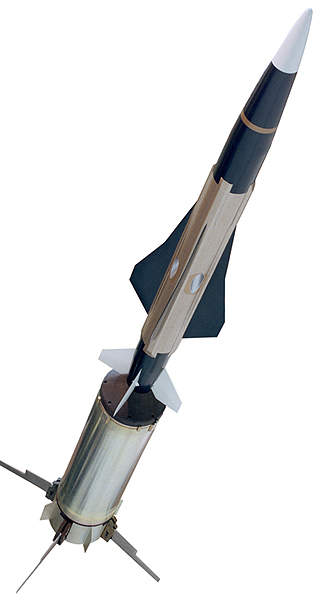
Missiles used by the Swedish air defence system
The radar command-to-line-of-sight (CLOS) missile uses solid propellant booster and sustainer rocket motors, which give the missile high acceleration and high maintained velocity.
Nammo supplies the sustainer rocket motor and components for the booster motor. The missile has a range of more than 15km and covers altitudes to 15,000m.
The missile has high manoeuvrability, even at the outer range limit. The fragmentation and shaped charge warhead is equipped with a proximity fuse and an impact fuse.
The Global Missiles & Missile Defence Systems Market 2011-2021
This project forms part of our recent analysis and forecasts of the global Missiles & Missile Defence Systems market available from our business information platform Strategic Defence Intelligence. For more information click here or contact us: EMEA: +44 20 7936 6783; Americas: +1 415 439 4914; Asia Pacific: +61 2 9947 9709 or via email.
