

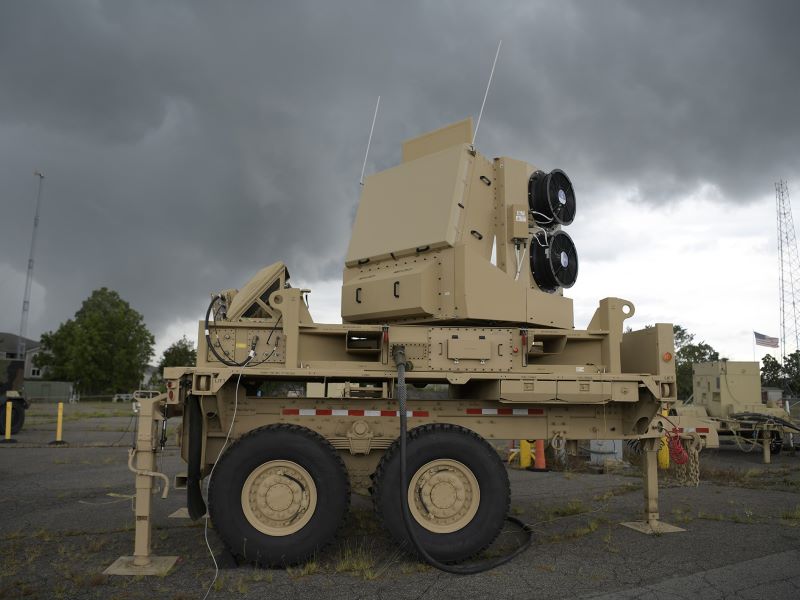
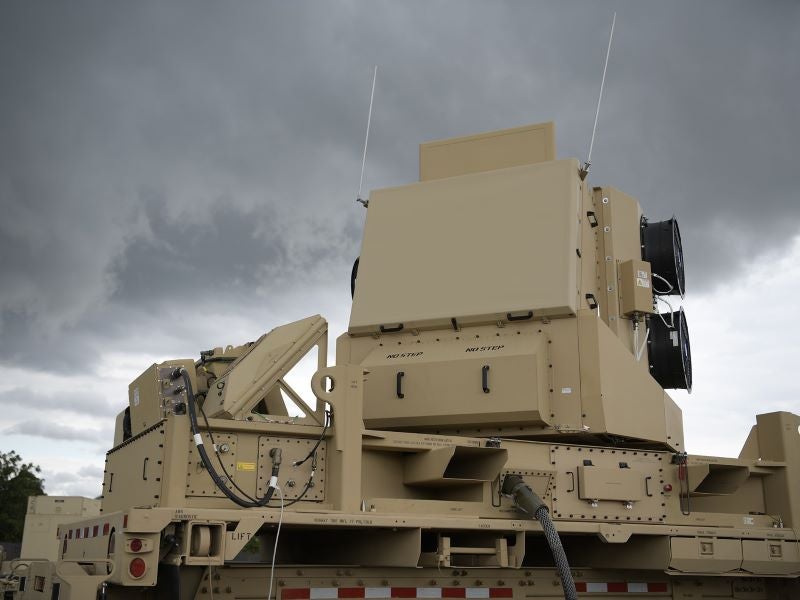
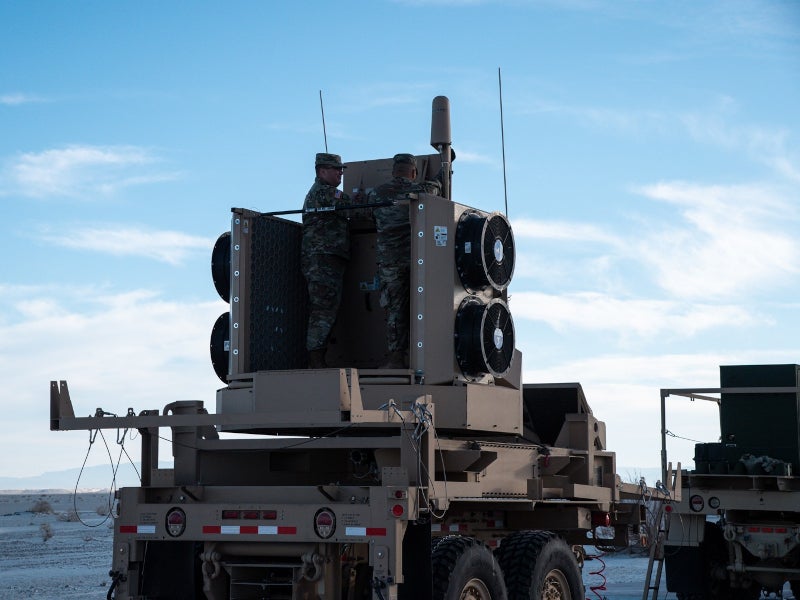
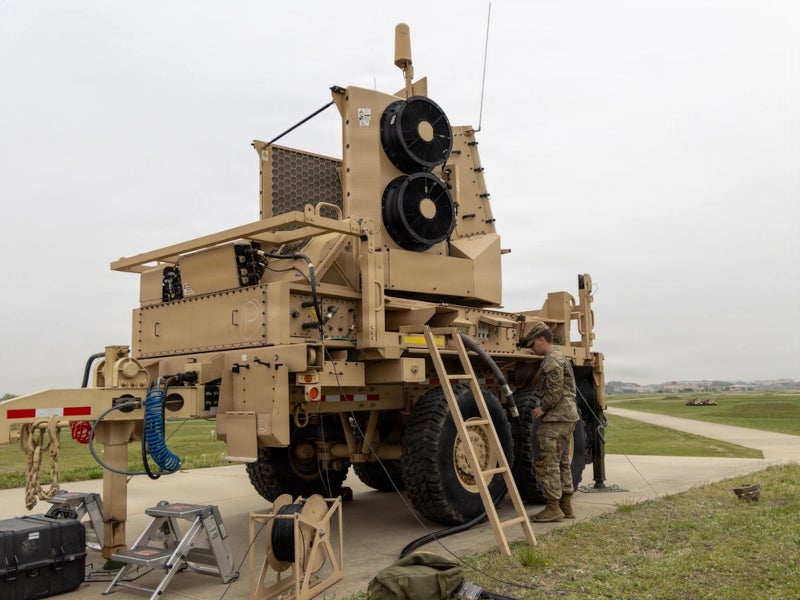
The AN/MPQ-64A4 radar, also known as Sentinel A4, is an air and missile defence radar developed by Lockheed Martin.
The radar was developed in response to obsolescence issues affecting its predecessor, the AN/MPQ-64A3 Sentinel A3.
Recommended White Papers
Recommended Buyers Guides

The system is intended to enhance the existing Sentinel capability against a range of threats including cruise missiles, unmanned aircraft systems, helicopters, fixed-wing aircraft and indirect fire such as rockets, artillery and mortars.
The Sentinel A4 radar is the US Army’s programme of record for meeting air and missile defence performance needs over the next 40 years. A total of 200 radars are set to be deployed as part of the programme.
The first Sentinel A4 radar under a low-rate initial production (LRIP) contract was delivered to the US Army in February 2026.
The first phase of initial operational test and evaluation was also completed, supporting progress towards full-rate production.
Sentinel A4 development background
The US Army awarded a $281m contract to Lockheed Martin for the development of the Sentinel A4 in September 2019. The programme subsequently completed major design reviews including a system requirements review/system functional review, preliminary design review and critical design reviews.
A radar array prototype became operational in September 2020, around five months earlier than planned.
In October 2021, the US Army Sentinel A4 Programme Office issued an accelerated production award for five additional systems, which were delivered the following year.
Developmental testing concluded in 2023, when the programme also reached Milestone C.
Lockheed Martin received a contract for 19 LRIP systems during the same year, with the first delivery taking place in February 2026.
Design and features
The Sentinel A4 replaces legacy travelling wave tube technology with an X-band digital active electronically scanned array (AESA) radar design. In comparison to its predecessor, the Sentinel A4 is reported to extend its detection range by up to 175% and improve sensitivity by 225%.
The radar’s open architecture is designed to support future adaptation as threat profiles evolve and includes provision for around 60% growth capacity for future upgrades.
The radar utilises digital transmit and receive line-replaceable units, as well as commercially available gallium nitride high-power amplifiers. It incorporates sub-array digital beamforming and includes a 60kW generator power provision.
The system provides search, acquisition, tracking, classification and fire control functions, with elevation coverage from -15° to the zenith and 360° azimuth coverage.
For tracking and identification, the radar can handle hundreds of simultaneous tracks and support multiple engagements in parallel. Its identification friend or foe functionality includes Modes 3, 5 and S.
A stop-and-stare mode provides surveillance from ground level to the zenith without a cone of silence while maintaining fire control quality track output.
Sentinel A4 capabilities and operations
Sentinel A4 can operate in complex terrain and cluttered environments including conditions affected by electromagnetic and radio-frequency interference. It is intended to sustain mission performance without frequent manual intervention, while supporting enhanced combat identification to reduce engagement timelines.
The radar can calculate projected points of impact to support the protection of personnel and critical assets. It is designed to conduct multiple missions simultaneously across the air and missile defence threat set.
The system also supports interfaces such as the Integrated Battle Command System and Forward Area Air Defense Command and Control for short-range air defence units. It is designed to support integration with the National Advanced Surface-to-Air Missile System in non-contact radar (NCR) configurations.
Furthermore, the radar is designed to integrate with wider air and missile defence architectures including the Indirect Fire Protection Capability and the National Capital Region Integrated Air Defense System (NCR IADS), as well as the Aegis Combat Management System and the North American Aerospace Defense Command.
Portability and maintenance
The Sentinel A4 radar can be deployed from a single truck or trailer on a family of medium tactical vehicles (FMTV)-based platform. It can be transported by C-5 or C-17 aircraft as well as by rail and sea.
The radar system can be emplaced in under 30 minutes and returned to march order in under ten minutes. It is intended to be operated and maintained by a two-soldier team.
Mean time to repair is 30 minutes, with an operational availability above 96%.
The Mean time between failures is 208 hours to specification, with demonstrated figures reported at more than 800 hours.
Contractors involved
In May 2021, Orolia Defense & Security (formerly Safran Federal Systems) supplied its SecureSync mission timing and synchronisation units featuring M-Code capability for the Sentinel A4 radar.
SecureSync equipped with M‑Code provides a robust timing and frequency reference for the system, strengthening resilient positioning, navigation and timing performance. It also increases protection against current and evolving GPS risks, including jamming and spoofing.
