
Roke Manor Research has been awarded a contract to lead the UK Ministry of Defence’s (MoD) Dismounted Close Combat Sensors (DCCS) research programme over the next three years.
Under the £5m research contract, awarded by the MoD’s Defence Science and Technology Laboratory (Dstl), the company will lead a team of experts from across industry and academia to assess, mature and integrate innovative sensor technology for dismounted close combat infantry soldier.
Go deeper with GlobalData


Discover B2B Marketing That Performs
Combine business intelligence and editorial excellence to reach engaged professionals across 36 leading media platforms.
Comprising SEA and QinetiQ, the DCCS team will carry out a comprehensive system integration, architecture and experimentation with an array of technology and exploitation partners in an open framework, to assess and integrate sensor technologies.
Dstl C4ISR Domain programme lead Dr David Massey said the programme was for delivering an integrated sensor capability within the wider intelligence, surveillance, target acquisition and reconnaissance (ISTAR) enterprise to the UK’s dismounted soldier, improving battlespace awareness and overall combat effectiveness.
"Over the next three years, Roke, along with its partners, will be developing the key low-power, low-weight sensor and processing technologies that will realise the benefits envisaged," Massey said.
Roke business sector manager James Fisher said the team would provide a complete range of industry and technology expertise to optimise the programme’s results.

US Tariffs are shifting - will you react or anticipate?
Don’t let policy changes catch you off guard. Stay proactive with real-time data and expert analysis.
By GlobalData"The team will be casting the net wide to identify novel sensor technologies, developing them into workable solutions that improve military capability and maximise the return on this programme’s investment," Fisher added.
Additional responsibility for Roke includes collaboration with Dstl to ensure the programme objectives are addressed.
The DCCS programme primarily seeks the development of an open system architecture system, in compliance with the developing Generic Soldier Architecture (GSA), to enable the incorporation of multiple sensor-based subsystems, including acoustic, thermal imaging and RF subsystems.
In addition to improving situational awareness, the system will also allow for collaborative targeting and increase operational tempo, while reducing size, weight and logistics burden on the soldier.
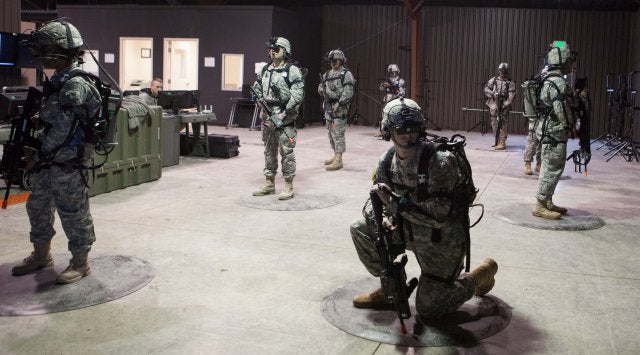
Image: Dismounted soldiers should be equipped with advanced technologies to reduce risks in any theatre of operations. Photo: courtesy of Maj Penny Zamora.




