

- US Special Forces overwhelmed Venezuelan systems in the digital domain, conducting jamming operations on radar and communications networks
- Defence expert Dr Tom Withington warns Nato must not be complacent after US success over S-300VM air defence systems
- It would be unwise to project the problems suffered in Caracas onto the modern S-400 iteration currently in service with India, Russia and Türkiye
The Russian-made air defence systems which Nicolas Maduro, the captured Venezuelan President, touted in October last year proved ineffective against US Special Forces on the night of the 3 January 2026.
There are widespread reports and analysis assessing the total failure of the Venezuelan military’s anti-air capability – which leans on the legacy S-300VM air defence system – to shoot down low-flying MH-47 Chinook helicopters.

Discover B2B Marketing That Performs
Combine business intelligence and editorial excellence to reach engaged professionals across 36 leading media platforms.
However, American operational success must not encourage complacency among Nato, warned Dr Tom Withington, an associate fellow of the Royal United Services Institute in London and a senior non-resident fellow at the Nato defence college in Rome.
“It is imperative that allied airpower is at least a generation ahead of whatever the Russians can muster, if not more,” he insisted.
The EW advantage
S-300 first appeared in Venezuela in 2013 and was fielded in two battalions. Russian forces have deployed the system in Syria which resulted in the US and allied nations (such as Israel) collecting valuable electronic intelligence on the characteristics of the S-300’s radars, and the communication systems that the batteries use.
“Armed with this knowledge it is possible to start developing jamming tactics and protocols that will be effective in degrading the system’s performance,” Withington considered. “Moreover, the system has been extensively observed in the Ukraine theatre of operations and Iran.”
In this case, Venezuela may have been on the backfoot in deploying this legacy missile defence network prior to Maduro’s capture.
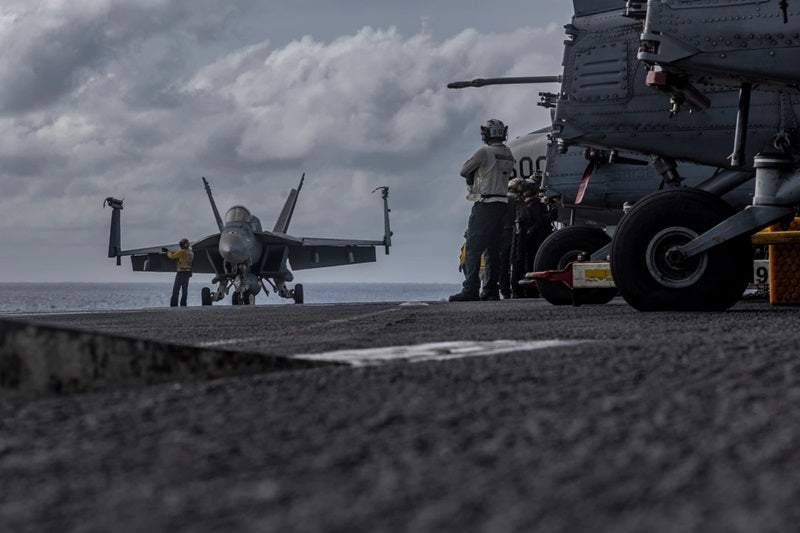
Upon closer inspection the Russian air defence system relies on the 9S32ME radar, which was highly vulnerable to the electronic warfare (EW) capabilities of the EA-18G Growler, itself a dedicated EW aircraft, in addition to those of the F-35C.
“This forced [Venezuelan] radar operators to increase power output, thereby revealing their position, which allowed for them to be targeted by AGM-88 High-speed Anti-Radiation Missile,” observed GlobalData defence analyst Callum Kaye.
Global users of the S-300 (such as Algeria, Egypt, Iran and others) will no doubt express concern about the their own ageing systems after the Venezuela raid. In Nato, Bulgaria operates the S-300PMU, although the country was already on track to procuring the IRIS-T SLM as part of the European Sky Shield Initiative.
But would S-300 be effective against a less technologically sophisticated adversary, or one not capable of deploying such a weight of airpower as the US? “Almost certainly,” Withington contends. This has already been proven in Ukraine where both sides have enjoyed success therein.
S-400: EW resistance
While Withington stipulates that “older S-300 systems are as good as dead metal” against the kind of sophisticated airpower the US displayed, it would be unwise to project the problems suffered in Caracas onto the modern S-400 Triumf air defence system in service with several major militaries including India, Russia and Türkiye.
The S-300 serves as a “canvas on which the S-400 idea could be painted”, he added. Although the Russians have improved the S-400’s capabilities, extending its range and tracking capabilities and integrating more advanced radars and, notably, EW resistance.
The S-400 features a software update, better frequency hopping and digital signal processing intended to counter EA-18G Growler tactics.
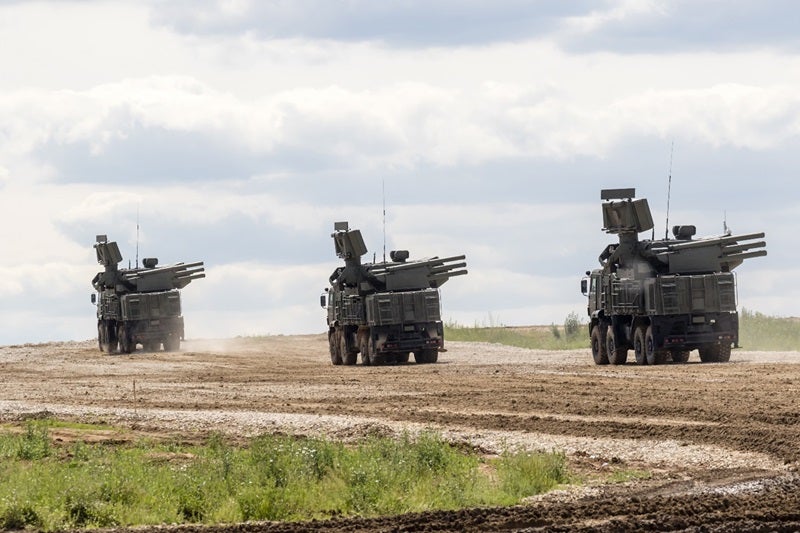
In a 2021 report, the US Department of Defense noted what it called ‘eye-grabbing technology’ in the S-400 system. On the other hand, the West has studied the characteristics of the S-400 system closely throughout the war in Ukraine.
While it is a bit more of an “unknown quantity”, it too has “begun to give up its electronic secrets”, Withington observed. This is seen with Russia’s use of the Pantsir S-1 point defence systems in tandem with the S-400 radar but as Ukraine’s drone strikes have shown, this does not make Russia’s extra air defence layer invulnerable.
India, Türkiye
The Indian Air Force are trying the expedite the final delivery of the last two (of five) S-400 squadrons from Russia initially ordered in 2018, but these have been delayed due to Russia’s preoccupation in Ukraine.
More recently, in October 2025, Russia’s state news agency TASS, claimed that India intended to purchase a large batch of S-400 missiles.
TASS alleged that the decision was spurred by the ‘high efficiency’ of the system during Operation Sindoor, India’s brief conflict with Pakistan in May last year. Since then, India has also paid tribute to the effectiveness of the system with a model of the Russian air defence system made out of 800 kilos of scrap metal.
Elsewhere, Türkiye also operate the S-400 air defence system however the country appears less impressed by Russia’s system, torn between the US and Russian defence orbits. Ankara’s procurement of the S-400 in 2019 provoked diplomatic controversy within Nato and antagonism with the US thus precluding it from purchasing the F-35A Lightning II aircraft.
It is said that Türkiye is currently considering a buyback of the S-400, and the system is conspicuously absent from the military’s indigenous Steel Dome integrated and layered air defence project.


