


Beechat Network Systems and Savox Communications Collaborate to Extend MissionCore with Tactical MANET Connectivity
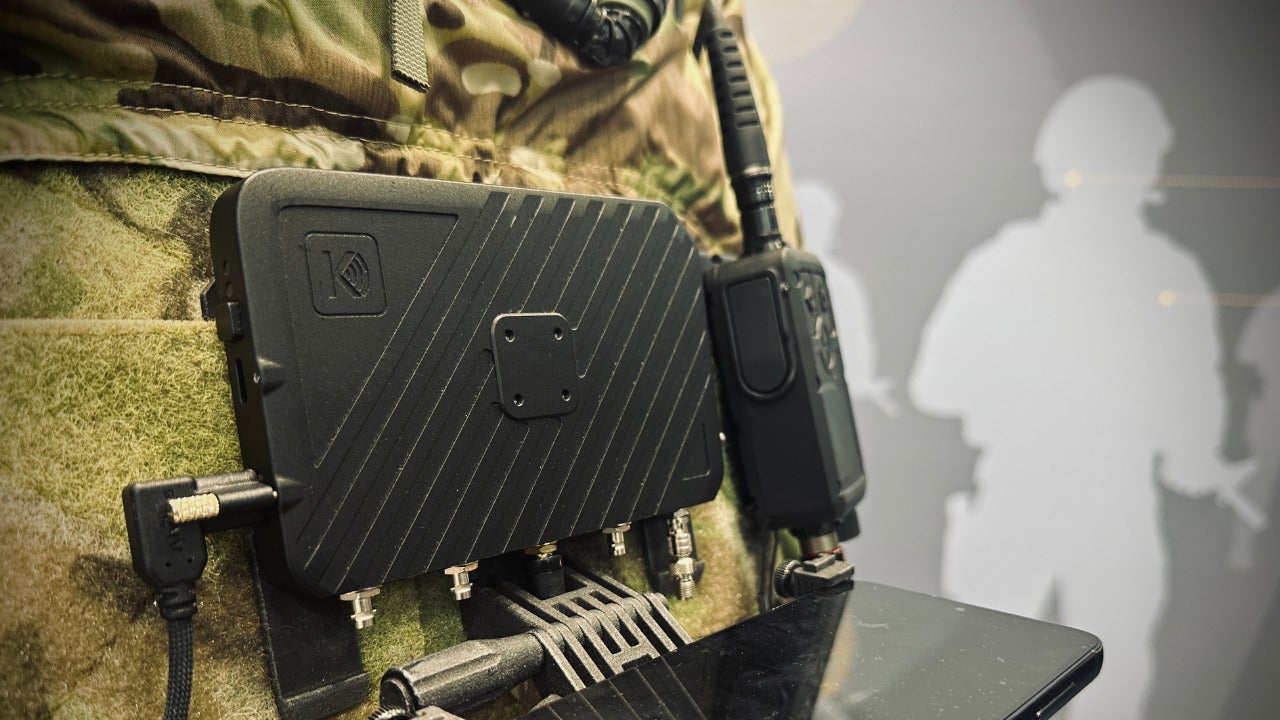
Beechat Network Systems and Savox Communications announced a collaboration to evaluate interoperability between the Beechat Kaonic 1S next-generation secure mesh radio and the Savox MissionCore system. The collaboration aims to extend MissionCore’s ability to deliver resilient voice and data connectivity across mounted and dismounted operations. The companies have formalised the collaboration through a Memorandum of Understanding.
Enhancing battlefield connectivity
Savox MissionCore is an open, interoperable, software-defined modular platform built on an IP-based architecture. It integrates voice, video, and data into a scalable C4ISR (Command, Control, Communications, Computers, Intelligence, Surveillance, and Reconnaissance) solution. Designed to modernise fragmented battlefield networks with minimal disruption, MissionCore connects existing assets and transforms operational data into actionable situational awareness.
The addition of Beechat’s Kaonic 1S introduces self-forming, self-healing tactical MANET capabilities. This rugged SDR supports secure, decentralised communications across dismounted soldiers, vehicles, drones, remote sensors, and other mission nodes. It enables mission-critical sharing of voice, video, data, and sensor information even without fixed infrastructure.
By bridging mounted and dismounted domains, the evaluation improves information flow between deployed units, command elements, and remote assets. This directly supports faster decision-making and superior situational awareness in complex operational scenarios. Planned interoperability work includes dismounted, mounted, and sensor-enabled use cases, along with the evaluation of compatibility with situational awareness applications.
James Kenyon, director of Strategy and Market at Savox Communications, commented: “The ability to exchange mission-critical voice and data across dispersed operational environments is becoming increasingly important. Our collaboration with Beechat evaluates how MissionCore can incorporate MANET capabilities to support resilient tactical communications.”
Nicholas Quinn, CEO of Beechat Network Systems, added: “Kaonic 1S is designed for secure, decentralised communication without reliance on fixed infrastructure. Integrating this capability with MissionCore highlights how resilient connectivity can support coordination and situational awareness in complex environments.”
Beechat’s Innovation and NATO DIANA Involvement Beechat Network Systems specialises in zero-trust, post-IP tactical mesh technologies with built-in cryptographic identity. The Kaonic 1S is a dual-transceiver, Linux-powered SDR module optimised for OEM integration, edge intelligence, and
high-security deployments in defence and unmanned systems.
Beechat is a member of the NATO DIANA (Defence Innovation Accelerator for the North Atlantic) 2026 cohort, underscoring its contribution to advancing dual-use communications technologies for defence and security. The company is leveraging the programme’s transatlantic network to mature solutions like Kaonic for operational use.
The collaboration was showcased at Eurosatory 2026 in Paris.
Strategic implications for modern defence forces
This partnership addresses key challenges in contemporary warfare, where fragmented networks and contested electromagnetic environments can hinder operations. By combining Savox’s robust mission platform with Beechat’s decentralised tactical networking, defence forces gain a more unified, resilient communications framework that supports multi-domain operations.
For more information:
Beechat Network Systems
Savox Communications
NATO DIANA 2026 Cohort
This integration represents another step toward more agile, interconnected, and survivable tactical communications systems for the future battlespace.
