
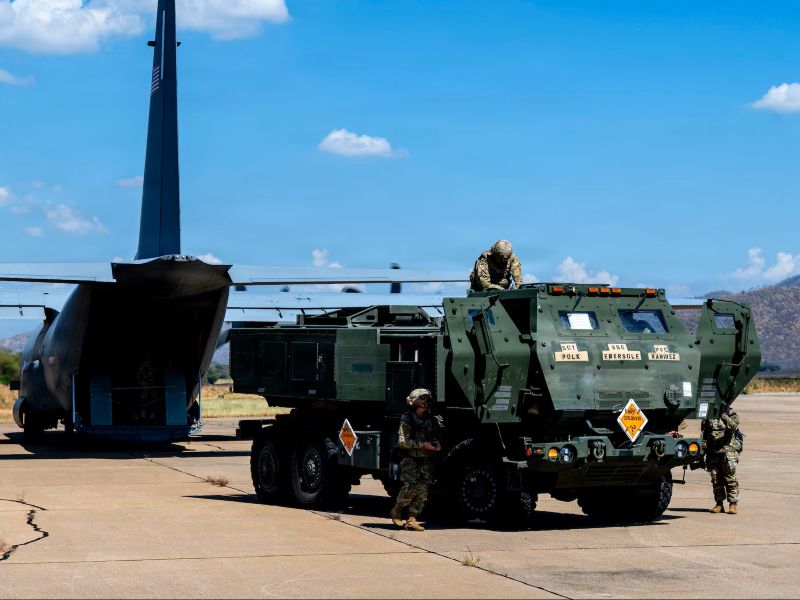
The Joint Reduced Range Rocket (JR3) programme is a US Army initiative to develop a reusable pod and an affordable training round to replace the low-cost Reduced Range Practice Rocket (RRPR) for the US Army and its global partners.
The JR3 is planned as a surface-to-surface live-fire qualification rocket for use with fielded M270 Multiple Launch Rocket System (MLRS) and M142 High Mobility Artillery Rocket System (HIMARS) launchers.
Recommended White Papers

Recommended Buyers Guides

The munition is intended to meet a training requirement by allowing MLRS and HIMARS crews to undertake live-fire qualification in different environmental conditions, at various ranges and during different operating hours without using higher-cost tactical munitions. It will support artillery crews conducting Platoon, Battery and Battalion-level Mission Essential Task List qualification tables under Training Circular 3-09.8.
Lockheed Martin and Raytheon are currently developing a prototype JR3.
The JR3 programme is expected to reach production-level maturity by 2028.
Joint Reduced Range Rocket requirements
The STORM Project Management Office has provided a set of requirements for JR3 design to align with the existing Multiple Launch Rocket System Family of Munitions (MFOM).
The rocket is required to have a minimum impact range of 7.5–8km and a maximum impact range of no more than 15km at sea level, and provide near-precision accuracy within 25–30m of the target point.
The rocket is required to support either free-flight or trajectory-corrected fire over friendly troops with a 2km fire support safety distance, with the worst-case range safety fan to remain within the boundaries of the legacy RRPR.
The launch pods for the JR3 must match the volume, mechanical interfaces and centre-of-gravity limits of existing MLRS and Guided MLRS pods, without requiring modifications to launchers or handling equipment. Each pod is also required to be reusable or reloadable and accommodate six to 48 rockets in multiples of three, while replicating standard tactical loading and unloading procedures.
The system will be compatible with current M142 and M270 launcher software baselines, emulate current and future MFOM munitions, and interoperate with existing and planned Advanced Field Artillery Tactical Data System software. The rocket is also required to be cleared for firing over the launcher cab, flanks, personnel and structures within designated exclusion zones.
The minimum shelf life of the munition is expected to be ten years with a reliability rating of at least 0.95 across launch, flight and warhead activation. A Modular Open Systems Architecture interface between the motor and warhead will support future payload upgrades without redesigning the all-up round. The system must also accommodate visual flash, bang and smoke signatures.
Lockheed Martin JR3 system design and features
Lockheed Martin’s JR3 solution is designed for HIMARS and M270 launchers. It comprises an all-up round and a 24-rocket launch pod intended to support crew training in different environmental conditions and high-volume live-fire exercises.
The modular design uses established rocket-motor technology, including a lower-cost motor and an adaptable payload for repeated training cycles. The launch tubes and pods can be reloaded and reused.
JR3 could enable launcher crews to conduct live-fire training on constrained ranges during day or night operations and at multiple locations. Reusable tubes and launch pods may reduce the cost per round.
Lockheed Martin JR3 field tests
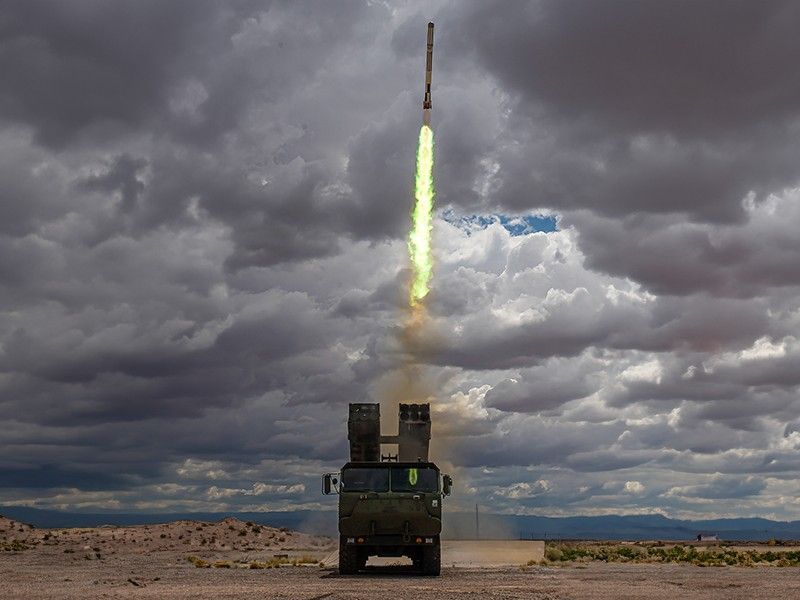
In August 2025, Lockheed Martin demonstrated its prototype JR3 solution at White Sands Missile Range. The flight demonstration involved launching a training round and assessing its range, trajectory and reusability.
The test team subsequently loaded another rocket into the same tube, indicating that rocket tubes and pods could be reused in field conditions. This approach could increase the number of training rockets available per pod while reducing the time and resources needed for reloading.
A second test was conducted by Lockheed Martin in August 2026 at Yuma Proving Ground in Arizona, US. The trial launched multiple training rounds from a HIMARS to assess range, trajectory, accuracy and the effects of marking payloads. A further JR3 flight test is planned later this year to evaluate performance.
