
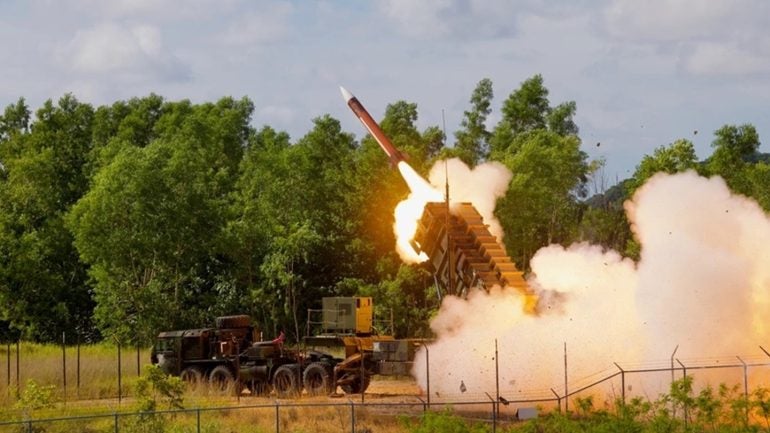
The Patriot air defence system, which has been in service with the US Army since the 1980s, will undergo further changes to keep pace with the saturated airspace threat that has come to define conventional peer warfare to date.
In this backdrop, the coveted system already responds to hostile aircraft, ballistic, and air-breathing cruise missiles but now it is suggested Patriot capabilities will expand to intercept new threat types: one-way attack (OWA) drones and hypersonic weapons.
Go deeper with GlobalData


Discover B2B Marketing That Performs
Combine business intelligence and editorial excellence to reach engaged professionals across 36 leading media platforms.
But it is not lost on the military user that there is a bewildering cost gap when it comes to intercepting drones with missiles while there is currently no operational missile in service that can boast a truly ‘hypersonic’ effect that strictly befits the name.
Thus, Army Technology will assess the effectiveness of new components and projects associated with the enduring air defence system to tackle the new threat landscape; some of these were displayed in their grandeur at the AUSA 2025 exhibition in October.
LTAMDS
The most recent advancement to the Patriot system, and perhaps the most significant improvement, is the Lower Tier Air and Missile Defence Sensor (LTAMDS). This component will replace the Patriot’s legacy radar, the ageing AN/MPQ-65 system, which first reached initial operating capability in 2003 and was later updated in 2017.
Only the US and Poland are procuring the LTAMDS at present. In September, a contract worth $1.7bn was awarded for the production of nine radars for the two users, but Poland initially expressed interest in acquiring 12 systems in 2023.
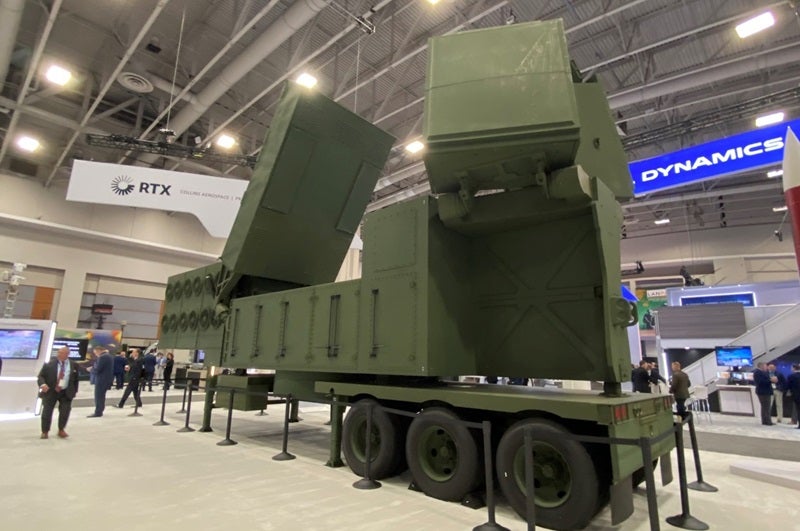
At first glance, LTAMDS comprises a large active electronically scanned array (AESA) radar at the front and two smaller AESA radar units behind. This extension provides 360-degree coverage which offers continuous all-round sensing and eliminates the blind spot of the 120-degree angle of the legacy radar.
Total coverage is important to meet the mass effect of Russia’s “wolf pack tactics” in which massive strikes – consisting of drones, cruise and ballistic missiles, and others – approach a target from different directions before striking virtually simultaneously.
According to Raytheon, the manufacturer, the system has “more than twice the power” and extended range with the integration of the Large Tactical Power Source. The US defence prime affirmed that the component functioned well in a flight test to track and intercept what was described as “a complex threat representative target.”
US Army revive LTFI
The Army has returned to an old programme to replace the in-service PAC-3 Missile Segment Enhancement (MSE) which is currently used to physically obliterate high-speed ballistic missile warheads through kinetic impact.
This next generation interceptor is called the Lower Tier Future Interceptor (LTFI). It was an official programme until it was cancelled in October 2024 due to cost overrun.
However, a US Army spokesperson told Army Technology that the service is pursuing the LTFI once again. Although it is not yet listed as a programme of record, the Army will define its requirements and procurement strategy going forward, considering numerous disruptive entrants in the interceptor market.
Crucially, the concept comes at a time when the global missile defence market looks to close the cost gap between interceptors and OWA drones.
Cost dilemma
“Military decision makers quickly realised it is unsustainable to launch expensive missiles at commercial-off-the-shelf UAS,” commented Fox Walker, GlobalData defence analyst. It is therefore ineffective to use a single PAC-3 MSE missile, which costs $4m, to intercept a drone that may cost $4,000 or less.
“In some urgent instances,” Walker continued, “it may be worth launching a PAC-3 at a drone if it were to defend critical infrastructure or other valuable assets, but there are other systems that can do this at a lower cost and the PAC-3 is probably better used against expensive manned systems.”
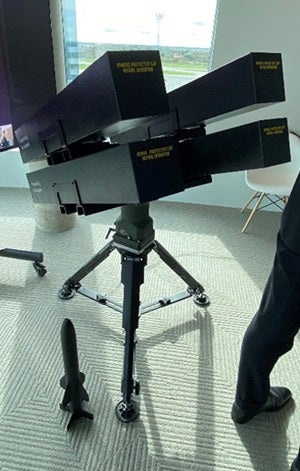
Frankenburg, an Estonian company, has already put forward what they say is a unique low-cost missile at around $50,000, which is more reasonable than the price of extant missiles. The CEO Kusti Salm told this reporter in September that the company will be able to produce 100 missiles per day. But out of 53 tests, the missile was only accurate half the time.
While slightly lacking, the company raises a worthwhile point around cost, and it is something the LTFI programme will need to take into account to provide a competitive and sustainable advantage in air defence.
PAC-3 falters
Meanwhile, the Patriot air defense system has demonstrated mixed results in its interception rate, which leads to questions about its efficacy against hypersonic missiles, which exceed speeds of at least Mach 5.
“With a highly manoeuvrable airframe, the PAC-3 MSE interceptor utilised by the Patriot system is on paper well-suited for use against highly manoeuvrable hypersonic missiles,” said another GlobalData defence analyst, Jonathan Birch.
This appears to have been the case during the early stages of fielding Patriot systems in Ukraine with the successful interception of a Russian Kh-47 Kinzhal hypersonic missile.
However, the interception rate of Russian missiles by Patriot systems in Ukraine has reportedly fallen to 6%. “Despite the Patriot’s field-tested maturity,” Birch continued, “this seemingly indicates growing uncertainty over its ability to match the development rates of hypersonic missiles.”
Business as usual
Nevertheless, America’s defence industry will continue to do what they can with the arsenal they have. Companies are doubling down on producing existing missile components. Boeing, for example, won a $2.7bn deal last month to deliver more than 3,000 PAC-3 seekers at a rate of up to 750 units per year through 2030.
The subcontractor has supported the Army and the primary contractor, Lockheed Martin, in this area for the last 25-years. Boeing’s seekers allow the interceptors to conduct target acquisition and terminal guidance.
This requires infrared and electro-optical (IR/EO) sensors to detect heat signatures and to recognise and track the target. The IR/EO market, which GlobalData says is currently valued at $13.9bn in its latest market report, is projected to grow at a compound annual growth rate of 4.6% over the next decade.
Meanwhile, the German air defence player Diehl Defence and Lockheed Martin signed a memorandum of understanding to consolidate work on the PAC-3 MSE to ensure a more resilient supply chain for allied air defence.
But more than this, there are attempts to diversify missiles and eliminate the siloed use of PAC-3. In 2022, for example, Lockheed Martin integrated the lower tier PAC-3 MSE with the upper tier Terminal High Altitude Area Defense (THAAD) system. THAAD is typically used against ballistic missile threats in their terminal phase, beyond the versatile tactical Patriot system used against a wider range of threats in the medium range.
With no need to co-locate THAAD and Patriot weapon systems, the Army has a significant reduction in required logistics and ground equipment.


