


Understand the impact of the Ukraine conflict from a cross-sector perspective with the Global Data Executive Briefing: Ukraine Conflict
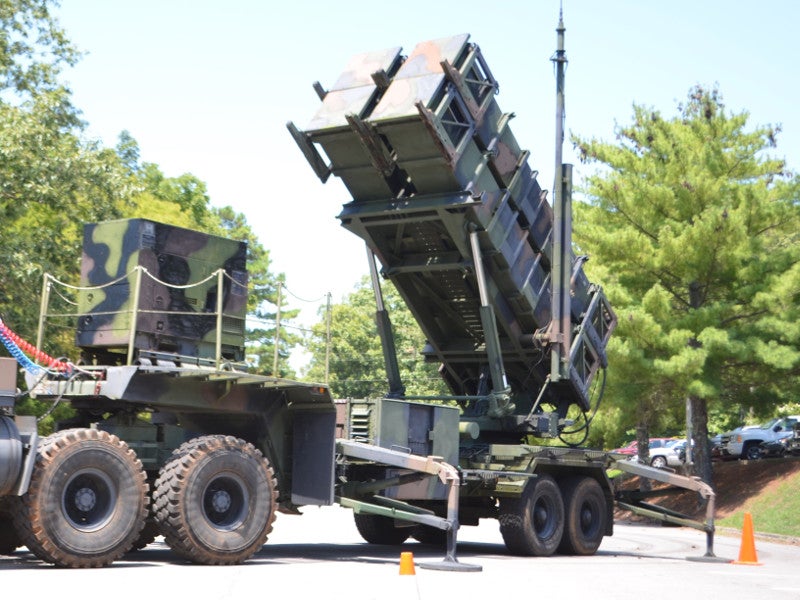
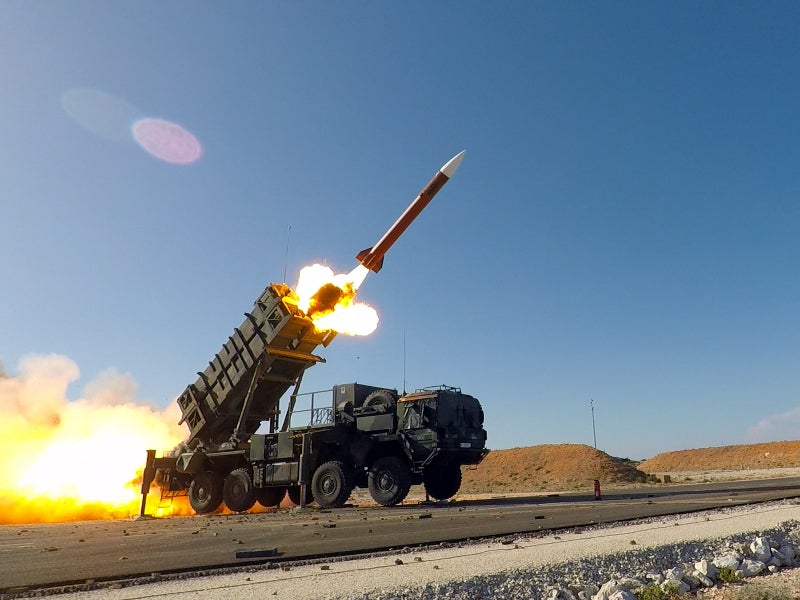
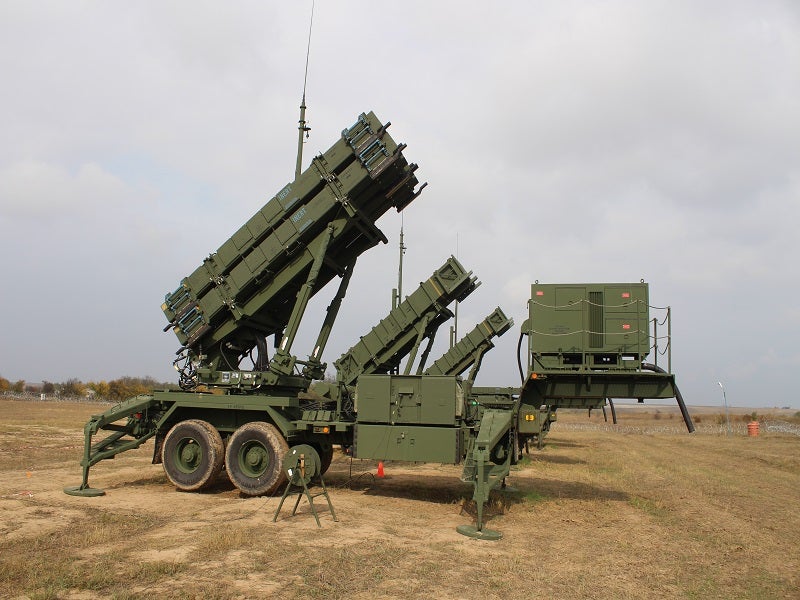
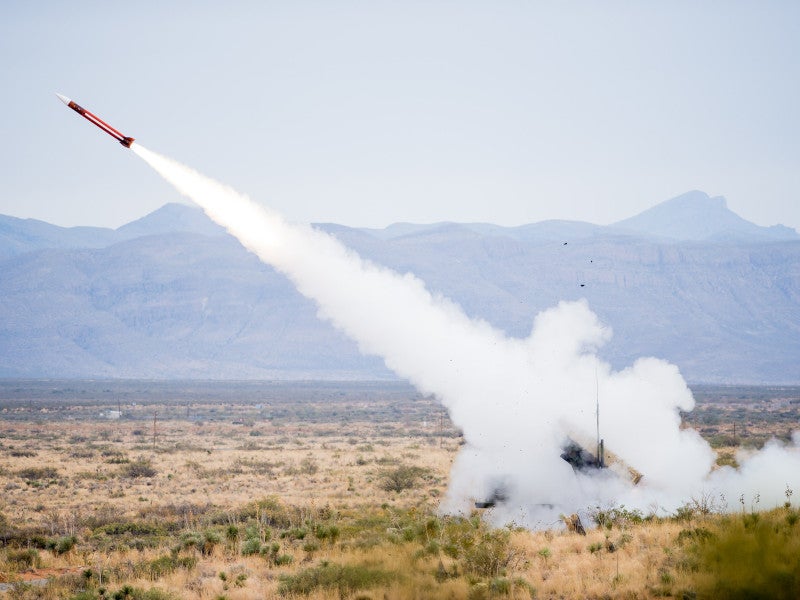
The Phased Array Tracking Radar to Intercept on Target, or Patriot (MIM-104), is a long-range, all-altitude, all-weather air defence system to counter tactical ballistic missiles, cruise missiles and advanced aircraft. It is produced by Raytheon in Massachusetts and Lockheed Martin Missiles and Fire Control in Florida, US.
Recommended White Papers

Recommended Buyers Guides

Patriot is in service with the US and allied countries, including Germany, Greece, Israel, Japan, Kuwait, the Netherlands, Saudi Arabia, South Korea, Poland, Sweden, Qatar, the United Arab Emirates, Romania, Spain, and Taiwan.
US forces deployed the Patriot missile systems during the 2003 Iraq conflict. The systems were stationed in Kuwait and destroyed several hostile surface-to-surface missiles using the new Patriot advanced capability-3 (PAC-3) and guidance-enhanced missiles.
The US Department of Defense (DoD) approved the deployment of additional forces and a range of military systems including two Patriot missile batteries and a Terminal High Altitude Area Defence (THAAD) to Saudi Arabia in October 2019. The deployment was in response to a drone attack on oil facilities operated by state-owned oil company Saudi Aramco in Saudi Arabia in September 2019.
In January 2024, COMLOG, a 50/50 joint venture between Raytheon and missiles and missile systems developer MBDA received a $5.6bn contract from the Nato Support and Procurement Agency (NSPA) to supply GEM-T missiles as part of the European Sky Shield Initiative (ESSI).
The NSPA contract aids a coalition of nations, including Germany, the Netherlands, Romania, and Spain, by offering a total of up to 1,000 Patriot GEM-T missiles, if all options are utilised. It enables a group of allies to enhance their air defence capabilities in response to Russia’s conflict with Ukraine.
Guidance enhanced missile (GEM-T) upgrade
The Patriot missile is equipped with a track-via-missile (TVM) guidance system. Midcourse correction commands are transmitted to the guidance system from the mobile engagement control centre.
The target acquisition system in the missile acquires the target in the terminal phase of flight and transmits the data using the TVM downlink via the ground radar to the engagement control station for final course correction calculations. The course correction commands are transmitted to the missile via the missile track command uplink. The high-explosive 90kg warhead is situated behind the terminal guidance section.
The missile has a range of 70km and a maximum altitude greater than 24km. The minimum flight time is less than nine seconds while the maximum is three and a half minutes.
Raytheon developed the Patriot guidance enhanced missile (GEM-T), an upgrade to the PAC-2 missile. The upgrade involved a new fuse and the insertion of a new low-noise oscillator, which increased the seeker’s sensitivity to low radar cross-section targets.
The GEM-T missile provides an upgraded capability to defeat air-breathing, cruise and ballistic missiles, as a complement to the PAC-3 missile. The first upgrade fore-bodies were delivered to the US Army in November 2002.
By September 2010, a total of 1,000 Patriot missiles had been upgraded for the US Army.
In April 2011, US Army Aviation and Missile Command awarded a $58.3m contract to Raytheon to upgrade 131 PAC-2 missiles to GEM-T missile configuration.
South Korea placed an order for 64 GEM-T upgrade kits in July 2008.
In April 2023, Raytheon secured a $1.2bn foreign military sales contract from the US Army to supply Switzerland with five Patriot fire units and a quantity of GEM-T units.
Details of the Patriot Advanced Capability (PAC-3) missile
The new PAC-3 missile has increased effectiveness against tactical ballistic and cruise missiles through the use of advanced hit-to-kill technology. Lockheed Martin is the primary contractor, with Raytheon as the systems integrator. The PAC-3 has a Ka-band millimetre wave seeker developed by Boeing.
The missile guidance system enables target destruction through the kinetic energy released by hitting the target head-on. 16 PAC-3 missiles can be loaded on a launcher, compared to four PAC-2 missiles.
PAC-3 entered low-rate initial production (LRIP) in late 1999 and the first LRIP production missiles, reaching a total of 92, were delivered in September 2001. A contract for 88 missiles was placed in December 2002 and another for 12 in March 2003.
The missile was first deployed during the Iraq conflict in March/April 2003. In February 2004, Lockheed Martin was awarded a production contract for 159 PAC-3 missiles, which included 22 missiles to replace those expended in Iraq. Deliveries were concluded by April 2006.
A further contract for 156 missiles was received in February 2005. Approximately 32 of these missiles were for the Netherlands and 16 were for Japan, under foreign military sales (FMS) agreements. The Netherlands received the first PAC-3 missiles in October 2007. The US Army ordered 112 missiles in May 2006 and an additional 112 missiles in March 2007.
Lockheed Martin was awarded a contract in January 2007 for the risk reduction/concept definition of a programme for an air-launched Patriot PAC-3 missile system. The F-15C fighter was the first aircraft to be fitted with the system.
In December 2007, the UAE requested the FMS of the Patriot system, including nine Patriot launchers, 288 PAC-3 missiles, and 216 Patriot GEM-T missiles. The contract was awarded in December 2008.
Kuwait also requested 80 PAC-3 missiles and 60 GEM-T upgrade kits, and a contract for the first six upgrade kits was placed in July 2008.
In April 2008, Taiwan placed an order for several PAC-3 upgrade kits. It also requested the sale of 330 PAC-3 missiles in October 2008.
The US State Department approved the possible sale of equipment and services worth $100m to help Taiwan maintain and improve the existing Patriot air defence system in February 2022. Raytheon and Lockheed Martin were named prime contractors for the five-year programme.
The US Army placed several contracts totalling $921m in January 2012 for the PAC-3 missiles and associated systems. A $755m contract for 168 PAC-3 missiles, 27 launcher modification kits and related equipment and services was placed in January 2013.
South Korea requested a $404m possible FMS of 112 Patriot missiles, which were subsequently upgraded to GEM-T configuration in October 2013.
In April 2014, the US Army Aviation and Missile Command awarded a $611m contract to Lockheed Martin for the production of the first PAC-3 missiles with launcher modification kits.
The US Army Aviation and Missile Command placed a $212m contract with Lockheed Martin to provide PAC-3 maintenance and surveillance services to the US and international customers in July 2014.
In October 2014, Lockheed Martin was selected by the Qatar Government to produce a PAC-3 missile and command launch system for the Qatari Air Force. In the same month, the US State Department approved a possible FMS of 202 Patriot air defence systems with PAC-3 enhancement and support equipment to the Kingdom of Saudi Arabia at an estimated cost of $1.75bn.
The US State Department approved a possible FMS of PAC-3 missiles and support equipment to South Korea at an estimated cost of $1.4bn in November 2014.
The US and allied military forces awarded a $1.5bn contract in July 2015 and a $1.1bn contract in December 2015 for the production and delivery of PAC-3 and PAC-3 missile segment enhancement (MSE) missiles.
Lockheed Martin received a $1.45bn contract from the US and allied military forces for the production and delivery of PAC-3 and PAC-3 MSE missiles in December 2016.
Two contracts worth $944m and $524m were awarded by the US Government in December 2017 and February 2018 for the PAC-3 and PAC-3 MSE interceptors respectively.
Lockheed Martin received a $506.9m modification contract from the US Army Contracting Command, Redstone Arsenal, for the production of PAC-3 missiles in March 2019.
PAC-3 missile segment enhancement (MSE)
The PAC-3 MSE is part of a spiral development undertaken by Lockheed Martin.
The increased range MSE gives the missile a more powerful rocket motor for added thrust and larger fins for increased manoeuvrability against faster and more sophisticated ballistic and cruise missiles. The MSE began flight testing in May 2008.
The PAC-3 MSE is the baseline interceptor for the multinational medium extended air defence system (MEADS) under a contract placed in February 2008. The missile was test-fired using the Patriot system in May 2011. Lockheed Martin was awarded a $68.9m contract in July 2012 to prepare the PAC-3 production line for the PAC-3 MSE missile.
In December 2012, the PAC-3 MSE destroyed a tactical ballistic missile (TBM) target at White Sands Missile Range in New Mexico, US.
The US Army Aviation and Missile Command awarded a $308m contract modification to Lockheed Martin for hardware and services associated with the PAC-3 missile segment programme in August 2013.
Lockheed Martin received the first production order worth $611m from the US Army for PAC-3 MSE missiles in April 2014. The first interceptor under the contract was delivered to the US Army in October 2015.
The PAC-3 MSE achieved initial operational capability in August 2016 and entered the full rate of production stage in November 2017.
An agreement was signed between the Swedish and US Governments for the delivery of PAC-3 missiles in August 2018.
In March 2018, the Government of Poland selected Lockheed Martin for the delivery of PAC-3 MSE missiles and associated equipment.
The US and its FMS partners awarded a $1.8bn contract to Lockheed Martin in December 2018 for building and delivering PAC-3 and PAC-3 MSE interceptors. The contract also includes the delivery of modification kits and associated equipment.
The company signed a $6.07bn multi-year contract with the US Army for the production of PAC-3 MSE interceptors for the US and foreign customers in April 2020. In addition to the interceptors, the contract covers launcher modification kits and related equipment.
An interoperability test involving the Patriot and THAAD weapon systems was successfully conducted at the White Sands Missile Range in 2020. The Patriot weapon system used the PAC-3 MSE interceptor to intercept a target after receiving data from the THAAD system’s AN/TPY-2 radar during the tests.
Boeing received contracts worth more than $974m from Lockheed Martin to develop a next-generation seeker for the PAC-3 missile system, and to continue production of current generations of the PAC-3 seeker in 2020.
Kuwait’s request to buy 84 PAC-3 MSEs and associated equipment was approved by the US State Department in May 2020. The potential FMS was worth $800m.
The US signed an agreement with the Netherlands for the procurement of the PAC-3 MSE interceptors and associated support equipment in August 2021. The Netherlands became the 12th customer of the PAC-3 MSE.
Software and hardware component upgrades to the interceptor were successfully validated during flight tests in August 2021, The PAC-3 MSE intercepted a tactical ballistic missile target during the tests.
A $94.2m contract was awarded to Lockheed Martin by the US Army to provide technical assistance for the PAC-3 missile segment in November 2021. It will support the Patriot systems used by the US Army, Kuwait, Poland, Sweden, Romania, the UAE, South Korea, Taiwan, Saudi Arabia, Qatar, and Bahrain.
Lockheed Martin completed the production of the 1,000th PAC-3 MSE interceptor in November 2021.
The integration of the PAC-3 MSE with the US Army’s Integrated Air and Missile Defence Battle Command System (IBCS) was successfully demonstrated during flight tests in November 2021.
M901 launching station
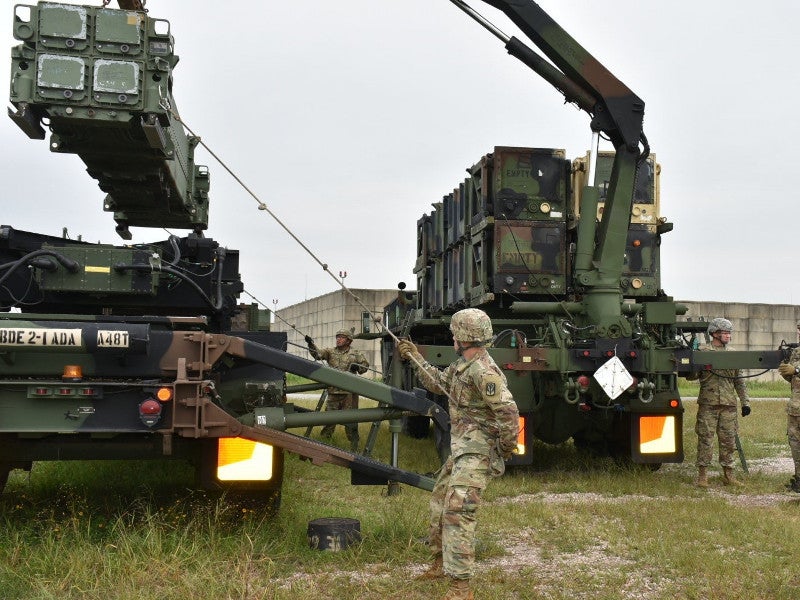
The M901 launching station transports, points, and launches the Patriot missile. Each launcher has four missiles. The launcher is remotely operated via a very high frequency (VHF) or fibre-optic data link from the engagement control station, which provides both the missile pre-launch data and the fire command signal.
Engagement control station
The AN/MSQ-104 x control station is the only manned station in a Patriot fire unit. The control station communicates with the M901 launching stations, other Patriot batteries and the higher command headquarters.
The control station is manned by three operators using two consoles and a communications station with three radio relay terminals. The digital weapon control computer is located next to the VHF data link terminals.
Modern Man Stations (MMS) is an upgrade to the Patriot command and control system. It provides a full-colour graphical UI along with LCD displays.
Radar of Patriot air defence system
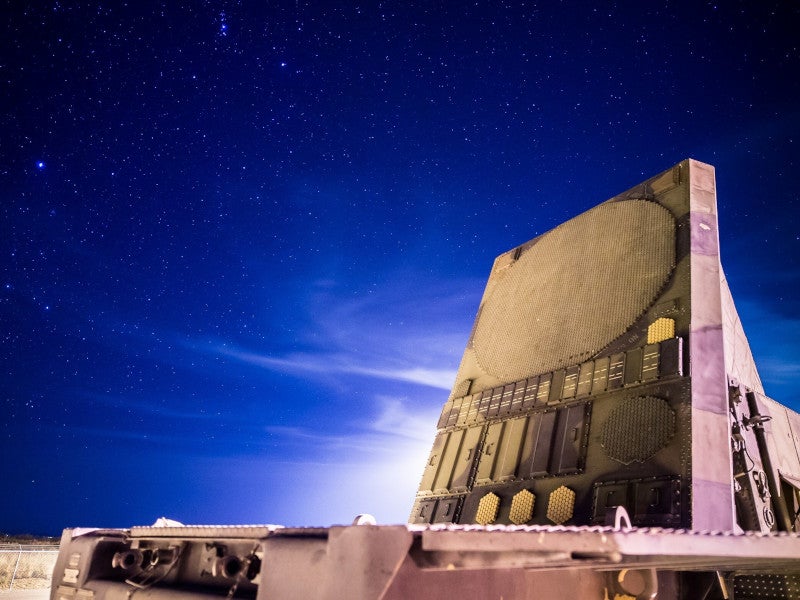
The AN/MPQ-53 phased-array radar carries out search, target detection, track and identification, missile tracking and guidance, and electronic counter-countermeasure (ECCM) functions. The radar is mounted on a trailer and is automatically controlled by the digital weapons control computer in the engagement control station via a cable link.
The radar system has a range of up to 100km, the capacity to track up to 100 targets and can provide missile guidance data for up to nine missiles.
Raytheon is upgrading the US Army Patriot radars. The upgrade kits provide greater power for the radar and the addition of wideband capability for improved target discrimination.
Target engagement can be carried out in manual, semi-automatic or automatic modes. When the decision has been made to engage the target, the engagement control station selects the launch station or stations, and pre-launch data is transmitted to the selected missile. After launch, the Patriot missile is acquired by the radar.
The command uplink and the TVM downlink allow the missile’s flight to be monitored and provide missile guidance commands from the weapon control computer. As the missile approaches the target, the TVM guidance system is activated, and the missile is steered towards the target. A proximity fuse detonates the high-explosive warhead.
Patriot orders and deliveries
Raytheon received a $235.5m contract to improve the Patriot system with radar digital processor (RDP) kits for the US and two partner nations in July 2014. The US Army Aviation and Missile Command awarded a $109m engineering services contract to Raytheon for its Patriot system in September 2014.
Raytheon received a $2.4bn FMS contract to provide new-production Patriot system fire units to Qatar in December 2014.
In March 2014, Raytheon received a $655m contract from the US Army Aviation and Missile Command for providing new-production Patriot system fire units to Kuwait.
The US Government approved the export of a Gallium Nitride (GaN) based active electronically scanned array (AESA) Patriot sensor to system partner nations in February 2015.
In April 2015, Raytheon received a $2bn international order to provide fully digitised, new-production Patriot fire units with the latest technology for enhanced threat detection, identification and engagement. In the same month, the Patriot system was selected by Poland for its two-phase medium-range integrated air and missile defence procurement programme called Wisła.
Raytheon received a $212m contract from the US Army for the improvement of the Patriot air and missile defence system during the same month. The company was also awarded a $255m contract from an undisclosed customer for enhancing Patriot missile defence capability in October 2016.
The Royal Netherlands Defence Materiel Organisation awarded a contract to Raytheon for a Patriot missile system with an MMS interface in October 2016.
Romania signed an agreement with the US Government for the Patriot air and missile defence system in November 2017. Raytheon was awarded a $395.8m contract to build a Patriot fire unit for Romania in May 2018. The country requested three additional Patriot systems in November 2018.
It inducted the first Patriot system in 2020. Romania became the first country in the world to induct the latest version of the missile. The upgraded version delivered in 2022 features hardware and software modifications. It completed a technical review by the US Army.
Raytheon was awarded a contract worth $1.5bn by the US Army to build and deliver four Patriot fire units for Poland in September 2018. The contract was awarded as part of phase one of the Wisła programme.
In December 2018, Sweden awarded a $692.9m contract to Raytheon through the US Army’s FMS programme for the production and delivery of an undisclosed number of Patriot fire units, along with GEM-T interceptor missiles. It received the first Patriot unit during a handover ceremony in November 2021. The unit was declared operational in December 2021.
Raytheon was awarded a $105.5m contract by the Nato Support and Procurement Agency (NSPA) to upgrade Germany’s Patriot system to the latest configuration in July 2019.
It received a $551m contract to commence the production of the Patriot systems for Bahrain in January 2020. The contract followed an agreement between the US and Bahrain for the purchase of Patriot defence systems for the latter in August 2019.
Switzerland’s federal council decided to purchase five Patriot fire units for its BODLUV GR air defence system programme in June 2021. Patriot was chosen over the SAMP/T ground-based air defence system. It is expected to replace the country’s ground-based anti-aircraft defence system by 2030.
The selected team comprises Raytheon Technologies, Rheinmetall Air Defence, and Mercury Systems. Swiss aerospace and defence company RUAG joined the team in October 2021. Switzerland will become the 18th country to use Patriot as the air defence solution when it receives the system.
