

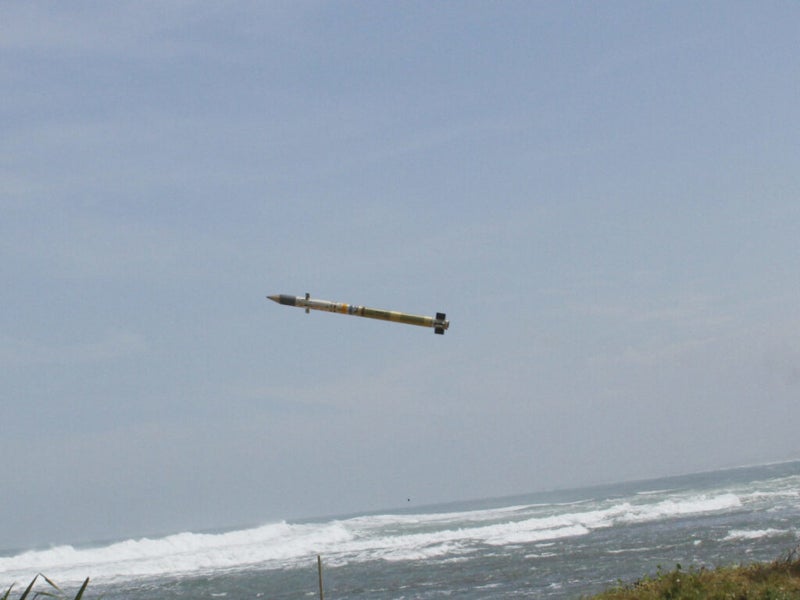
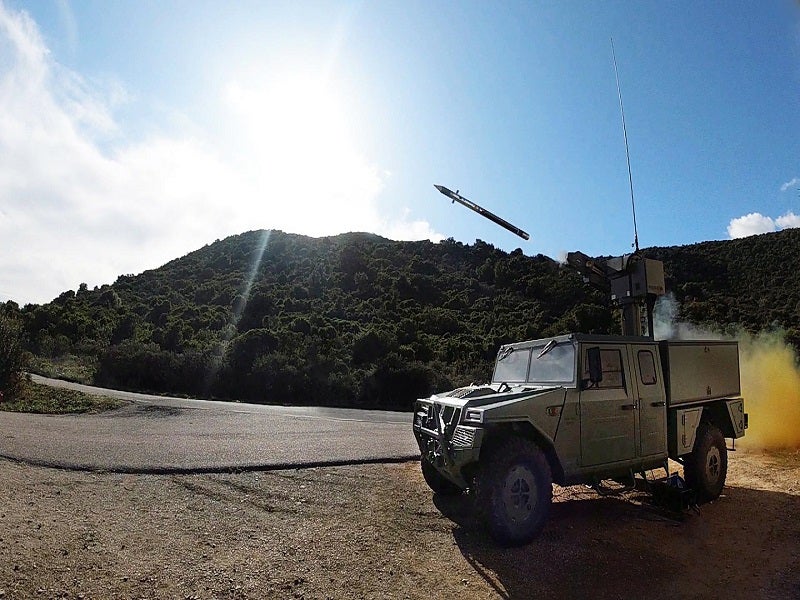
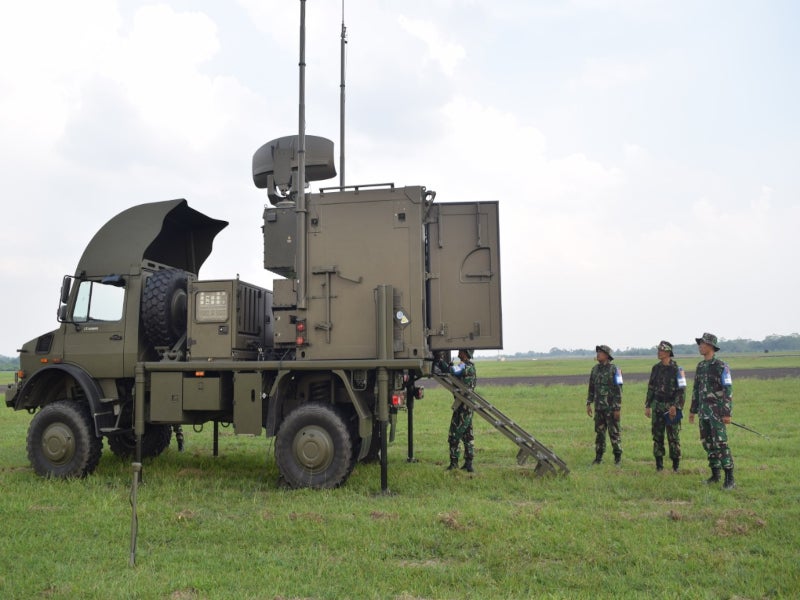
Mistral is a very short-range air defence (SHORAD) missile system that can be used from vehicles, surface ships and helicopters, as well as in a portable configuration.
Development of the French portable missile SATCP (sol-air à très courte portée), which later became Mistral, began in 1974.
Recommended Buyers Guides

Matra was selected as the prime contractor to develop the Mistral in 1980. Matra later became Matra BAe Dynamics, which is now known as MBDA, a defence company based in France. MBDA was formed by merging the missile systems activities of Matra BAe Dynamics, Aerospatiale Matra (EADS) and Alenia Marconi Systems.
Mistral entered series production in 1989 and has been deployed by more than 40 armed forces. In June 2001, the last of 45 ATLAS launchers and nine MCP with Mistral 2 missiles were delivered to Hungary.
Mistral 3, the latest in the Mistral series of missiles, is currently in service with the French armed forces.
France, Cyprus, Belgium, Hungary and Estonia signed a Letter of Intent (LoI) to jointly acquire the Mistral 3 ground-based air defence system in June 2023. French procurement agency Direction Générale de l’Armement (DGA) will procure the missiles on behalf of all the partner nations.
Orders and deliveries
In February 2007, Estonia placed an order for the Mistral 2 missile system. The contract was valued at €60m ($77.7m) with 25 launchers entering service in 2009.
Estonia signed a €50m ($58.9m) contract for another batch of Mistral missiles in June 2018, with the option for the delivery of additional missiles worth up to €100m ($117.92m). The contract provided access to the latest generation Mistral SHORAD missiles.
The Serbian Ministry of Defence acquired Mistral 3 missiles from MBDA in July 2019, becoming its 32nd buyer and the tenth country to possess Mistral missiles.
MBDA collaborated with India-based Bharat Dynamics for the final assembly, integration and testing of Mistral and ASRAAM missiles in September 2019. The two companies signed a memorandum of understanding for the manufacturing of Mistral missiles at BDL in June 2022.
The Croatian Government approved the procurement of Mistral 3 surface-to-air missiles for €72m ($76m) in December 2022.
The Norwegian Government donated about 100 Mistral air defence missiles along with several launchers to Ukraine in April 2022, in response to Ukraine’s request for international military assistance to meet the requirement for weapons during its ongoing conflict with Russia.
Mistral 2 ‘fire and forget’ anti-aircraft missile
The fully autonomous ‘fire and forget’ Mistral 2 missile is equipped with a two-stage solid propellant rocket motor designed and developed by Snecma Propulsion Solide in Paris using EURENCO (formerly SNPE) propellant charges.
The missile is armed with a 3kg high-explosive warhead loaded with tungsten ball projectiles. The warheads, supplied by French-based Manufacture de Machines du Haut Rhin, are equipped with a contact fuse, a laser proximity fuse and a time delay self-destruct device.
Guidance is by passive infrared homing using an indium arsenide detector array operating in the three to five-micron waveband, which was developed in Paris by SAT, now Safran, which was formed by the merger of SAGEM and Snecma. The detector array is housed in a low-drag transparent hexagonal pyramid-shaped nose cone.
Compared to any other low-level air defence missile, Mistral is more reliable and successful. It has a success rate of 93%.
MANPADS operating system details
The man-portable air defence system (MANPADS) is portable by two people – one carrying the missile and one carrying the firing unit. It can be set up and ready to fire in 60 seconds. The firing station has a seat, a fire control unit and a compressed air supply.
Compressed air initiates the missile’s gyroscopes and is used as the coolant for the infrared detectors. A telescopic sight is used for target acquisition. The IFF (identification, friend or foe) interrogator installed in the launcher operates while the target is being tracked.
The system can be fitted with a thermal imaging night sight, such as the Sagem MATIS or Thales (formerly Pilkington) Optronics MITS 2.
Sagem received a contract in February 2002 to provide MATIS sights for the French Air Force. The missile is fired when the gunner sees a confirmation light on the launcher to signal that the infrared sensor system is locked-on to the target.
On firing, the booster motor accelerates the missile to a speed of 40m/s and burns out before the missile leaves the launch tube. In less than 0.4s, with the missile at a distance of about 15m from the gunner, the sustainer motor ignites and accelerates the missile towards the target at Mach 2.5. The range of the missile is up to 6km, which it reaches in nine seconds.
Mistral coordination post (MCP)
The Mistral coordination post (MCP) enables day and night coordination, control and monitoring of up to 12 MANPADS systems, ALBI or ATLAS firing units.
The MCP is fitted to a light armoured vehicle, such as the Panhard VBL 4×4 or off-road light vehicle. The MCP is in service with NATO countries and has been ordered by Oman.
ALBI twin Mistral 2 launcher
ALBI is a twin launcher firing post for the Mistral 2 missile that was launched by Matra BAe Dynamics in 2000. The first customer for the ALBI was the Sultanate of Oman, which ordered the system in November 2000.
The firing post is installed on a retractable turret, which is mounted on an armoured, tracked or wheeled vehicle.
The systems for Oman are mounted on the Panhard VBL light armoured vehicle. The system can be operated and set up by a single gunner and can be equipped with a thermal imaging sight.
Atlas twin Mistral launcher
Launched in the early 1990s, Atlas is a twin-launcher for the Mistral Air defence system. It has been designed to provide greater mobility, flexibility, high firepower and autonomy and can be installed on many high-mobility vehicles or used in a pedestal version.
The system can be made operational in under five seconds and has been engineered to be fired in less than five seconds.
Mistral missile vehicle mounts
Mygale, supplied by French defence systems manufacturing company Thales, is a short-range modular air defence system comprising an Aspic launcher and a fire control station. The fire control station contains a TRS.2630 Griffon two-dimensional pulse-Doppler radar developed by Thales.
The Aspic launcher is a four-launch unit on a pedestal mount and fitted with a television sight and tracking system. Aspic can be equipped with a thermal imager, a laser range finder and an IFF transponder. Aspic can fire Mistral or Stinger missiles. Mygale can control up to eight Aspic launch stations, each with four missile launchers.
The French Army selected Samantha, a variant of the Mygale. Samantha uses a Panhard light armoured vehicle with a telescopic mast, a Griffon radar and a command and control system.
Guardian, developed by Matra and Boeing Defense Systems, uses the Mistral and is based on the HMMWV M998 high-mobility wheeled launch platform. Some of the subsystems are common with the Boeing Avenger mobile short-range air defence system.
The General Dynamics/Thales Blazer air defence system is based on the Mowag Pirhana 8×8 armoured vehicle with a Blazer turret. The turret is fitted with a Thales Gerfaut search radar, Mistral missiles, a television and thermal sight and a 2.5km range GE GAU-12 25mm Gatling gun.
Saab Microwave Systems was contracted to provide the associated Giraffe AMB3D air defence radars. Deliveries began in July 2008.
The Mistral ATLAS RC is based on a remotely controlled turret that can carry up to four Mistral missiles. It is equipped with the latest generation thermal sight and can be installed on light armoured vehicles such as the URO VAMTAC ST5, ARCUUS SHERPA or NIMR Ajban 440.
The combat system for the Mistral missile
MBDA and Rheinmetall Defence Electronics developed the multi-purpose combat system (MPCS), which is armed with four Mistral missiles.
The system consists of an armoured wheeled vehicle with a turret which has a Rheinmetall DE EOSS day / thermal sensor suite with an integrated laser rangefinder. The first missile firing tests of the MPCS took place in 2009.
Shipborne and airborne Mistral missile systems
Mistral is also successfully deployed in shipborne and airborne roles. It was tested for its anti-surface capabilities against fast boats, such as Fast Inshore Attack Craft in January 2019.
In the test, SIMBAD RC automated naval turret fired Mistral from land at a fast-moving boat more than 3km off the shore successfully. SIMBAD is a remotely-controlled very short-range naval air defence system.
Sadral is an automated naval mount capable of launching six rounds of Mistral missiles at multiple targets in anti-aircraft and anti-missile operations.
Based on SIMBAD, Self-Protection Integrated Mistral Module is an all-in-one air defence module designed for all types of ships. The helicopter-borne versions of Mistral are the air-to-air Mistral ATAM or air-air très courte portée.
Mistral ATAM provides fire-and-forget engagement mode and increased kill probability. The system includes two launchers, each equipped with two missiles.
MBDA successfully demonstrated the effectiveness of Mistral missiles against fast inshore attack craft during both day and night.
Mistral 3 air defence missile details
Mistral 3 features an infrared imaging seeker and possesses advanced image processing capabilities.
The missile possesses the capability to effectively target and engage objects with minimal heat signatures, including unmanned aerial vehicles, turbojet-powered missiles and fast attack craft at distances up to 7.5km. Furthermore, it provides exceptional resilience against countermeasures.
Mistral 3 testing details
In November 2019, Mistral 3 missile demonstrated its increasing capabilities by intercepting a moving target at more than 7km range. Complete installation with Saab Giraffe 1-X radar system, a LICORNE command and control unit and an ATLAS-RC launcher was utilised to hit a small MIRACH 40 target in the firing test.
