

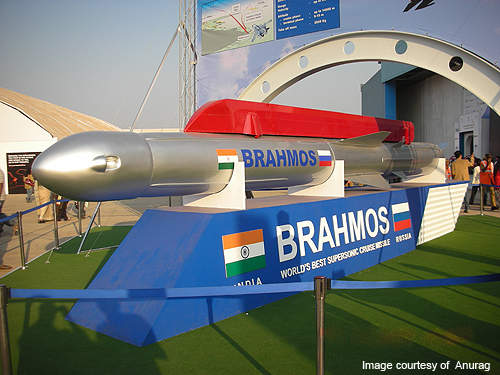
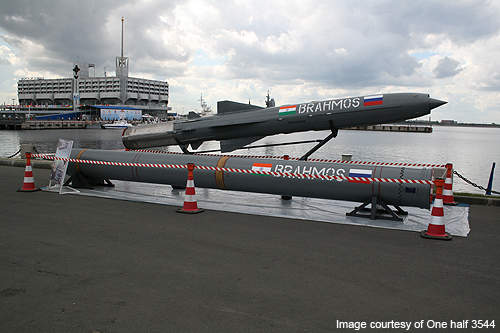

BrahMos is a supersonic cruise missile being developed by BrahMos Aerospace, a joint venture between Defence Research and Development Organisation (DRDO) of India and NPO Mashinostroeyenia (NPOM) of Russia. The missile can be launched against ships and land-based targets. The missile is named after two rivers, the Brahmaputra in India and the Moskva in Russia.
Recommended Buyers Guides

BrahMos has a flight range of up to 290km and can reach a maximum speed of Mach 3. The air launched version of the missile is under development as of 2013.
Advanced satellite navigation systems from Russia’s Kh-555 and Kh-101 strategic long-range cruise missiles, and GPS-GLONASS technology were added to the existing doppler-inertial platforms of BrahMos missiles in 2013.
The missile can be installed on ships, submarines, aircraft and ground vehicles. BrahMos missiles are inducted in to the armed forces of India and Russia and can also be exported to friendly nations.
The ‘Fire and Forget’ type missile weights 3t and intercepts surface targets at an altitude of 10m up to 14,000m. In February 2011, the Indian Army placed a $4bn order with BrahMos Aerospace for BrahMos missiles. Deliveries are expected to conclude by 2016. The total value of orders placed by the Indian Navy and Indian Air Force for BrahMos missiles was approximately $9bn as of March 2013.
BrahMos cruise missile development
In February 1998, India and Russia signed an inter-governmental agreement to establish BrahMos Aerospace for producing the BrahMos missiles. The first BrahMos missile was test fired from the integrated test range at Chandipur in Orissa Coast in June 2001. Since then, the missile has been successfully tested from a variety of platforms, including land-based platforms and warships.
In 2008, BrahMos Aerospace acquired Indian state-owned firm Keltec to manufacture and integrate BrahMos components and missile systems. This was necessary to meet the increased orders received from the Indian Army and Navy.
A hypersonic version of the BrahMos, with a speed of Mach 7, is also under development. It is expected to be ready for testing by 2017.
BrahMos design and features
BrahMos is derived from the Russian made P-800 Oniks / Yakhont supersonic anti-ship cruise missile.
The BrahMos propulsion is based on the Oniks, while the guidance system was developed by BrahMos Aerospace.
Related project
Pinaka Multibarrel Rocket Launch (MBRL) System, India
Pinaka is a multibarrel rocket launch (MBRL) system used by the Indian Army.
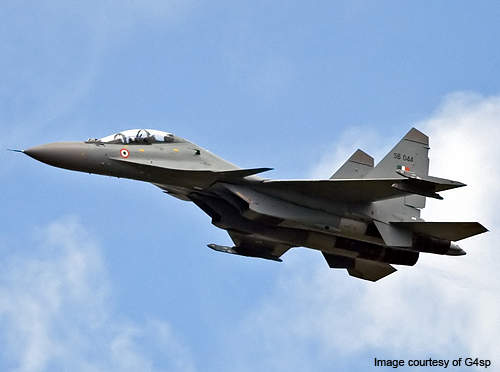
The missile can be configured for land, sea and aerial platforms. An aircraft-launched variant (BrahMos A) is currently being configured for the Sukhoi SU-30MKI aircraft of the Indian Air Force (IAF). It features a smaller booster and additional tail fins for greater stability during launch.
The ship and land-based BrahMos missiles can carry a conventional semi-armour-piercing warhead of 200kg, while the aerial variant can carry a 300kg warhead. These missiles can intercept surface targets as low as 10m in altitude.
The deep penetration capabilities of the Brahmos was tested successfully in November 2013 at the Pokhran test range in Rajasthan, India.
BrahMos block-I, block-II and block-III
The land-based BrahMos block-I was successfully test fired twice in December 2004 and March 2007. The missile was inducted in to the Indian Army in June 2007. Block II, the land attack variant of BrahMos, has also been developed. The missile was first tested in January 2009. In September 2010, the missile was test fired at supersonic speeds in a steep-dive mode and created a world record. In December 2010, the BrahMos block-III+ version was successfully test-fired from the integrated test range at Chandipur, off the Orissa Coast, India.
The Indian Army conducted the 32nd test-firing of the BrahMos missile from the integrated test range at Chandipur in July 2012. The test firing was part of development trials to evaluate newer subsystems added to the missile.
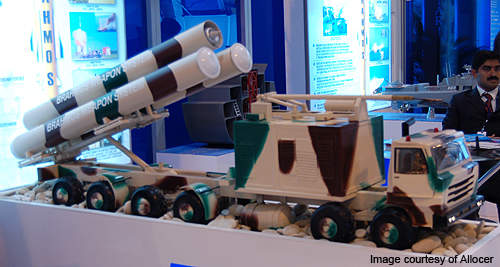
The land-based missile system consists of four to six mobile autonomous launchers, a mobile command post and mobile replenishment vehicle. The Indian Army regiment of BRAHMOS-I variant includes 67 missiles, five mobile launchers based on 12×12 Tatra vehicles and two mobile command posts. The first two regiments have been introduced by the Indian Army and the third is being inducted as of 2013.
BrahMos N1 ship-based cruise missile
The ship-based BrahMos N1 is launched either from the inclined or vertical launch platform.
Related project
AGM-114 Hellfire II Missile, USA
The AGM-114 II Hellfire is an air-to-ground missile developed primarily for the anti-armour role.
The missile system can be installed on frigates, corvettes, offshore patrol vessels and other types of vessels to attack sea and land-based targets.
BrahMos Aerospace has developed a universal vertical launcher module (UVLM) for the BrahMos N1 missile.
The UVLM can launch up to eight missiles to destroy a group of warships featuring modern anti-missile defence systems.
The first variant of BrahMos N1 has been installed on front-line warships of the Indian Navy from 2005. A highly manoeuvrable variant of the BrahMos missile was successfully test fired in October 2012 from INS Teg, a Talwar Class guided missile frigate of the Indian Navy.
The ship-based cruise missile consists of a fire control system, with high salvo launch capability and enhanced with an inertial navigation system.
BrahMos air launch missile
BrahMos Aerospace has completed the development of an air launch variant. The aircraft launcher is being manufactured in cooperation with the Sukhoi Design Bureau, HAL and IAF. The launch platform is integrated in to the SU-30 MKI aircraft.
Russia signed a contract with India in December 2012, to integrate the BrahMos with the Su-30MKI aircraft for developing an air launch variant of the missile.
The Indian government has decided to lower the weight and strengthen the structure of the aircraft and rocket launcher of the BrahMos in order to make it more suitable for integration with the SU-30 MKI.
The first test for the air launch missile will be carried out by the end of 2013 and the new missile will be inducted in to the IAF in 2014.
BrahMos submarine launch missile
The submarine-launched BrahMos missile was successfully test fired on 20 March 2013 at Vishakhapatnam. India is the only country in the world to own a submarine launched supersonic cruise missile.
The missile can be fitted on a vertical launcher installed in the pressure hull of the submarine. It can be launched from submarines under a water depth of 40m-50m. The missile has a range of 290km and can travel at a speed of Mach 3.
BrahMos-2 hypersonic version
The hypersonic version of the BrahMos missile is under development. It can travel at a speed of Mach 5 to Mach 7. It will be the fastest hypersonic missile in the world, when fully developed.
The Moscow Institute of Aviation, Russia, and a team of scientists of IISc Bangalore will develop new technologies for the hypersonic version.
Propulsion
BrahMos is powered by a two-stage propulsion system. Initial acceleration is provided by a solid-propellant booster and supersonic cruise speed is provided by a liquid-fuelled ramjet system. The air-breathing ramjet propulsion is more fuel-efficient in comparison with conventional rocket propulsion. It provides the BrahMos with a longer range over similar missiles powered by rocket propulsion.
The Global Missiles and Missile Defence Systems Market 2011-2021
This project forms part of our recent analysis and forecasts of the global missiles and missile defence systems market available from our business information platform Strategic Defence Intelligence. For more information click here or contact us: EMEA: +44 20 7936 6783; Americas: +1 415 439 4914; Asia Pacific: +61 2 9947 9709 or via email.
