

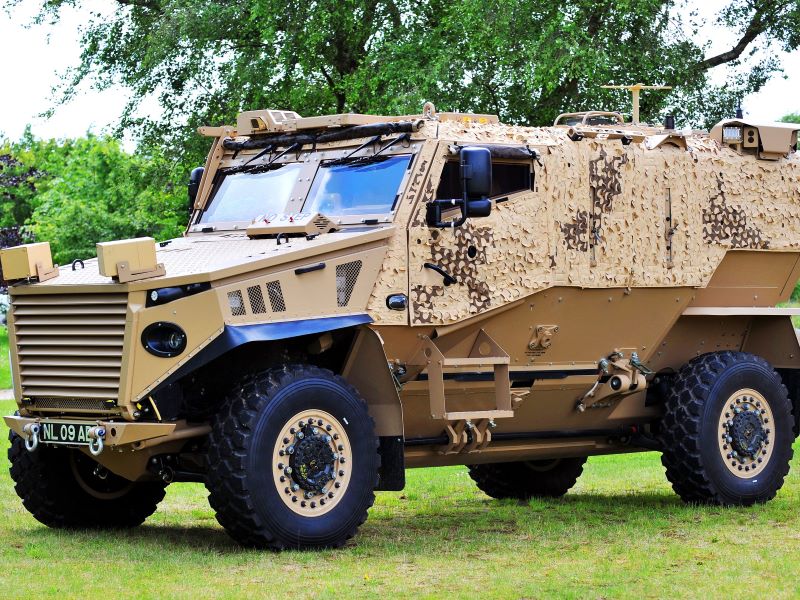
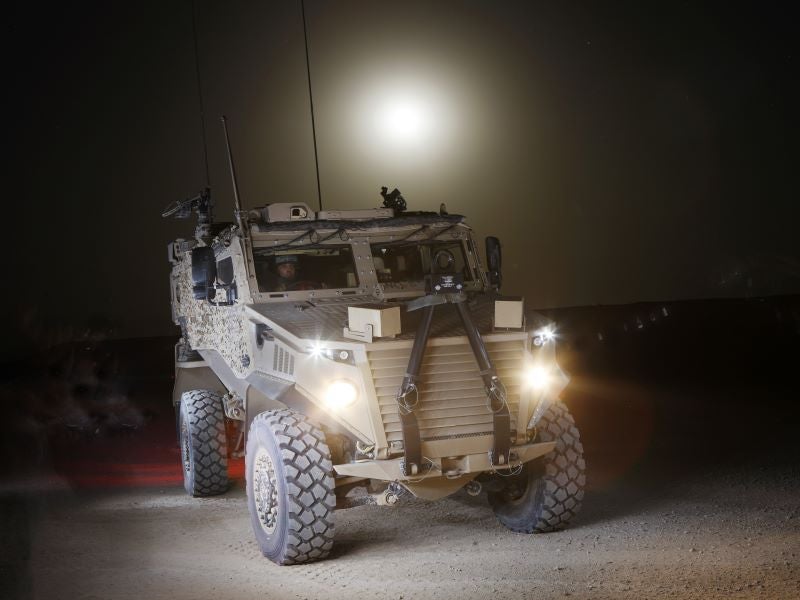
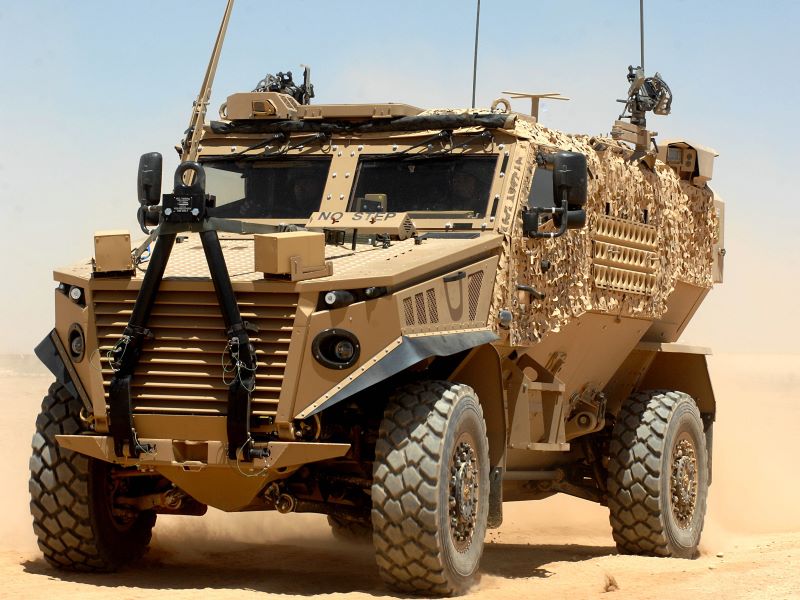
The Foxhound light protected patrol vehicle (LPPV), previously known as Ocelot, was jointly developed by Ricardo and Force Protection Europe, part of General Dynamics.
The LPPV was launched at the Defence Systems & Equipment International Exhibition (DSEi) in London in September 2009.
Recommended White Papers

Recommended Buyers Guides

The 7.5-tonne lightweight mine-protected vehicle is designed to provide better protection and flexibility than its preceding light vehicles in the market.
The British Ministry of Defence (MoD) renamed the Ocelot the Foxhound to bring it into line with its other armoured wheeled vehicles such as the Mastiff and the Ridgback.
The Foxhound LPPV was specifically designed to meet the UK MoD’s £200m ($268.08m) LPPV programme requirements and replace the Snatch Land Rovers in use with the army. The Snatch Land Rovers have been criticised for their inability to protect against improvised explosive devices and roadside bombs in Iraq and Afghanistan.
In September 2025, Moog and General Dynamics Land Systems UK partnered to showcase a high-capability short-range air defence version of the Foxhound vehicle. The specialised variant made its first public appearance at DSEI 2025.
A total of 400 Foxhound LPPVs have been delivered by General Dynamics Land Systems-UK to the British Army since service entry in 2012.
Foxhound LPPV development
The Foxhound vehicle was developed under the banner Team Ocelot, with collaborators including Formaplex, DSG, Thales, QinetiQ and Sula. Force Protection was later acquired by General Dynamics in December 2011.
The UK MoD purchased two Foxhound vehicles for testing in April 2010. The invitation to tender was issued in May 2010.
In September 2010, the Foxhound LPPV was selected under the programme against the contender Supacat and NP Aerospace consortium’s SPV400. An initial £180m order for 200 Foxhound vehicles was made through the urgent operational requirements process in November 2010.
In December 2011, a further 100 Foxhounds were ordered as part of a £400m package of protected vehicles and Counter-Improvised Explosive Device technology for British Forces in Afghanistan. The contract was finalised in June 2012.
In August 2020, General Dynamics Land Systems-UK was awarded a contract by NP Aerospace, under the UK MoD’s Protected Mobility Fleet Vehicle Programme, to demonstrate an electric-drive variant of the Foxhound vehicle.
Foxhound design and features
The Foxhound LPPV includes an automotive armoured spine system or ‘skateboard’, onto which various special-role pods are mounted. These pods are detachable and can be interchanged based on the needs of different missions such as patrol, fire support or protected logistics.
This combination of the skateboard spine system and pods, along with advanced composite technology, makes the LPPV flexible, survivable, and highly protective against blasts and mines.
The vehicle is 5.3m long, 2.3m high and 2.1m wide. The four-wheel steering provides it with a turning circle of 12m.
Another unique feature of the Foxhound is its low centre of gravity, as all the heavy items are placed under the skateboard. The vehicle can be accessed through large rear doors, two top hatches or from the oversized commander’s door.
Foxhound patrol vehicle
The patrol version of the LPPV has seating for two crew and four dismounts. The fire support variant and the protected logistics variant have a seating capacity of two crew and two dismounts, and two crew, respectively.
At a maximum payload of 2,000kg, the vehicle can reach a maximum speed of 112 kilometres per hour (km/h). The gross vehicle weight rating of the Foxhound LPPV is 7,500kg. The low maintenance of this vehicle enables the assemblies to be rapidly changed in the field instead of taking it back to the base workshop for any repairs.
Mission variants
The Foxhound LPPV has been built to be flexible enough to perform numerous missions as and when required. The assemblies of the vehicle can be changed and fitted in 30 minutes to customise it for specific missions.
The latest Foxhound variant is equipped with Moog’s Reconfigurable Integrated-weapons Platform (RIwP) to provide the British Armed Forces with improved short-range air defence and counter‑unmanned aircraft system (UAS) capability.
The variant showcased at the recent DSEI was fitted with the British Army’s in-service high-velocity/lightweight multirole missiles, a 30x113mm cannon for a generalist counter‑UAS role, a 7.62 mm machine gun and an electro‑optic sensor.
The RIwP has a common base hub that can be configured for multiple critical tasks, meaning the Foxhound could also be adapted for other priority roles including counter‑drone missions and anti‑armour tasks as part of a mounted close-combat overwatch role.
Engine
The Foxhound LPPV is fitted with a Steyr 3.2-litre engine. It is a six-cylinder, four-stroke diesel engine with a turbocharger. The vehicle is also fitted with six speed auto-transmission and independent, lockable differential axles.
Foxhound LPPV mine protection
The vehicle has a V-shaped hull, which provides maximum protection to the crew. The hull, running all through the vehicle length, also includes the drive line, main fuel tank, generator, batteries and the powerpack.
The crew area is separated from the running gear, reducing the danger of injury from the running gear while on attack. The crew and the dismounts are separated by the bulkheads placed between them and kept away from the vehicle’s electronic equipment – providing high protection. The vehicle was successful against blast and mobility tests conducted for more than 12 months.
Manoeuvrability
The Foxhound LPPV is an improved medium mobility load carrier, having high mobility and combat performance features. The suspension system provides 338mm of ground clearance under normal loaded conditions. The power-to-weight ratio is 19.3 kilowatts per tonne (kW/t) (25kW/t in combat mode).
Each LPPV can be transported in a C-17, C-130 and CH-47 (underslung) aircraft.
