

Barak MX is an integrated air and missile defence system developed by Israel Aerospace Industries (IAI), an aerospace and defence company.
The platform is a unified solution that provides comprehensive air defence coverage to mobile land forces for countering multiple aerial threats from different sources and ranges, even on the move.
Recommended Buyers Guides
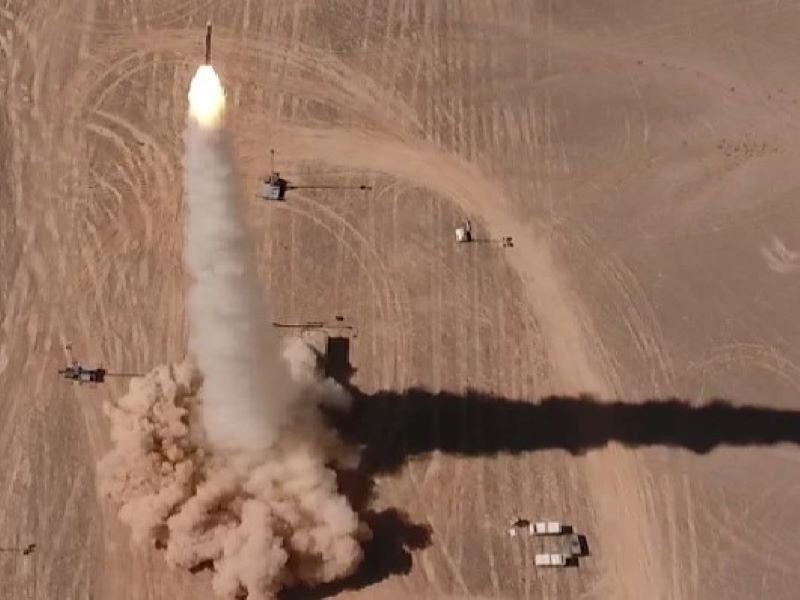
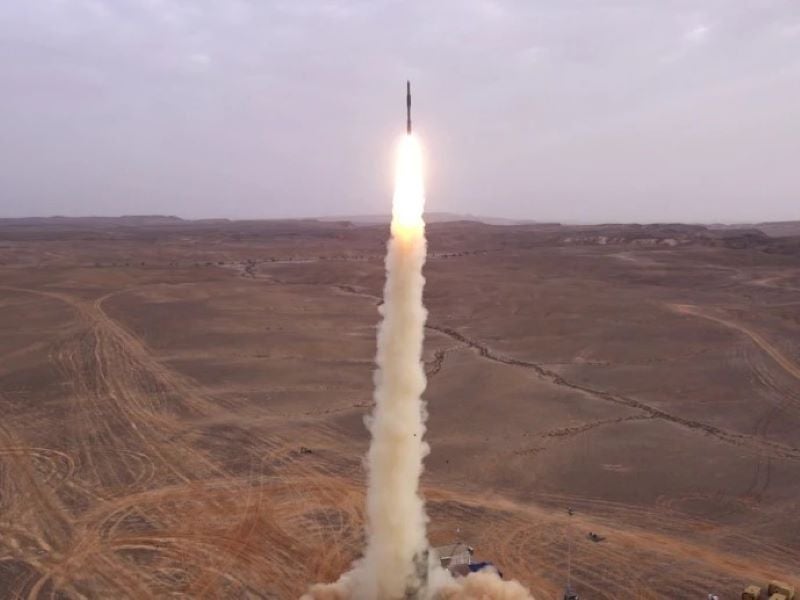
IAI completed a series of live firing trials with the Barak MX air defence system in March 2021. The system was tested for its ability to manage a range of scenarios and threats including interception of an attacking ballistic target by the Barak extended range (ER) interceptor.
Barak MX defence system design and details
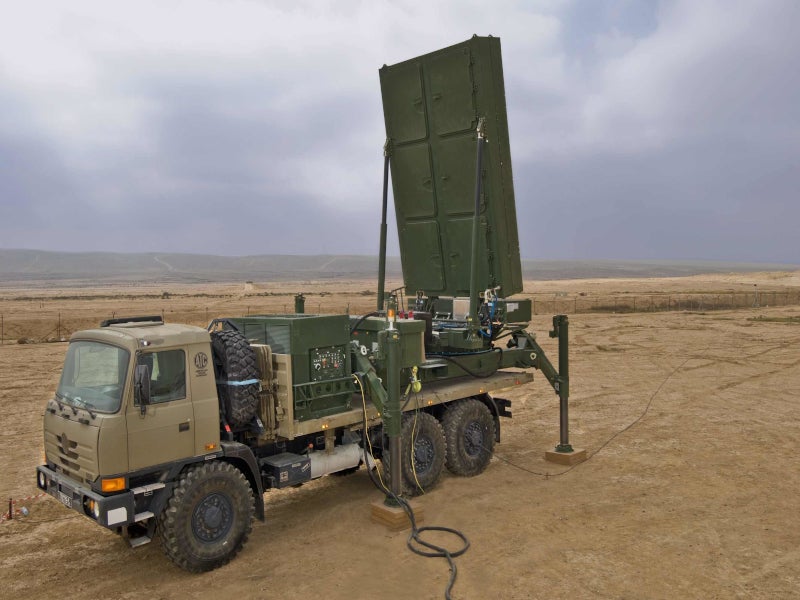
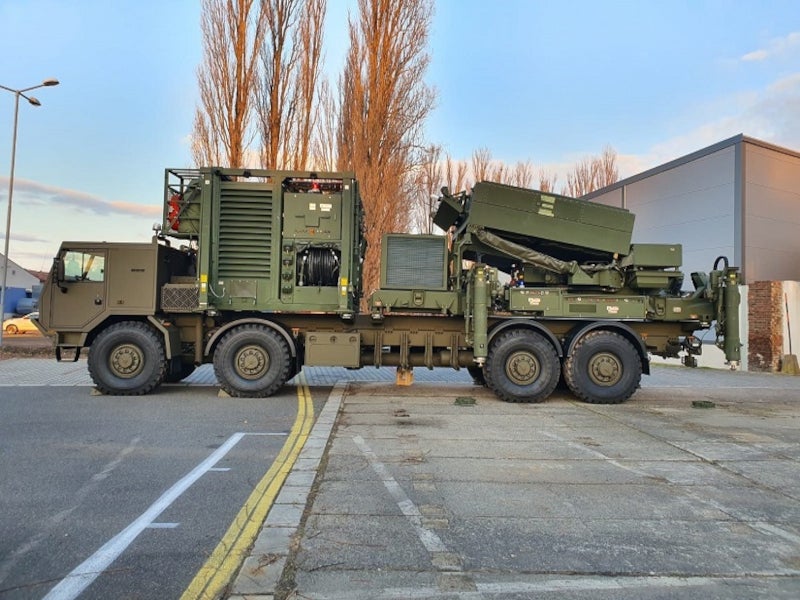
The Barak MX system comprises the Barak battle management centre (BMC), IAI’s multi-mission radar (MMR), launchers equipped with surface-to-air missiles, a missile reloading vehicle and a logistic support vehicle.
All elements are mounted on high-mobility platforms, allowing rapid deployment and readiness within a short time. Any combination of the three components can be connected and utilised based on the incoming threat.
The modular design offers a cost-effective operational capability to handle different mission requirements and optimise operational effectiveness. The system is adaptable to address future threats.
Barak BMC details
The Barak BMC is available in mobile, deployable or stationary configurations tailored to operational requirements. It creates and manages a unified air picture and interfaces with any command-and-control system. It selects the battle management system and manages the multi-interceptor launch array.
Barak interceptors details
The Barak MX system includes three types of advanced Barak interceptors. The Barak medium-range air defence (MRAD) with a single pulse rocket motor has a range of up to 35km, while the Barak long-range air defence (LRAD) with a dual pulse rocket motor has a range of up to 70km.
The Barak ER, with a dual pulse rocket motor and an additional booster, has a range of up to 150km. The interceptors offer fast and reliable target acquisition with high immunity to electronic countermeasures.
All versions have an advanced active radio frequency seeker for low radar cross section and for seeking manoeuvring targets, and can carry a large warhead. They are launched vertically to achieve 360-degree coverage, quick reactions and short minimal ranges.
The three interceptor variants are integrated into the BMC with a unified Barak land-based launcher, which can stop and deploy in under two minutes. The launcher can deploy eight missiles.
The MRAD and LRAD missiles can reach an altitude of 20km, while the ER missiles can reach 30km with 50g manoeuvrability. A data link enables communication between the BMC and the missiles.
IAI has also introduced the Barak SR, the latest short-range interceptor in the Barak MX family. With a 15km range and 360-degree vertical coverage, it is designed for naval and ground-based air defence from sea and land, and is intended to counter unmanned aerial vehicle (UAV) swarms, loitering munitions and incoming missiles.
The interceptor has an altitude of 9km and is purpose-built for point defence, area defence and force protection missions. Each launcher can carry eight missiles in naval configurations and 15 missiles in land-based configurations.
Sensors details
The Barak MX system includes legacy sensors and a fully digital integrated phased array MMR developed by IAI.
It is equipped with active electronically scanned array (AESA) radars developed by ELTA Systems, a subsidiary of IAI, such as the ELM 2138 MMR and ELM-2084 MMR, which are capable of mobile operations.
ELTA’s MMR is a 3D multi-beam AESA radar system with gallium nitride technology. The radar can identify and monitor both aircraft and ballistic targets and provide fire control guidance for missile interception or artillery air defence. The radars are available in different sizes and configurations.
The Barak MX system can be integrated with existing as well as new sensors.
Capabilities
The Barak MX defence system can operate in all weather, day and night. It can handle multiple threats including aircraft, helicopters, gliding bombs, UAVs and cruise missiles.
It can be deployed in point defence and area defence missions and can adapt to joint task force coordination battle conditions.
Barak MX’s distinctive networking capability enables protected zones to be extended by linking several units together, allowing individual fire elements to draw on shared resources to strike threats outside their own engagement envelopes.
It also supports the combined integration of land-based and naval air-defence systems within a single, layered network, improving area coverage and helping to prevent adversary penetration or missile strikes.
Live firing trials
In March 2021, IAI carried out a series of live firing trials of the Barak air defence system, assessing its performance across multiple scenarios and threat types. The testing included the interception of an incoming ballistic target using the Barak ER interceptor.
The Barak ER interceptor completed another round of trials in April 2021. The interceptor used during this series was drawn directly from the company’s production line.
In September 2021, IAI began integrating Barak MX interceptors on the Israeli Navy’s Sa’ar 6 corvettes. The Barak MX system was chosen following trials that showed it met existing operational needs and could be adapted to expected future threats.
A long-range Barak LRAD interceptor was tested at sea in December 2022 and successfully detected and intercepted a target designed to replicate an advanced cruise missile.
Barak MX orders and deliveries
IAI signed a deal to supply the Barak MX air and missile defence system to Morocco in February 2022 under a deal worth more than $500m (NIS1.52bn).
Colombia awarded a contract worth $131.2m (420.96bn pesos) to IAI to deliver truck-transportable Barak MX air defence systems and missiles for the Colombian army in January 2023. The missiles are expected to be delivered by September 2026.
In March 2023, IAI signed a memorandum of understanding (MoU) with Daronmont Technologies, a defence company based in Australia, to work on the Barak MX air defence system. The agreement was linked to the Australian MOD Tender AIR-6502, which covers the procurement of defence systems and other Australian Defence Force (ADF) programmes.
Under the MoU, IAI plans to draw on Daronmont’s integration, development and manufacturing capabilities as part of its Australian Industry Capability strategy. This will support the delivery of a combat‑proven BARAK MX system, strengthening protection for the Australian Defence Force and key national assets, and enabling a fast initial operational capability.
In December 2025, IAI received a contract to provide the Royal Thai Air Force with the Barak MX air defence system. The agreement is intended to strengthen Thailand’s air defence by improving protection against tactical ballistic missiles and Air Breathing Targets including UAVs, fighter aircraft and cruise missiles.
Alongside the delivery of the system, the contract also included the signing of an MoU with Thai Aerospace Industries, setting out arrangements for collaboration on local maintenance and the transfer of know-how.
In April 2026, Israel’s Ministry of Defence, acting through the Defence Export Directorate and in coordination with IAI, delivered the BARAK MX air defence system to the Slovak Air Force under a €560m agreement signed in 2024.
