

- A US-led peace plan appears be the gaining political steam, although it reportedly requires Ukraine to cede territory
- Russia will be delighted with much of what has been proposed, which also includes forcing neutrality of Ukraine
- However, Kyiv may be running out of options with the prospect of a battlefield resolution as distant as ever
Disclosures of the renewed emphasis from the US to bring about a ceasefire and potential end to the Ukraine-Russia war represent the latest in a series of efforts by the White House to draw a line under the conflict, in a deal that appears to heavily favour Moscow.
In a widely leaked plan, Ukraine is being asked to cede both territory occupied by Russia as well as areas of the Donestk still under Ukrainian control, reduce the size of its army, and adopt a neutral stance on the world stage, effectively opting out of ever joining Nato.
Go deeper with GlobalData


Discover B2B Marketing That Performs
Combine business intelligence and editorial excellence to reach engaged professionals across 36 leading media platforms.
The latest point is a for Russia, which has cited as part of its reasoning for its large-scale invasion of Ukraine in February 2022 to prevent Nato’s eastwards expansion.
The timing of initial reporting of the peace deal is also notable, occurring while Ukrainian President Volodymyr Zelenskyy was out of the country on a visit to Turkey – ironically to discuss peace talks – as Defence Minister Denis Shmyhal met with a US delegation led by General Randy George, as reported by the Ukrainian Ministry of Defence on the evening of 19 November.
On his return, President Zelenskyy then held his own meetings with the US delegation on 20 November, where the US peace plan will have been relayed to him in person.
By the evening of 20 November, Zelenskky took to social media in his nightly address to speak about the proposed plan.

US Tariffs are shifting - will you react or anticipate?
Don’t let policy changes catch you off guard. Stay proactive with real-time data and expert analysis.
By GlobalData“Ukraine needs peace, a real peace that will not be broken by a third invasion,” he said, referring to the 2014 annexation of Crimea by Moscow and the beginning of a Russia-backed separatist movement in Ukraine’s eastern regions, and the subsequent 2022 invasion.
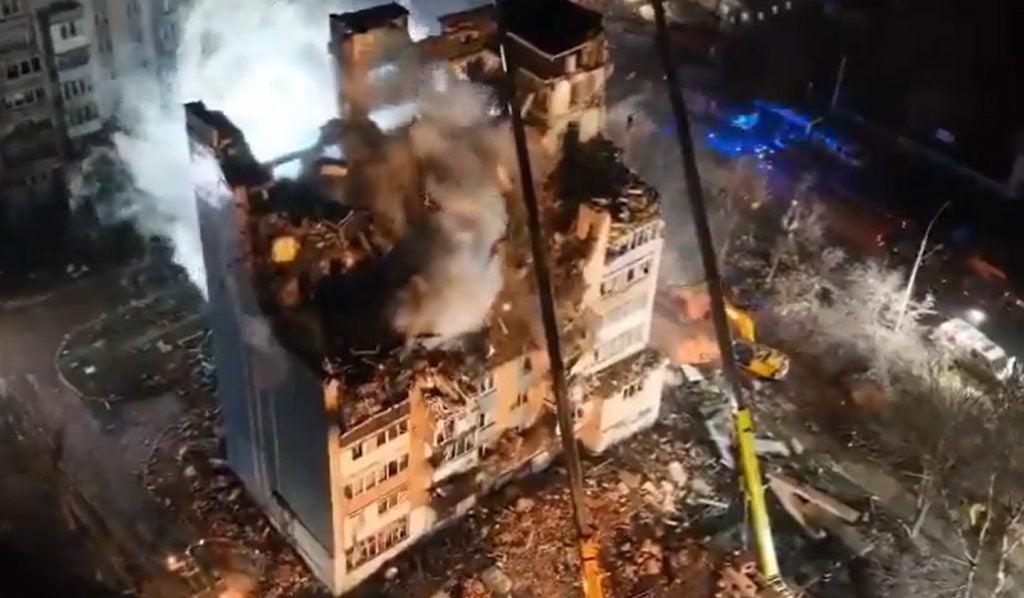
On the battlefields of Ukraine, Russia continues to press small advantages, at huge cost in manpower, as nightly bombardments continue throughout the country. Mostly recently, 27 people are reported to have died in a missile strike on an apartment block in the western city of Ternopil.
Is Ukraine running out of time, and options?
The prospect of ceasefire leading to a permanent peace in Ukraine, while capturing international media attention, appears to have barely moved the needle in the public sphere, with internet search engine trends preferring to focus on sporting events and Black Friday sales.
For Ukraine, the prospect of giving up further swathes of its territory annexed by Russia, and potentially areas it still retains control over, would be a bitter pill to swallow after nearly four years of intense combat operations against an existential threat.
Casualties for Ukraine are a closely kept secret, but it is likely to have suffered hundreds of thousands of combat losses. Conscription and recruitment efforts continue to try and fill gaps in units, while a shift from in combat from conventional to full-scale drone war have brought about a new lethality on the battlefield.
Less a frontline, Ukraine and Russia have now saturated a kind of ‘de-humanised’ zone along the eastern front, where drone swarms search up and down seeking targets.
In a purely practical sense, Ukraine being forced to reduce the size of its military, depending on the final number (reports indicate somewhere in the region of 500-600,000 personnel), could be mitigated through advances in drone warfare concepts of operations.
However, it is hard to see how Ukraine could agree a ‘neutral’ position after a ceasefire, given the scale of devastation inflicted on the country. In some circles, it would be seen as capitulation, where in others, perhaps a necessary step to ensure a future, albeit compromised.
Meanwhile, Russia will no doubt be keen to do all it can to encourage the US to continue with its efforts to secure a ceasefire and potential peace deal. The White House has consistently leant towards Moscow’s own demands for peace, which to Kyiv are unpalatable.
Any concession by Kyiv to Moscow’s demands – including the big three of land acquisition, reducing Ukraine’s military, and committing to an ‘non-aligned/Russian-centric’ geopolitical outlook – would represent a clear victory for President Vladimir Putin’s maximalist demands.
The deciding factor, realistically, will be around funding and the estimated $120bn that Ukraine will seek to spend in 2026 acquiring defence equipment. A recent plan to seize frozen Russian finances in European banks was unsuccessful, with a subsequent IMF proposal only for a fraction of what would be needed.
Kyiv could lean further into European lending structures, but this simply increases a debt that will have to be repaid. Ukraine could be running of time, as democratic Western allies, as ever, cede political territory to encroaching single party/person governments.
It is notable that 21 November marks Ukraine’s ‘Day of Dignity and Freedom’. The latest proposal for ‘peace’ in Ukraine could end of being the best of an increasingly bad set of options.



