

Russian advances in Ukraine have faltered coming into the first quarter of 2025, according to recent findings from the UK Ministry of Defence.
In one of the government’s regular updates on the war from the 5 April, the department revealed that Russian territorial gains have decreased “month by month” from 730.5km² in November 2024 to 143km² in March 2025.

Discover B2B Marketing That Performs
Combine business intelligence and editorial excellence to reach engaged professionals across 36 leading media platforms.
This correlates with Russian President Vladimir Putin stalling the peace process in order to negotiate from a position of strength over Ukraine.
However, the debilitating pace of Russia’s progress will not change in the near-term. Likewise, there are no expectations of a summer offensive that will penetrate Ukraine’s defences.
When success is measured in yards, it does not seem likely that Russia will weaken Ukraine’s Armed Forces enough to enter talks on its own terms. It does not help Putin that the United States, led by President Donald Trump, who made it his mission to broker an end to the three-year-long war, may soon decide to force Russia into negotiations with Ukraine, a country he has also bullied to the table.
Britain’s figures also undermine the prevailing narrative that Ukraine is ostensibly on the backfoot, albeit the country is still far from preserving all its territory in future negotiations. Observers have noted the gradual territorial advances Russian forces have made over the last several months, such as it efforts to envelop the town of Pokrovsk.
However, these efforts have always remained operationally insignificant. At present, Ukrainian drone operations and localised counterattacks are keeping Russian forces from capturing Pokrovsk according to the Institute for the Study of War.
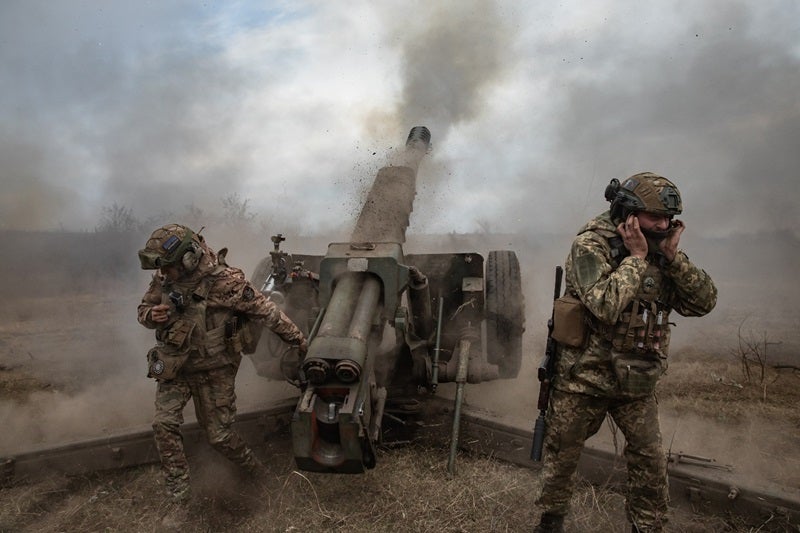
Manpower problem
Nevertheless, the Kremlin’s meat-grinder tactics have had a merciless toll on manpower – Russia’s and Ukraine’s. Although, for Ukraine, this is beginning to prove existential.
One notable expert, Matthew Savill, the Director of Military Sciences at the Royal United Services Institute, told Army Technology that the main problem is that units on the front line no longer resemble anything like their paper strength.
Battalions, which typically encompass 600-800 personnel, appear to muster the strength of a company, which contains 120 troops.
For that reason, troop rotations and depriving the Russian Air Force of its enablers, such as airstrips and munitions stocks, remain key objectives. The former is far too difficult given Russia’s persistent pressure, although Savill said he expects to see Ukraine conduct more deep strikes into Russia to deprive invading forces of materiel it uses to wear down Ukraine.


