
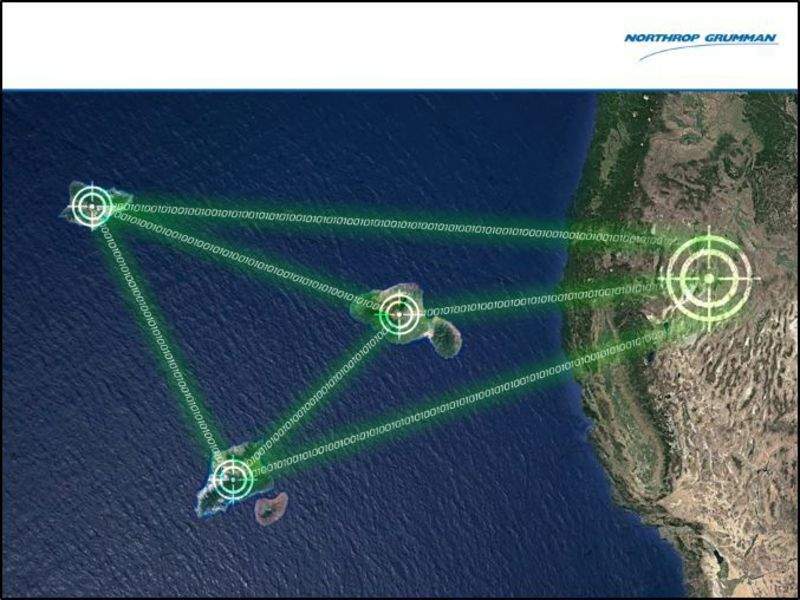
A US Army-led test has successfully demonstrated the ability of Northrop Grumman’s Integrated Air and Missile Defense (IAMD) Battle Command System (IBCS).
Conducted by the US Army soldiers, the IAMD IBCS exhibited its capability to share an integrated air picture over vast distances.
Go deeper with GlobalData


Discover B2B Marketing That Performs
Combine business intelligence and editorial excellence to reach engaged professionals across 36 leading media platforms.
Northrop Grumman Missile Defence and Protective Systems vice-president and general manager Dan Verwiel said: “The ability of IBCS to integrate sensors and shooters over a vast area and grow the single integrated air picture offers huge advantages to air defenders and the joint forces.
“This was demonstrated using an operationally realistic equipment laydown across several states and showed how IBCS is truly a force multiplier.”
Known as Soldier Checkout Event (SCOE), the evaluation was carried out for a period of five weeks with air and missile defence assets located at sites in New Mexico, Texas and Alabama.
Verwiel added: “This SCOE demonstrated the ability of IBCS to scale broadly. It further demonstrated IBCS’ robust network management technologies to efficiently and effectively maintain voice, data and video connectivity for the warfighter’s increasingly complex and challenging environment.”
The open-architecture IBCS networked more than 20 nodes across White Sands Missile Range, New Mexico; Fort Bliss, Texas; and Redstone Arsenal, Alabama.
Integrated to operate as a single system, the evaluation involved nine IBCS engagement operations centres and 12 IBCS integrated fire control network relays, in addition to Sentinel short-range air defence radars and Patriot radars, Patriot Advance Capability Two (PAC-2), PAC-3 and PAC-3 Missile Segment Enhancement interceptors.
During the test, the system virtually formed an IAMD task force that could defend four critical assets while tracking ‘red’ and ‘blue’ fighter aircraft, cruise missiles and tactical ballistic missiles.
The IBCS programme is managed by the Army Program Executive Office for Missiles and Space, Redstone Arsenal, Alabama.



