

The Government Accountability Office (GAO) has recommended that the US Department of Defense (DoD), restyled the War Department, track information regarding the status and efficacy of its legacy excess defence articles (EDA) transferred to foreign nations.
While the Department does conduct “end-use monitoring” of the systems sold or donated to foreign nations on a quarterly basis, ensuring the recipient complies with the conditions of the transfer agreement, the government does not systematically collect key information related to the continued performance of this equipment.
Go deeper with GlobalData

Discover B2B Marketing That Performs
Combine business intelligence and editorial excellence to reach engaged professionals across 36 leading media platforms.
“Such information would allow DoD to make better-informed recommendations on future EDA transfers,” the GAO report contends.
This assertion is valid at a time of geopolitical confrontation with China and other adversaries. Spread thinly, with a large portion of the Navy situated aimlessly off the shores of Venezuela, a limited albeit declining presence in Europe and the Middle East, and a large-scale pivot to the Indo-Pacific, the US must ensure its allies can operate efficiently.
Military success in this context, the GAO said, is “based in part on foreign partner abilities to support [these legacy] items”.
To this end, the watchdog recommends that the Department, firstly, improve information recorded on EDA in its database and, secondly, develop and implement a process to manage each programme’s performance.
Case study: Abrams
However a platform’s effectiveness is not limited to its performance but includes logistics, sustainment and an alignment in doctrine. When these elements are neglected, even advanced American assets can disappoint the foreign end user in particular circumstances.
Ukrainian troops have raised issues concerning protection when it comes to the M1 Abrams main battle tank (MBTs). Yet Ukraine’s military are fighting in a wildly different environment saturated with one-way attack drones.
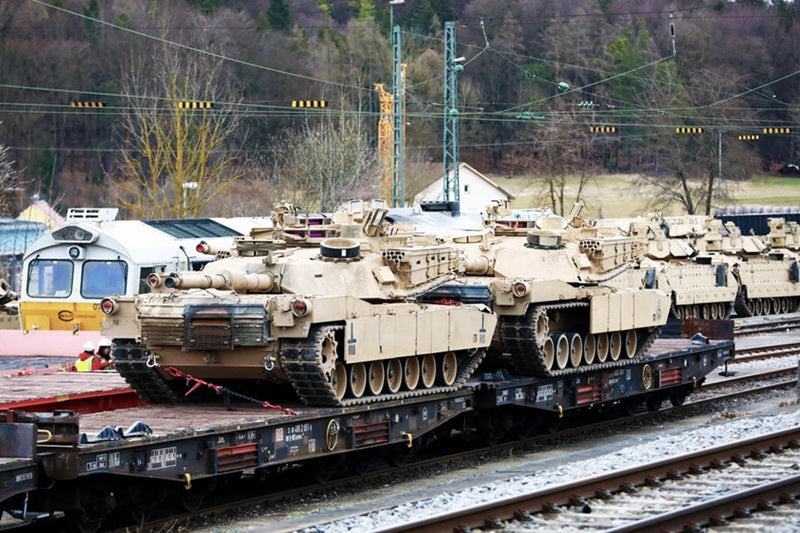
In Ukraine, these MBTs, designed for combined arms manoeuvre, lack sufficient artillery and air support to operate as effectively as the platform did in Iraq and Afghanistan, where the full potential of the tank was unrestricted.
Since the US first donated the M1 Abrams to Ukraine in September 2023, America have had to invest even more in localising support services for the large and complicated albeit powerful platform. Last year, the US announced plans to build an “Abrams competence centre” to primarily support the the Polish and US forward presence units in Poznan but also sustain Ukrainian fleets and others in region interested in the platform (like Romania).



