

- While Iran’s ballistic missile strikes decline, its one-way attack drones are filling the void
- For defenders, the main challenge of a drone barrage is the saturation; a few units are slipping through the coverage of excquisite US, Israeli and Arab air defences
- Tehran’s strategy offers little beyond its increasing drone tactics, which make the IRGC’s success dependent on sustaining Shahed production
A cornered Iranian regime can do little else but respond in kind to overwhelming US and Israeli strikes with its own salvos against targets across the Middle East.
The single, crucial enabler of Tehran’s immediate and destructive response is its indigenous and inexpensive Shahed – or ‘Witness’ in Farsi – family of one-way attack uncrewed aerial systems (UAS). The longer range, 200kg Shahed-136 variant is an increasingly common sight on social media these days, as Gulf neighbours record their interception of the drone type as the air campaign drags on into its second week.
Go deeper with GlobalData


Discover B2B Marketing That Performs
Combine business intelligence and editorial excellence to reach engaged professionals across 36 leading media platforms.
The Iranian Revolutionary Guard Corps (IRGC) is beginning to lean on the UAS over its dwindling ballistic missiles; a reduced effect which the US Central Commander (CENTCOM) indicated on 5 March as having declined by roughly 90% since the strikes began on 28 February.
Just as Russia looked to Iran for Shahed attack drones in its invasion of Ukraine when it proved difficult to sustain mass ballistic and cruise missile strikes, the IRGC will now be looking to make the same pivot.
Despite many interception successes by British fighter jets over Jordan to the Emirati Patriot air defences, a small number of units are still getting through the net, devastating civil society and military sites alike.
Crude but effective
With a range of at least 2,000km, Shahed-136 munitions are precision-guided, flying along manually-inputted coordinates before diving onto their targets and exploding.
The UAS is launched using a disposable rocket-booster fitted to its underside, at which point the booster is jettisoned and a piston-driven engine takes over to provide propulsion.
These slow moving drones are ineffectual alone, a single system is easily shot down, but the marginal few in a wider salvo which manage to bypass air defences always prove detrimental in hitting a refinery, power plant or air defence radar.
“Some drones serve as artillery systems, cruise missiles, or torpedoes, while others act as surveillance aircraft or bombers,” considered commentary from the Council for Foreign Relations, and “they offer enormous striking power at a much lower cost,” between $20-30,000 in the Shahed’s case, according to another report.
Is Iran dependent on the Shahed?
In short, no.
The IRGC has always found strength working against weak neigbouring states (Iraq or Lebanon) and using willing Shia communities to serve as proxy actors (Hezbollah and Houthis) which provide a logistics pipeline and an alternative source of pressure across the region that is difficult to uproot.
Yet Iranian strategy is limited when it comes to direct conflict with militarily superior forces, leaving asymmetric tactics the only viable approach to survival.
There are other tactics beyond mass drone effects, of course, one of which is simultaneously playing out in the Strait of Hormuz. The IRGC is currently seeking to deny the world access to this significant trade chokepoint with what is left of its navy; most of Iran’s conventional platforms have been dessimated by US forces in the ongoing conflict.
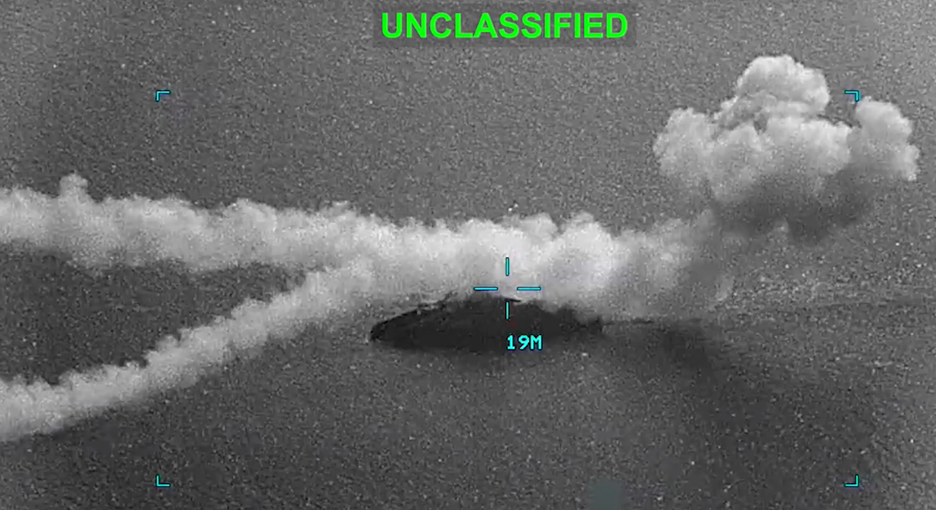
There is still potential for Iran to secure this contested space, however, since there is “a big unknown” as to what has happened to the navy’s fast attack craft, explosive boats, and torpedoes according to Matthew Savill, director of Military Sciences at the Royal United Services Institute (RUSI) in London.
But there is an enormous operational risk in deploying these smaller craft, which have so far been kept under cover and hidden away expect for a few attacks on tankers, leaving no guarantee of securing the bottleneck while the US Navy prepares to escort maritime shipping in the Strait.
This places even more singificance on the regime’s only longer term solution in this war: the Shahed UAS. For this reason, it is worth exploring Iran’s Shahed production and industrial capacity.
Can Iran sustain Shahed strikes?
It is difficult to determine with any certainty any figures related to Iranian Shahed production prior to the conflict, let alone in wartime.
The location of Shahed launch sites is a worthwhile consideration. According to a CENTCOM report on 8 March Iranian forces are using crowded areas surrounded by civilians in cities such as Dezful, Esfahan and Shiraz to launch attack drones and ballistic missiles, making it problematic for US and Israeli forces to eliminate these enduring targets from the air.
“U.S. forces strongly urge civilians in Iran to stay at home,” the report urged, perhaps to open up an opportunity for precision strikes against the launchers.
The Washington-based Instutute for the Study of War, an open source intelligence provider, validated this possibility, reporting that a combined force had struck the Shahed Aviation Industries Production Facility in Esfahan City. A day later, it emerged that two damaged buildings at the Badr Base belonged to the Shahed Aviation Industries’ Production Facility.
In a twist of irony, CENTCOM asserted that “the Iranian regime is knowingly endangering innocent lives” in the same 8 March report.
But such strikes do not eliminate the problem of Shaheds entirely. GlobalData defence analyst Abhijit Apsingikar points out that Iran may have dispersed and decentralised its drone production after the brief 12-day conflict in June 2025.
“By nature, drone production—unlike missile production—is not as dependent on cutting-edge manufacturing infrastructure and can be carried out relatively quickly and cost-effectively.”
Meanwhile, the US Department of War (née Defense) has been quick to dismiss the drone threat publicly, claiming that Iranian drone strikes have also reduced by around 83% as of last week.
However, this figure does not indicate with any certainty that US forces have rooted out Iranian drone manufacturing, or that IRGC stockpiles are depleting at an unsustainable rate. Instead, it could indicate a scaling back of units in order to expend a more sustainable rate of drone strikes, thus protracting the conflict further. At the outset, Iran had expended as many as 350 Shaheds against the UAE, a compact target, per night for two nights.
C-UAS problem
Defenders are struggling to intercept the Shahed stragglers which slip through.
Staggeringly, the Gulf countries continues to use exquisite air defence systems designed to intercept larger and more costly aircraft and conventional missiles. It seems the Arab nations under attack have taken no notice of the lower cost counter-drone (C-UAS) solutions practiced in Ukraine, at least publicly, despite Ukrainian president Volodymyr Zelenskyy’s calls to face the Shahed threat in a more sustainable way.
It is said that Ukraine’s domestically produced interceptor drones, for example, now account for nearly one-third of Russian aerial threats successfully neutralised.
Some militaries are adapting to the cost crisis in the region. The UK has deployed a number of AW159 Wildcat helicopters to perform the role of “drone busters”, to lift a phrase used in a government statement in early March, which is a different mission to the helicopter’s conventional maritime attack role. Crucially, this new role will see the rotorcraft fire Martlet Lightweight Multirole Missiles (in excess of £50,000 per unit) to intercept Iranian Shaheds in the Eastern Mediterranean.
While the US wage war on Iran, back home at White Sands Missile Range in New Mexico, the Joint Interagency Task Force 401 conducted a directed energy laser weapon test on 7-8 March for the purpose of C-UAS.
The trial gathered data about the laser’s material effects on aircraft surrogates, validating the functionality of automated safety shut-off systems, and informing analyses for aircrew eye safety. Laser weapons are increasingly deployable, with the Israel Defence Forces being the first military to induct such a system, the Iron Beam, into its force structure.



