
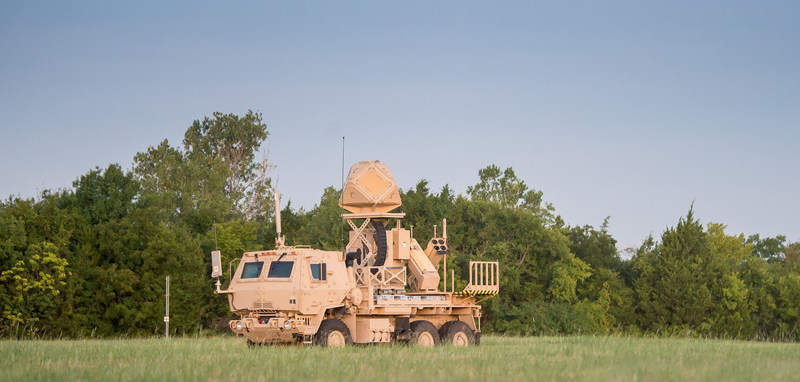
The US Army has awarded a $191m contract to Raytheon for the delivery of the Ku-band radio frequency radars, KuRFS.
Under the contract, Raytheon will deliver the advanced electronically scanned array system to address an urgent operational need for a counter-unmanned aircraft system radar to defend against drone threats.
Go deeper with GlobalData


Discover B2B Marketing That Performs
Combine business intelligence and editorial excellence to reach engaged professionals across 36 leading media platforms.
Already deployed with the army, KuRFS offers precision fire control, and ‘sense and warn’ capabilities for a wide range of missions, including detection of rocket, artillery, mortar, and swarming unmanned aerial vehicle (UAV) threats.
Raytheon Integrated Defense Systems tactical radars senior director Andrew Hajek said: “Seeing threats, like swarming drones, as soon as possible on the battlefield is essential to protecting critical assets and saving soldiers’ lives.
“KuRFS makes this possible by delivering a unique combination 360° situational awareness, precision and mobility.”
Designed and built by Raytheon, KuRFS provides defence and protection against different types of threats through integration with the land-based Phalanx weapon system, the 50-calibre guns, and 30mm cannons.
In addition, the Ku-band radar supports high-energy laser and the expendable Coyote weapon system in both a ground-mounted and vehicle-mounted configuration.
The KuRFS system has been specifically designed to be able to quickly address the immediate requirements of the US Army through a model of rapid-turn development and deployment.
This will help reduce the time to fielding while ensuring increased flexibility to adapt to a rapidly evolving threat environment in UAV space.
When combined with Raytheon’s Coyote intelligence and surveillance drone, the radar becomes a hit-to-kill kinetic interceptor that can take out small, consumer-sized drones.


