
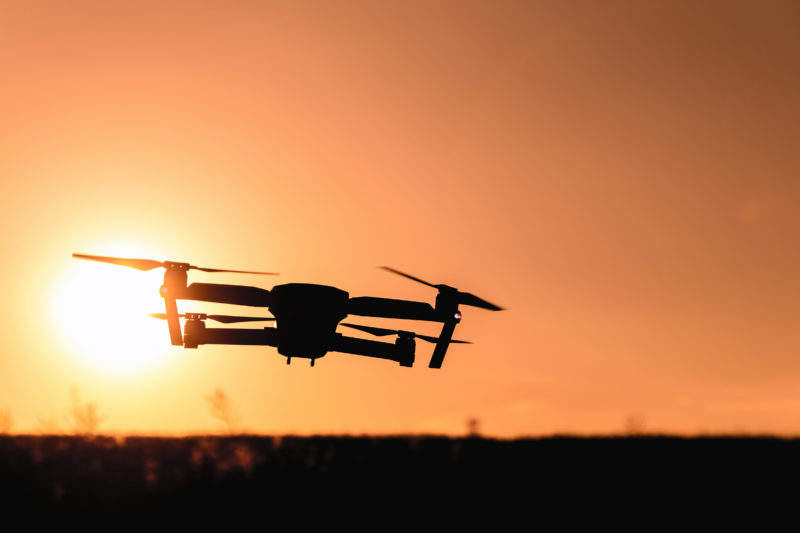
Countermeasures are needed to tackle multiple small unmanned aircraft systems (sUASs) being used against deployed US forces, according to a report by the National Academies of Sciences, Engineering, and Medicine.
High-performance drones can be modified to carry lethal weapons, identify long-range targets, and carry out electronic warfare strikes.
Go deeper with GlobalData


Discover B2B Marketing That Performs
Combine business intelligence and editorial excellence to reach engaged professionals across 36 leading media platforms.
The US Army and Department of Defence (DoD) are already developing countermeasures to fight single sUASs, more commonly known as drones, but the report highlights the need for separate measures against multiple drones coordinated in groups.
The committee that authored the report was asked by the US Army to assess the threat from sUASs. It examined the current capabilities of military units to counter them, assessed related human performance issues, and identified technologies appropriate for short- and long-term science and technology investments by the Army.
“Hobby drones are easy to buy, their performance is improving dramatically, and their cost has dropped significantly; now with millions of them around the world, they pose a growing threat to the US warfighting forces if used for nefarious intents,” said CNS Technologies president and chair of the committee Albert Sciarretta.
“The threats could be consumer items like hobby drones, modified consumer items could be assembled with online components, and customised ones, like built-from-scratch aircraft.”
The US Army faces a number of challenges to counter drones. Their small size, irregular flight paths and low altitude flying makes them hard to detect. They can also use the surrounding environment, such as trees, to remain undetected.
Once a threat is identified it can still be difficult to counter, according to the report. The DoD has made significant investments in technologies that could counter the threat, such as detecting radio frequency transmissions of the drones or their operators.
However, the report highlights that today’s consumer and customised drones can increasingly operate without radio frequency command-and-control links by using automated target recognition and tracking, obstacle avoidance, and other capabilities enabled by software.


