

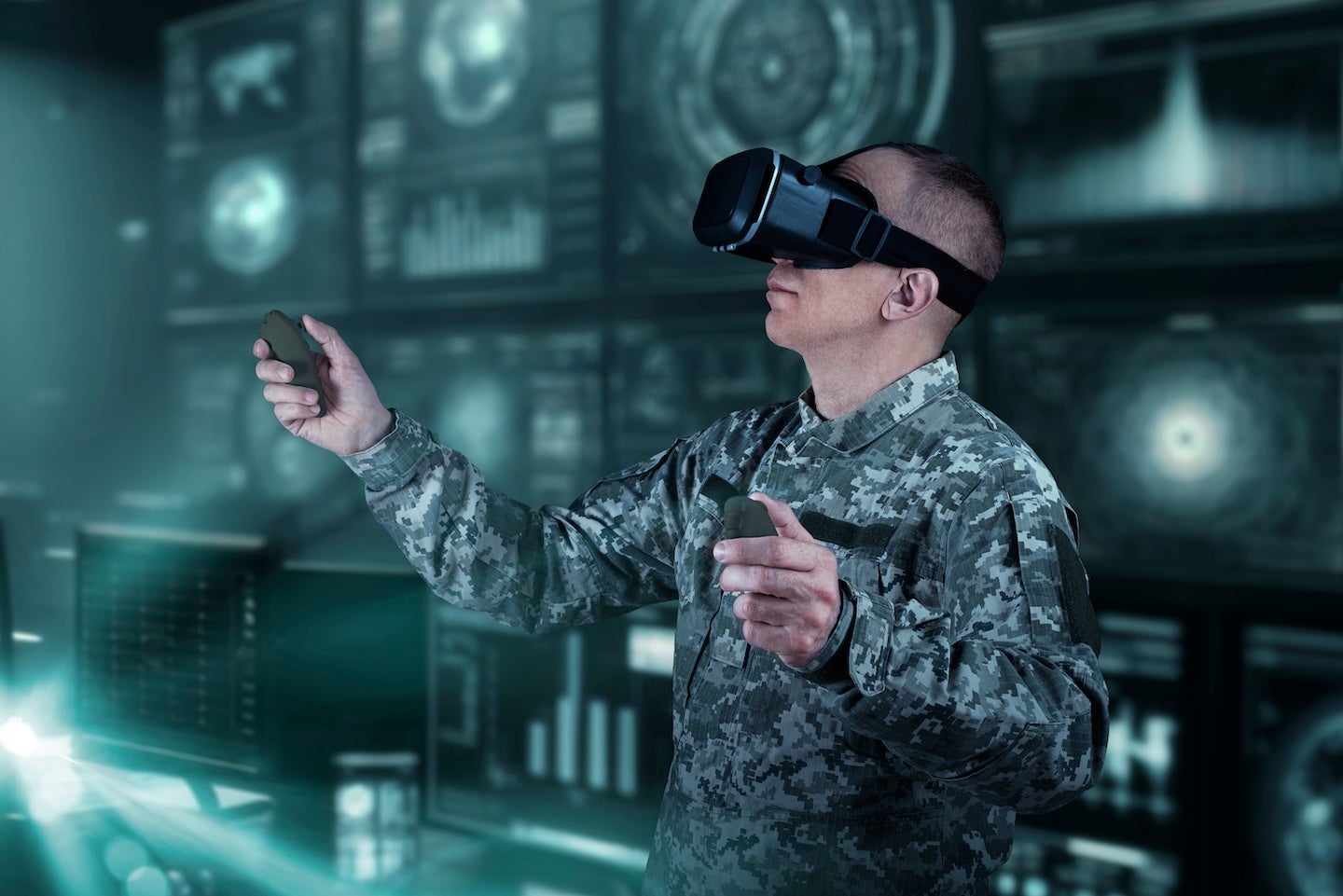
Military organisations are incorporating AI into every aspect of warfare, including data analytics, targeting, training simulations and autonomous drones. UAVs [uncrewed aerial vehicles] are increasingly favoured over direct soldier contact to reduce casualties. As AI continues to advance, there is an increase in the shift from human-in-the-loop to human-on-the-loop. According to the New York Times, “Most drones require a human pilot. But some new Ukrainian drones, once locked on a target, can use AI to chase and strike it — with no further human involvement.” The integration of AI in targeting actions results in fewer unplanned casualties caused by humans.
How is AI utilised in warfare?
Large defence contracts are being given to start-ups such as Anduril, which just received a ten-year, $20bn defence contract. Defence contractors such as Lockheed Martin and Anduril are supplying both unmanned drones and wearable technology. In 2025, Anduril launched EagleEye, a modular mixed-reality (MR) helmet and eyewear which uses thermal imaging and spyware. Additional data and insights allow for potential threats to be detected and tracked. This improves protection for combat personnel.
Away from the front line, AI is being utilised to analyse data more than ever. The British Army recently stated that a Corps-level battlefield analysis, which previously took 72 hours, is now completed in 60 minutes due to AI in Project Asgard. Faster and more accurate data analysis can give a military operation the edge over its targets.
The reliance on technology and AI makes cyberattacks a prominent threat in modern warfare. Cyberattacks can have a detrimental impact on military organisations and can heavily impact the outcome of the conflict. Yet, cyberattacks themselves have little to no physical casualties; cyberattacks can be used as a tool to disrupt local infrastructure, which may lead to deaths.
There have been ethical dilemmas over the use of AI in modern warfare. Concerns over who is responsible in the “kill chain” are constantly being raised.
Palantir’s Maven
AI companies such as Palantir provide AI agents for government officials to employ in many parts of governance. A recent attack in Iran saw “American forces kill between 175 and 180 people, most of them girls between the ages of seven and 12″. The American forces used Palantir’s AI agent called Maven to execute the bombing. Unfortunately, Maven’s data was outdated and mistook the school for the army compound it previously was. This begs the question, who is to blame in this accident: Palantir, the army official who ordered the bombing or the AI? The technology was used to minimise civilian casualties, yet the misuse of the AI led to a significant number of innocent casualties.
Reports
Artificial Intelligence (AI) in Aerospace, Defense, and Security: Strategic Intelligence
AI creates a whole new threat in warfare through cyberattacks or uncrewed drones, but increased protection for personnel and less direct conflict may see fewer casualties in this new era.

