

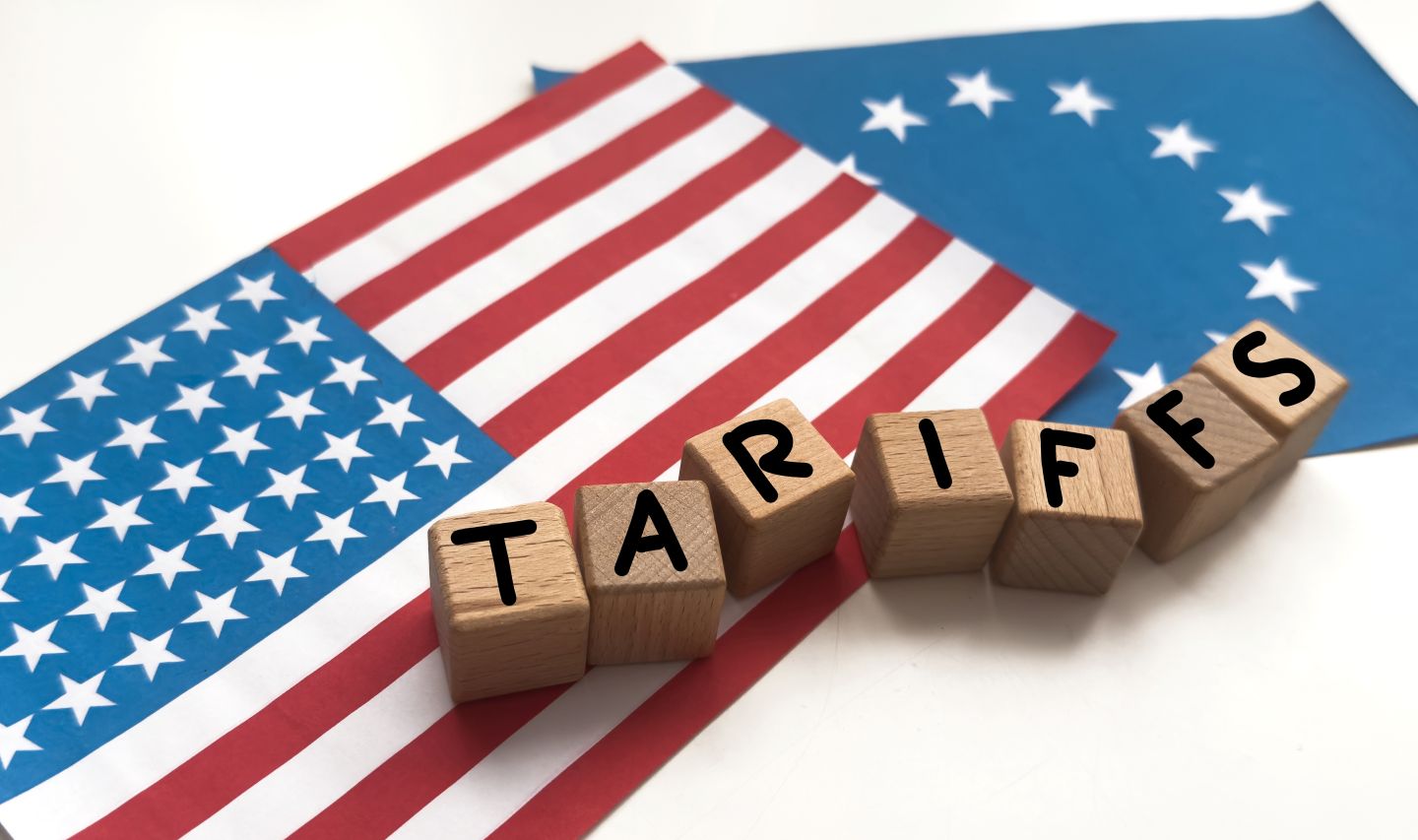
On 17 January, President Donald Trump announced a 10% tariff on US imports from the United Kingdom, Denmark, Norway, Sweden, France, Finland, Germany, and the Netherlands in response to opposition to US control over Greenland, with plans to raise the tariff to 25% on 1 June. He later rescinded the threats, stating at the World Economic Forum Annual Meeting that a framework deal on Greenland had been reached. Regardless of whether tariffs are enacted, the episode has deepened unease among European and Nato security stakeholders. As perceptions of the US as unpredictable grow—and as the risk of future tariffs persists—European defence procurement is reassessing sourcing options and long-term market commitments.
Supply chain and demand disruption
Civil and military aerospace and defence supply chains are highly interconnected, with substantial transatlantic trade. Europe exports avionics and engines to the US, as well as defence products such as missile systems. While some European primes have previously mitigated tariff exposure through US subsidiaries and/or Special Security Agreements (discussed below), companies with limited US footprints or heavy reliance on exports to the US are more exposed. Examples include Safran, which exports components to the US, and MBDA, whose missile production is concentrated outside the US, including in France and Germany.

Access deeper industry intelligence
Experience unmatched clarity with a single platform that combines unique data, AI, and human expertise.
Higher prices and political uncertainty may also weaken procurement confidence. Price sensitivity could increase volatility in commercial aircraft demand, while defence buyers may accelerate efforts to diversify suppliers away from the US and toward European or other partner sources—aligning with industrial sovereignty goals and initiatives such as ReArm Europe/Readiness 2030.
Safety through subsidiaries
Many European defence primes maintain a strong US presence through subsidiaries, which has historically reduced exposure to tariffs. BAE Systems has one of the most substantial footprints.
Its US subsidiary, BAE Systems Inc., headquartered in Falls Church, Virginia, operates under a Special Security Agreement with its parent company (BAE Systems PLC) and the US government. Under this arrangement, US-based outside directors and other board members form a Government Security Committee to ensure compliance with security and export rules. This structure allows BAE Systems Inc. to operate effectively as a major US prime, with access to sensitive programs and the ability to supply the US Department of Defense and intelligence agencies.
Other examples include Kongsberg, with sites in Virginia, Pennsylvania, Alabama, and New Jersey, and Rheinmetall, which operates through multiple US subsidiaries.
Joint procurement beyond the US
A likely consequence of tariff uncertainty is increased European interest in joint procurement. In March 2025, the European Commission launched the ReArm Europe Plan/Readiness 2030, intended to mobilise €800bn ($938bn) in defence spending. Of this, €150bn ($175bn) is allocated to the Security Action for Europe (SAFE) initiative, a loan instrument designed to support joint procurement among EU member states and other participating countries, such as Canada.
Joint procurement is especially attractive for smaller states. On 15 January 2026, the European Commission approved SAFE loan funding for Belgium, Bulgaria, Denmark, Spain, Croatia, Cyprus, Portugal, and Romania.
Summary
Europe will remain dependent on certain US platforms. Denmark, for example, is procuring the F-35A to replace its recently retired F-16AM/BM fleet and has indicated no intention to change course despite tensions over Greenland. The F-35A/B is also scheduled for procurement by the United Kingdom, Italy, the Netherlands, Norway, Germany, Poland, Belgium, Finland, and Romania. The MIM-104 Patriot is likewise fielded across Europe, with Germany and Poland buying additional systems.
Even so, preference for European equipment is likely to grow in some areas, including short- and medium-range air defence. The European Sky Shield Initiative (ESSI) aims to build an integrated, Europe-wide air and missile defence architecture. Diehl Defence’s IRIS-T system—comprising the short-range SLS and medium-range SLM variants—is being procured for ESSI participation by several European countries, including Denmark, Germany, and Latvia, among others.
Finally, tariff threats against allies have exacerbated distrust between Washington and European Nato members. While some countries—most notably the United Kingdom—will seek to sustain close ties (including the “special relationship” and Five Eyes intelligence cooperation), others may adopt a more cautious approach. Konstantin von Notz, chair of the German Bundestag’s intelligence oversight committee, has proposed a “Euro Eyes” arrangement comparable to Five Eyes. Over time, this could reduce the ability of major US primes to compete for highly sensitive European tenders, particularly those tied to intelligence-community applications such as artificial intelligence and cloud computing infrastructure.
