

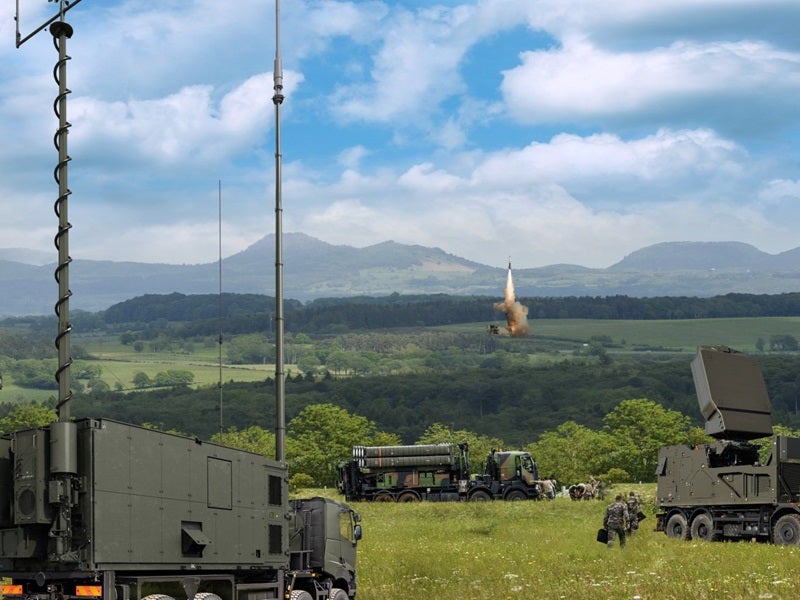
SAMP/T NG is a mobile anti-aircraft defence system developed for theatre protection by eurosam, a Franco-Italian joint venture between MBDA France, MBDA Italy and Thales.
The system provides simultaneous protection for sensitive sites and deployed forces against missile threats and aircraft, superseding all existing medium-range ground-to-air systems.
Recommended White Papers
Recommended Buyers Guides

SAMP/T NG is set to replace the current SAMP/T systems deployed in the Italian and French armed forces, offering enhanced range, altitude performance, and significantly improved anti-tactical ballistic missile capabilities through a new missile and advanced multi-function radar.
The SAMP/T NG system is set to enter service in 2026.
SAMP/T NG development background
Development of the SAMP/T NG commenced in March 2021 through close collaboration between France and Italy. The preliminary design reviews of the system were completed in 2022.
In January 2023, the Organisation for Joint Armament Co-operation (OCCAR), representing the Direction générale de l’armement for the French Air and Space Force and SEGREDIFESA for the Italian Army, finalised the FSAF-PAAMS sustainment and enhancement (S&E) contract to initiate the global production of the SAMP/T NG systems for both nations.
OCCAR and eurosam signed an amendment to the FSAF-PAAMS S&E contract in July 2023, enabling the procurement of additional SAMP/T NG systems for the Italian Air Force.
In September 2024, France formalised the contract, signed via OCCAR, to begin serial production of seven SAMP/T NG sections for the French Air and Space Force. This order marked the official start of full-scale serial production for the SAMP/T NG system.
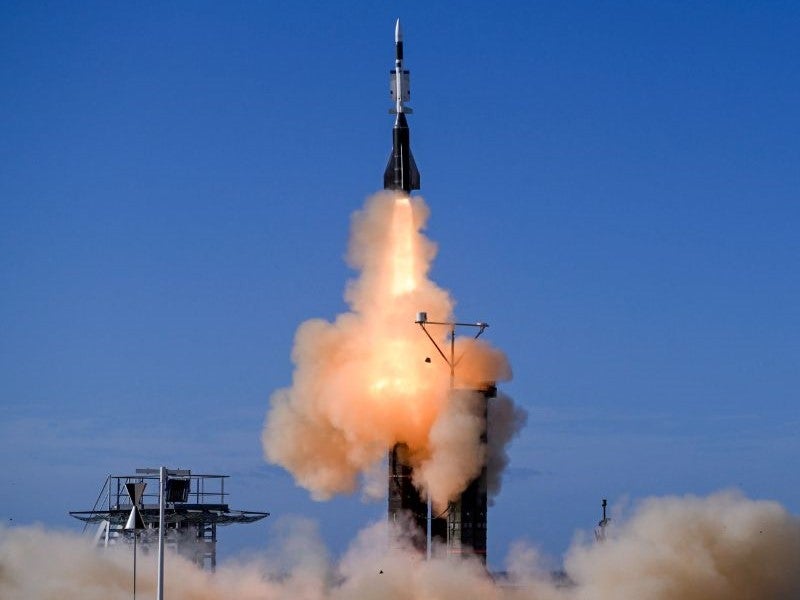
In October 2024, the first Aster 30 B1 New Technology missile, developed by eurosam, was successfully launched from the new SAMP/T NG system, marking a key milestone in the system’s qualification.
This demonstration highlighted the operational capabilities of the new MLT NG launcher and the Firing Control Unit, which features a completely new Engagement Module with open-architecture software and updated B1NT missile firing controls.
A second ASTER B1NT missile was fired from the SAMP/T NG in August 2025.
In September 2025, the Danish Ministry of Defence selected the SAMP/T NG, equipping Denmark with a cutting-edge solution for long-range air and missile defence.
SAMP/T NG design and features
The SAMP/T NG is a highly automated system, characterised by extremely rapid response times. It can operate autonomously or as part of a coordinated network, providing comprehensive air defence coverage.
The system is designed to address both medium and long-range air defence requirements including force projection, protection of high-value assets and area defence.
The sensors of the SAMP/T NG can detect air-breathing threats at ranges exceeding 350km and engage them at distances greater than 150km.
The system can detect and intercept manoeuvring ballistic missiles with ranges of more than 600km. It is designed for swift deployment by a small crew, integrates seamlessly with existing air defence networks and is capable of sustained operations with minimal logistical support.
It is a fully self-propelled system, usually mounted on 8×8 prime movers, and can be transported by air using a C-130 or a comparable aircraft. A standard crew for the system includes 20 personnel per battery.
The SAMP/T NG consists of four principal components: up to 48 Aster missiles, a single multi-function radar module, an engagement module and up to six launcher modules.
ASTER missile specifications
The SAMP/T NG system is designed to operate with the ASTER family of munitions.
The ASTER missile weighs approximately 450kg and measures 4.9m in length, with a body diameter of 180mm. It is powered by a two-stage solid-propellant motor, offering an operational range in the 150km class and reaching speeds of up to Mach 4.5. The missile can operate at altitudes up to around 25km.
The missile employs a combination of powerful aerodynamic control and direct force control, utilising lateral thrusters at the centre of gravity of the kill vehicle. This innovative control system affords the missile exceptional agility and manoeuvrability throughout its engagement envelope, particularly at high altitude.
Equipped with a proximity fuse and a dual-mode blast fragmentation warhead, the ASTER missile is effective against even the most challenging targets, including Tactical Ballistic Missiles.
The ASTER missile family also includes the Sea Viper, ASTER 15 and ASTER 30 variants.
Radar system details
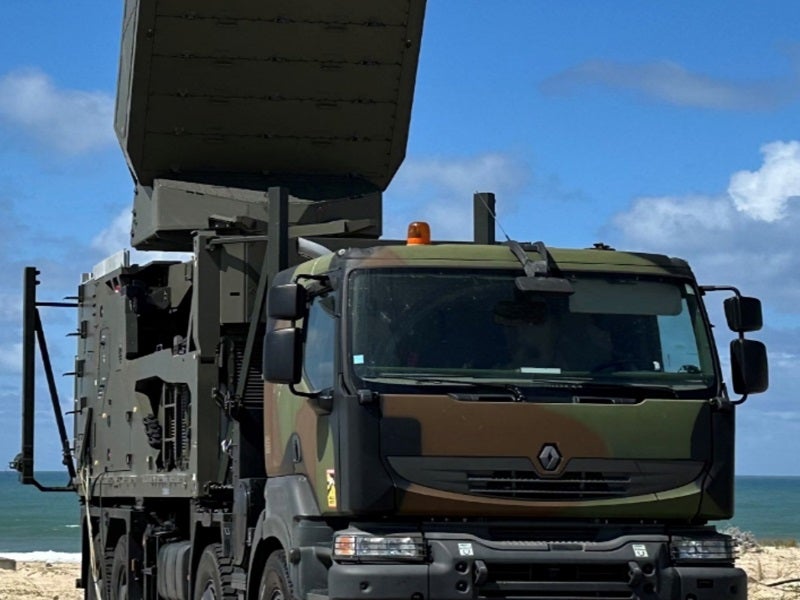
The SAMP/T NG system will be equipped with the Kronos Grand Mobile High Power (GMHP) radar from Leonardo for Italy and the Ground Fire 300 from Thales for France.
Ground Fire is a multi-function radar that delivers exceptional performance across a range of simultaneous missions by employing dynamic radar resource management.
It provides air surveillance, autonomously detects ballistic missiles, supports air and ballistic missile defence for the ASTER missile family, offers counter-rocket, artillery and mortar capability, and enables weapon location and counter-battery operations.
The radar delivers air surveillance out to 400km (248 miles), with full 360° azimuth coverage and 90° in elevation. It can track more than 1,000 targets simultaneously and provides track updates at up to 1Hz in rotating mode and up to 10Hz in staring mode.
The Kronos GMHP radar is a high-performance, multi-functional sensor designed to counter all types of air and missile threats simultaneously, ensuring high tactical mobility and rapid strategic deployment.
The radar provides air surveillance coverage of more than 300km with a coverage of 90° in both the surveillance and tracking modes. Its antenna incorporates new high-efficiency gallium nitride transmit–receive modules and it can track more than 500 targets.
The KRONOS GMHP radar leverages its Active Electronically Scanned Array antenna to optimise detection, tracking, threat classification and missile guidance, in line with the overall performance requirements of the SAMP/T NG.
Engagement module
The command and control system is designed to operate within a layered Integrated Air and Missile Defence architecture, either through ground-based air defence command-and-control coordination or as part of fully integrated systems.
It offers broad interoperability, supporting Link 16 and a variety of communications including satellite links.
The system is engineered to function in congested civilian airspace, cooperate with friendly military aircraft and integrate fully into national air defence networks, maintaining interoperability with Nato and coalition systems.
A team of up to four operators manages the sensors and networks, leveraging modern technologies for engagement decision-making and weapon assignment.
The system also meets current requirements for information security and access-control management.
Launcher module
The launcher module is an upgraded vertical launcher featuring enhanced electronics, while retaining the core benefits of the 360° launch system. These include automatic deployment, remote operation from the engagement module and the ability to sustain high rates of fire.
Each launcher is capable of firing eight missiles in rapid succession, with a total of 48 missiles ready to launch per battery.
