
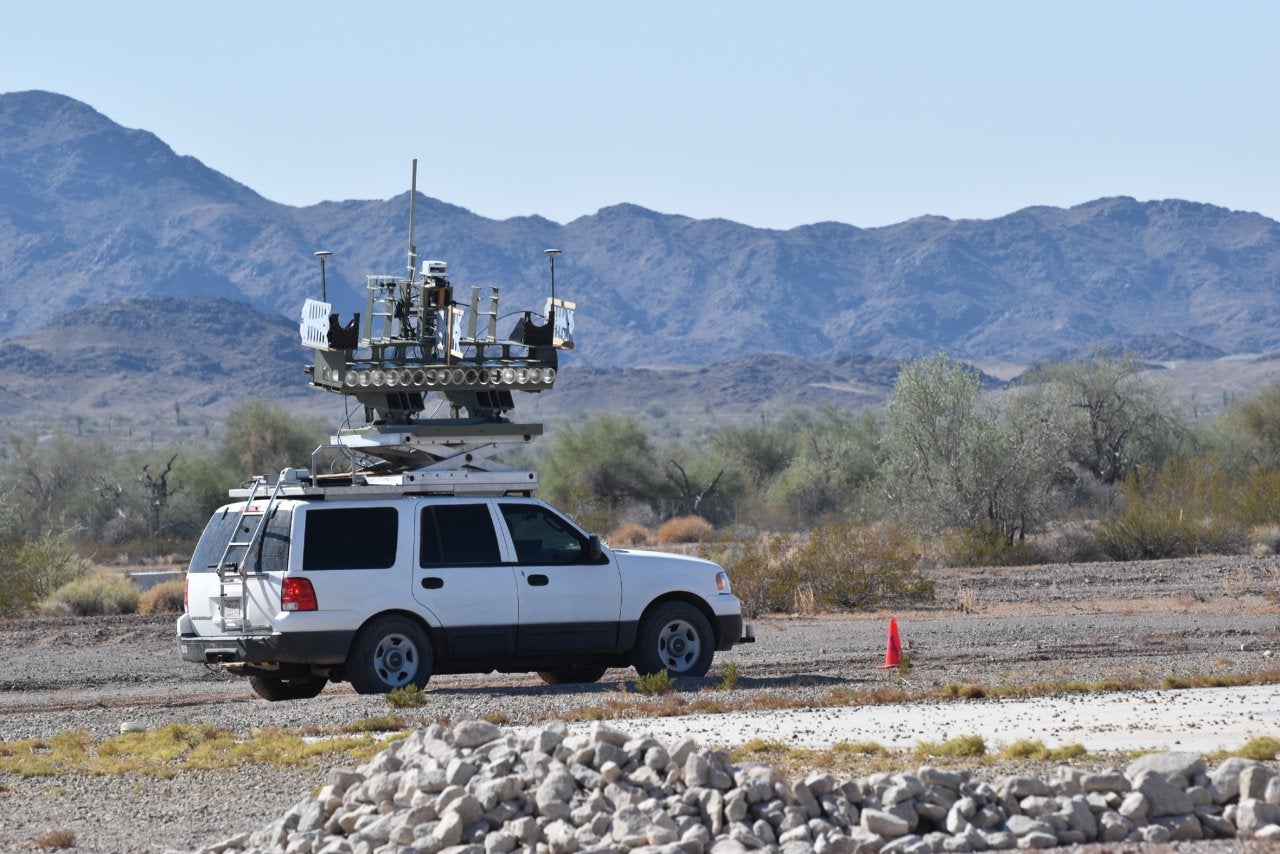
US researchers have stressed the importance of continued collaboration on explosion detection research efforts as initial experience indicates that no single sensor fits all emplacement scenarios.
The Army Research Laboratory (ARL) and other partners are funded by the Defense Threat Reduction Agency for the Blood Hound Gang Program, which emphasises a system-of-systems approach to standoff explosive hazard detection.
Go deeper with GlobalData


Discover B2B Marketing That Performs
Combine business intelligence and editorial excellence to reach engaged professionals across 36 leading media platforms.
The move comes as the US Army seeks to deliver new technologies that will provide soldiers with explosive hazard indicators from a safe standoff, mitigating threats from roadside explosive hazards.
The programme includes seven external collaborators from across the country.
ARL programme manager Kelly Sherbondy said: “Logically, a system-of-systems approach to standoff explosive hazard detection research is warranted going forwarded.
“Our collaborative methodology affords implementation of state-of-the-art technology and approaches while rapidly progressing the programme with seasoned subject matter experts to meet or exceed military requirements and transition points.”
In the first phase, researchers evaluated mostly high-technology readiness level standoff detection technologies against different explosive hazard emplacements over a fifteen-month period.
A lower-TRL standoff detection sensor designed to detect explosive hazard triggering devices was also developed and evaluated.
The assessment included the probability of detection, false alarm rate and other qualities to down select the number of sensors for the second phase of the programme.
The programme also collected data across the sensor sets to train artificial intelligence / machine learning algorithms.
Subsequently, the algorithms performed autonomous automatic target detection for each sensor. This provided with confidence levels for each suspected target displayed as an augmented reality overlay.
The detection algorithms were further tested with various sensor permutations to aggregate performance results and determine the best course of action moving forward into Phase II.
The project seeks to conduct additional research that will help in achieving real-time automatic target detection displayed with an augmented reality engine.


