
Raytheon has successfully carried out two control test vehicle (CTV) flights of the Accelerated Improved Intercept Initiative (AI3) system, currently under development for the US Army, at an undisclosed location.
During the test flights, the system’s fire control radar successfully detected an incoming threat, a 107mm rocket, determined its impact area and also delivered command data to the AI3 missile using a Ku-band radio frequency system (KRFS).
Go deeper with GlobalData


Discover B2B Marketing That Performs
Combine business intelligence and editorial excellence to reach engaged professionals across 36 leading media platforms.
The AI3 missile then flew on a calculated trajectory that was required for destruction of the target.
Raytheon Missile Systems AI3 programme director Steve Bennett said the completion of CTV flights demonstrated that the AI3 programme remained on schedule.
"Raytheon is committed to providing an affordable and highly effective solution to save warfighter lives," Bennett added.
AI3 US Army project manager lieutenant colonel Brett Wilhide added that the AI3 programme has achieved progress, and would now advance to the guided test vehicle flight test phase.
"Those tests will demonstrate the full integration of the tactical AI3 battle element system to intercept threat targets," Wilhide said.
The company is expecting an onboard semiactive radar seeker to conduct terminal guidance to target intercept in the upcoming flight tests.
Manufactured as part of a $79.2m contract awarded by the army in March 2012, the AI3 is an advanced system designed to enhance troops’ survivability against a wide range of incoming threats in the battlefied, such as rockets, artillery and mortars.
Expected to be deployed in 2014, the ground-based system will leverage proven technologies from Raytheon’s previous programmes, including the Sidewinder air-to-air missile and Small Diameter Bomb II to detect and intercept incoming threats in flight.
As part of the contract, Raytheon will develop and demonstrate the system within 18 months, followed by low-rate initial production (LRIP), if approved.
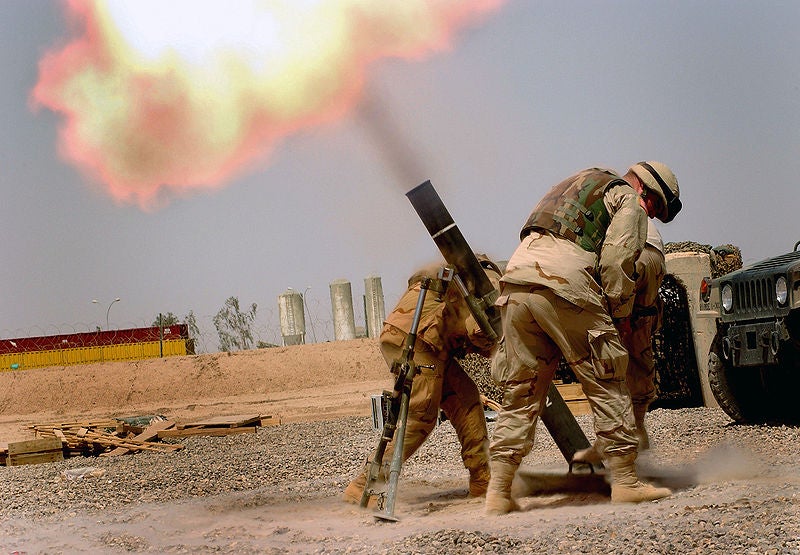
Image: The accelerated improved intercept initiative system will protect soldiers against incoming rockets, artillery and mortars. Photo: courtesy of SSGT Aaron D Allmon II, USAF.



