
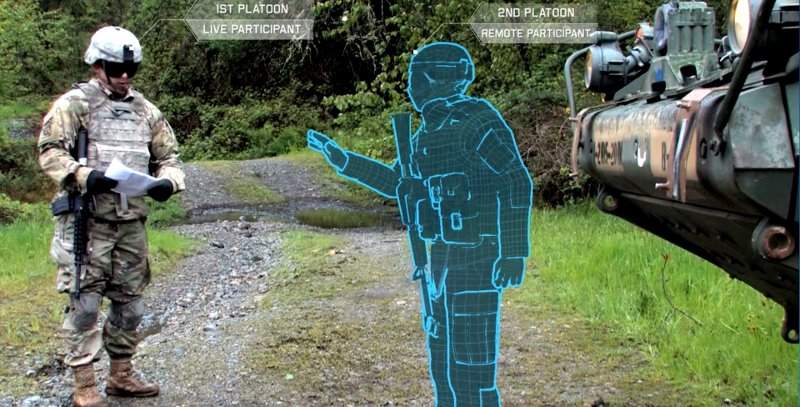

The US Army Research Laboratory (ARL) has partnered with a number of entities to research, prototype and deliver a collective training environment for the warfighter.
Known as Synthetic Training Environment (STE), the joint effort is carried out with the University of Southern California Institute for Creative Technologies, Combined Arms Center-Training and Program Executive Office for Simulation, Training and Instrumentation.
Go deeper with GlobalData


Discover B2B Marketing That Performs
Combine business intelligence and editorial excellence to reach engaged professionals across 36 leading media platforms.
STE is expected to eliminate facility-based training and allow the army to train its personnel at the point of need such as home-station, combat training centres or deployed locations, increasing mission readiness.
ARL Orlando and ICT programme manager colonel Harold Buhl said: "Due to the rapidly expanding industrial base in virtual and augmented reality and government advances in training technologies, the army is moving out to seize an opportunity to augment readiness.
"With STE, the intent is to leverage commercial advances with military specific technologies to provide commanders adaptive unit-specific training options to achieve readiness more rapidly and sustain readiness longer."
The army said that STE will seek to deliver the next generation of synthetic collective trainers, which will train BCT-level soldiers and below simultaneously using advanced learning technologies with artificially intelligent entities.
The trainers will deployed to armour, infantry, Stryker and combat aviation brigade combat teams.
Buhl added: "As the army evolves with manned and unmanned teams and other revolutionary battlefield capabilities, STE will be flexible enough to train, rehearse missions and experiment with new organisation and doctrine."
In addition, STE adaptive technology will support rapid iterations and provide immediate feedback to accurately assess and adjust training in real-time.
For the past one year, ICT Modeling, Simulation and Training director Ryan McAlinden and team have been working with ARL, the TRADOC capabilities manager, Combined Arms Center for Training and PEO STRI, on the STE requirements process.
McAlinden said: "The team has been researching and prototyping techniques and technologies that show feasibility for the one world terrain part of the programme.
"The hope is that these research activities can better inform the material development process when the STE is formally approved as a programme of record."
Image: A Stryker Vehicle Commander in a local training area interacts in real-time with the avatar of a soldier participating remotely from a collective trainer. Photo: courtesy of US Army illustration.


