
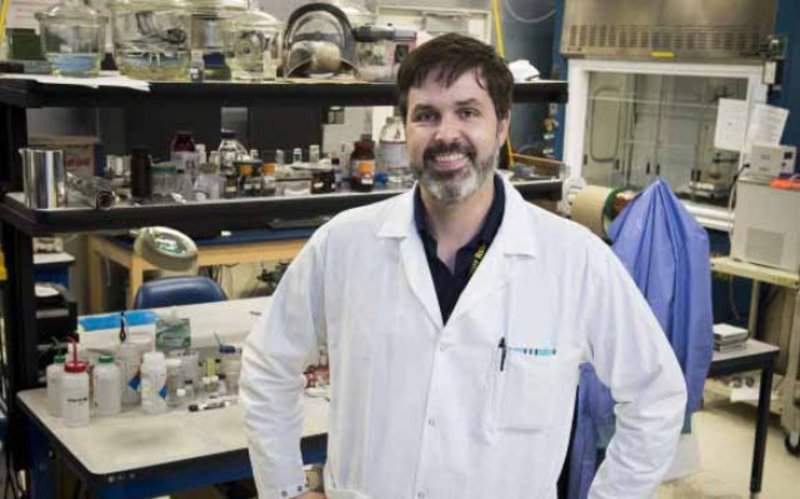

The US Army Research Laboratory (ARL) has partnered with Brown University to extend the battery life of mobile devices.
The military and university researchers will develop solutions to extend the battery life of GPS gears, mobile phones, field laptops and other technology used by soldiers, including robots, under a cooperative research and development agreement (CRADA).
Go deeper with GlobalData


Discover B2B Marketing That Performs
Combine business intelligence and editorial excellence to reach engaged professionals across 36 leading media platforms.
Under the agreed terms, Brown University will provide expertise in the analysis of certain atomic force microscopy (AFM), data analysis, and provide synthetic tools and raw materials for silicon nanowires and other deposited structures to be analysed.
ARL will provide electrolytes that will be used for the in-situ portion of the AFM studies and access to its analytical tools, including the in-situ AFM, the Raman spectrometer, X-ray photoelectron spectroscopy and infrared spectrometers.
Additionally, ARL will provide expertise in the preparation of in-situ AFM samples and other types of surface analysis.
The army scientists are working to replace all alkaline and nickel metal hydride field batteries with lithium ion (Li-ion) batteries, which are believed to provide the highest energy density of any commercial battery type.
ARL electrochemistry branch researcher Dr Arthur von Wald Cresce said: "The army is developing hybrid vehicles for use on the battlefield and that means they will also use Li-ion batteries.
“Certain high-energy applications such as reactive armour and directed-energy weapons also seem suited for Li-ion batteries, although those technologies are still developing.”
A SEI research will also be conducted to determine if a battery will cycle or whether harmful side reactions will consume the electrolyte components.
The SEI is a solid layer that is formed by the decomposition of liquid electrolyte components.
This electrolyte allows Li+ to move while still being an electrical insulator and it forms a new material phase in between the solid electrode and the liquid electrolyte.
Image: US Army Research Laboratory scientist Arthur von Wald Cresce works in the electrochemistry branch. Photo: courtesy of US Army.


