
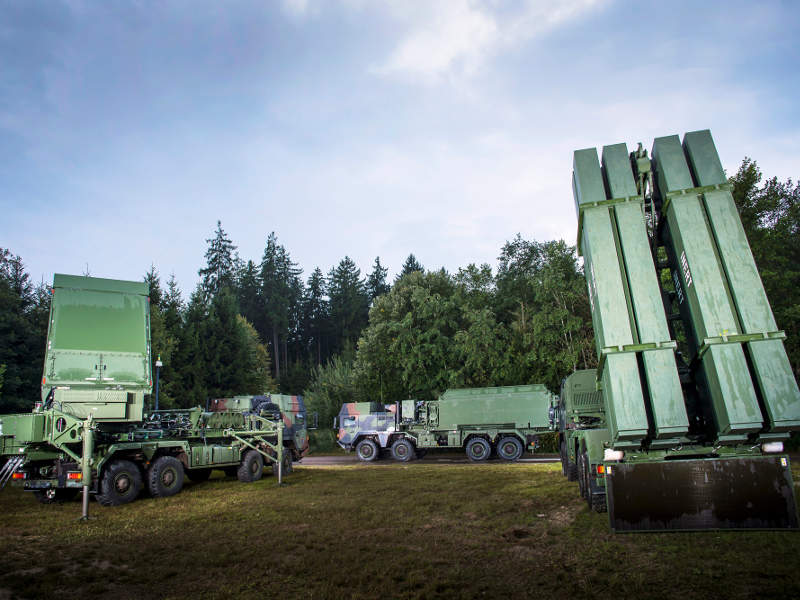


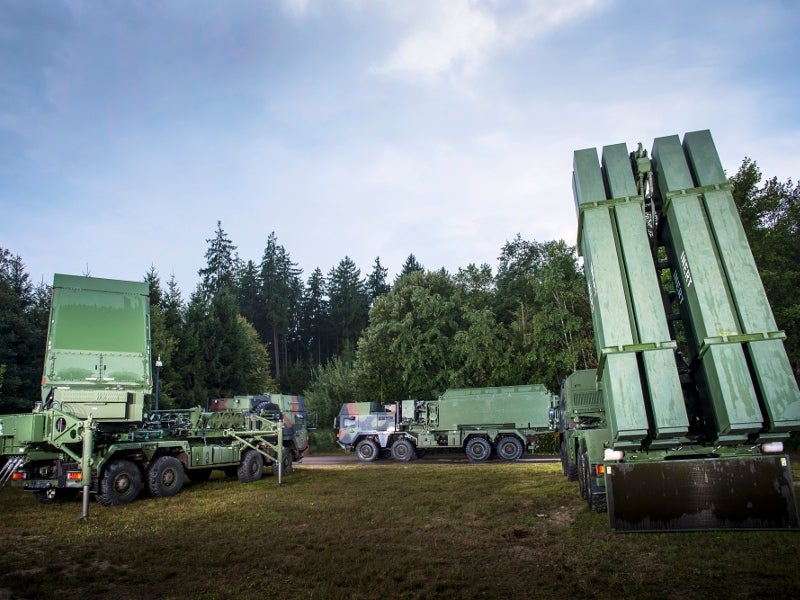
The medium extended air defence system (MEADS) was developed to replace Hawk and Patriot systems worldwide. MEADS will protect manoeuvring forces and fixed installations against attacks from current and next-generation tactical ballistic missiles, low and high-altitude cruise missiles, remotely piloted vehicles, and manoeuvring fixed-wing aircraft and rotary wing aircraft. The total system is designed for rapid deployment and tactical mobility.
Recommended White Papers

Recommended Buyers Guides

MEADS incorporates the Lockheed Martin hit-to-kill PAC-3 Missile Segment Enhancement (MSE) missile in a system including 360° surveillance and fire control sensors, netted-distributed tactical operations centres, and lightweight launchers.
A single MEADS battery is able to defend up to eight times the area of a Patriot battery through use of advanced 360° sensors, near-vertical launch capability, and the longer-range PAC-3 MSE missile. Using active phased arrays and digital beam forming, the MEADS radars enable full use of the PAC-3 MSE missile’s extended range.
The prime contractor, MEADS International, is a multinational joint venture headquartered in Orlando, Florida. Its participating companies are MBDA Italia, MBDA Deutschland, and Lockheed Martin. MBDA Deutschland, in partnership with Lockheed Martin, submitted a proposal in September 2016 to develop Germany’s Taktisches Luftverteidigungssystem (TLVS) based on the MEADS system.
MEADS project background
In 1999, NAMEADSMA selected MEADS International to develop the new air and missile defence system. Financing for the design and development programme were provided by the US (58%), Germany (25%) and Italy (17%). Development work was allocated in accordance with national funding.
A risk reduction effort (RRE) programme was awarded in July 2001. A successful system demonstration including a prototype of the fire control radar, command centre, launcher and emulated PAC-3 missile concluded the programme in May 2004.
In 2003, MEADS International submitted a solicited proposal for the design and development (D&D) phase. The phase was approved by the US and Italy in July 2004, and by Germany in April 2005.
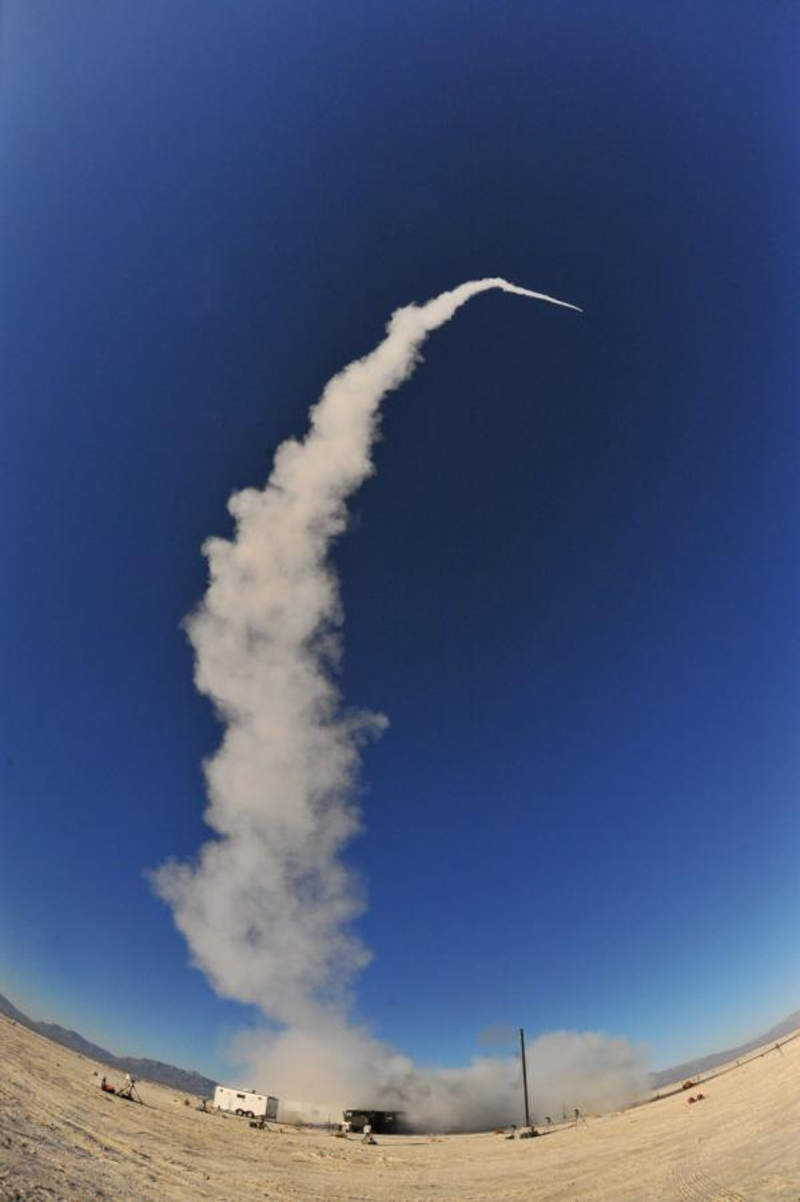
The preliminary design review began in August 2007 and was completed in February 2008, while the critical design review was completed in September 2010. Flight tests at the White Sands Missile Range were successfully conducted from November 2011 to November 2013. The D&D program was completed in 2014.
Flight tests and system demonstrations
In December 2010, the first MEADS launcher and Tactical Operations Center (TOC) were displayed in ceremonies in Germany and Italy before initiating system integration tests at Pratica di Mare Air Force Base, Italy.
The Multifunction Fire Control Radar (MFCR) was integrated with a TOC and launcher in November 2011 as initial operational proof of the MEADS plug-and-fight capability.
A contract modification to fund two flight intercept tests was approved in November 2011 and the first flight test of MEADS was successfully conducted at White Sands Missile Range in November of that year. Acceptance testing of the first MEADS power and communications unit was achieved in June 2012 and certification testing of the MEADS Mode 5 Identification friend or foe (IFF) system was concluded in October 2012. The first intercept test at White Sands Missile Range was successfully conducted in November 2012 as MEADS detected, tracked, intercepted and destroyed an air-breathing target in an intercept flight test.
In June 2013, MEADS demonstrated network interoperability with Nato systems during Joint Project Optic Windmill (JPOW) exercises. MEADS demonstrated battle management capability to transmit, receive and process Link 16 messages and to conduct threat engagements.
In November 2013, MEADS intercepted and destroyed two simultaneous targets attacking from opposite directions during a stressing demonstration of its 360° AMD capabilities at White Sands Missile Range, New Mexico. All elements of the MEADS system were tested, including the 360° MEADS Surveillance Radar, a networked MEADS battle manager, two lightweight launchers firing PAC-3 Missile Segment Enhancement (MSE) Missiles and a 360° MEADS Multifunction Fire Control Radar (MFCR).
In July 2014, MEADS completed a comprehensive system demonstration at Pratica di Mare Air Base, Italy. The tests, including operational demonstrations run by German and Italian military personnel, were designed to seamlessly add and subtract system elements under representative combat conditions, as well as blend MEADS with other systems in a larger system architecture. All criteria for success were achieved. During the test, plug-and-fight capability was used to rapidly attach and control an external Italian deployable air defence radar.
In June 2015, defence minister Ursula von der Leyen announced that Germany had selected MEADS as the foundation for its Taktisches Luftverteidigungssystem (TVLS).
Mobile surface-to-air missile system details
MEADS is a mobile surface-to-air missile system. The multi-canister launcher is mounted on a 5t wheeled vehicle. Advanced radars provide 360° coverage and operate in highly stressing jamming environments.
The system is strategically transportable and tactically mobile. It is required to be transported by C-130 and A400M aircraft and can be quickly deployed and airlifted with multiple missiles loaded on the mobile launcher. Once in the forward zone, it is able to move quickly to keep pace with fast-moving manoeuvre forces.
MEADS has greater firepower and requires less manpower than its predecessors. The components of MEADS are linked by a communications network with netted and distributed architecture, enabling its units to be organised according to the specific task requirements and configured according to predicted threats.
The multiple paths of communications result in the system being very robust against jamming and also allow the units to be dispersed over a wide area. The units have access to sensors from other systems. Interoperability also allows multiple allied air defences to work together.
‘Plug and fight’ flexibility feature
Flexibility is a key characteristic of MEADS. The ‘plug and fight’ flexibility of its open architecture provides for 21st century air defence system-of-system integration capabilities, which allow operational mission-tailoring for homeland defence or defence of manoeuvre forces. MEADS also provides greater firepower with less manpower than current systems, producing dramatic operation and support cost savings.
The system is able to command a fleet of distributed missile launchers while simultaneously detecting and tracking hostile forces and targets. The missile launchers can be located well away from the ground radar and the battle management units. It is also possible to hand over command and control of the launchers and missiles to a neighbouring battle management unit while management systems are moved.
MEADS is intended for use in standalone and tailorable operational configurations through compatibility with other air defence systems. A minimum engagement capability that relies on a single multifunction fire control radar (MFCR), tactical operations centre and launcher (12 PAC-3 MSE missiles) can be strategically deployed using a single C-5 or tactically deployed in just five C-130 sorties.
Lockheed’s Patriot advanced capability (PAC-3) missile
The Patriot Advanced Capability (PAC-3) hit-to-kill missile was the baseline interceptor for the MEADS programme when the design and development phase began.
However, in December 2007, the PAC-3 Missile Segment Enhancement (MSE) was developed by Lockheed Martin Missiles & Fire Control and chosen as the baseline interceptor for the MEADS programme.
While it builds on the PAC-3, the PAC-3 MSE provides greater range and velocity against the threat. The MSE uses a more powerful rocket motor for added thrust and larger fins for increased agility.
Whe guidance system is extremely difficult to jam, even by advanced cooperative mode jamming. The missile combines standard aerodynamic control surfaces and multiple single-shot thrusters to achieve the very agile high-g manoeuvres that are required for precise hit-to-kill control.
The missile has a solid propellant rocket motor made by Atlantic Research Corp in Gainesville, Virginia. It uses an inertial guidance unit made by Honeywell in Clearwater, Florida, to arrive at the target area. In the terminal phase of flight, the missile acquires and tracks the target with its forward-looking, gimbaled, active, RF Ka-band millimetre wave seeker, made by Boeing in Huntsville, Alabama.
Target destruction is achieved through the kinetic energy released by hitting targets head-on. The missile is armed with a lethality-enhancing warhead for use against air-breathing targets.
Control of the MEADS ballistic missile defence system
MEADS ballistic missile defence system BMC4I is a netted, distributed, automated communications network, which uses an open systems architecture. All equipment is rugged commercial-off-the-shelf / military-off-the-shelf.
The tactical operations centre (TOC) is housed in a single shelter containing three workstations and two operators. One standard TOC is provided to the nations, but each mounts it on a chassis or trailer of its selection. Northrop Grumman Italia was selected to provide the MEADS navigation and localisation system in February 2008.
Lockheed Martin Rotary and Missile Systems is responsible for the truck-mounted surveillance radar for MEADS. Selex Sistemi Integrati (formerly Alenia Marconi Systems) and MBDA Italia provide the X-band multi-function fire control radar. Hensoldt (formerly EADS Defence Electronics) is responsible for the radar’s transmit/receive modules.
Both radars provide full 360° capability.
The Global Missiles and Missile Defence Systems Market 2011-2021
This project forms part of our recent analysis and forecasts of the global missiles and missile defence systems market available from our business information platform Strategic Defence Intelligence. For more information click here or contact us: EMEA: +44 20 7936 6783; Americas: +1 415 439 4914; Asia Pacific: +61 2 9947 9709 or via email.
Related content
Predator Anti-Tank Missile System, United States of America
The Lockheed Martin Predator is a lightweight close-range anti-tank missile system which complements the Javelin anti-tank missile.
Patriot Missile Long-Range Air-Defence System, US
Patriot is a long-range, all-altitude, all-weather air defence system to counter tactical ballistic missiles, cruise missiles and advanced aircraft.
