
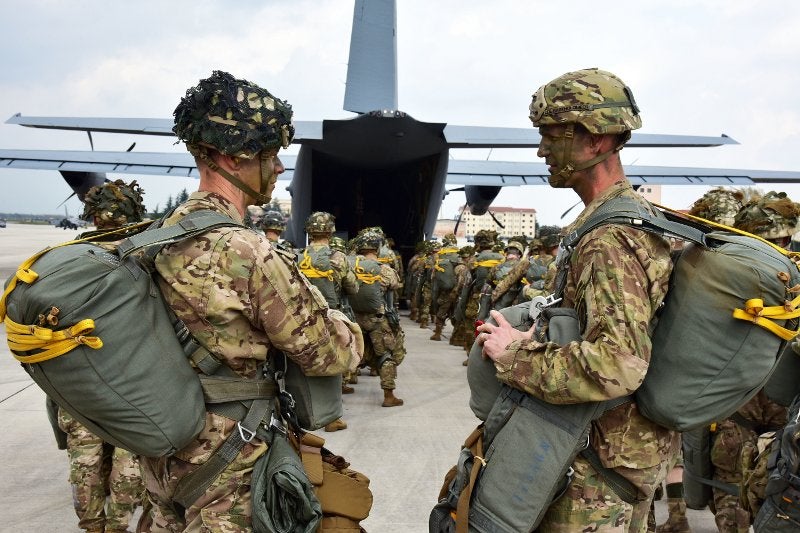
Researchers from the US Army and the UK have conducted a study to understand how reduced oxygen treatment could accelerate jet lag recovery for troops.
The study was carried out by the US Army Research Institute of Environmental Medicine (USARIEM) in collaboration with the UK Institute of Naval Medicine (INM) and the Walter Reed Army Institute of Research (WRAIR).
Go deeper with GlobalData


Discover B2B Marketing That Performs
Combine business intelligence and editorial excellence to reach engaged professionals across 36 leading media platforms.
British troops who were deployed to the rainforests of Brunei participated in the research programme.
Normally, a person who has travelled across multiple time zones will experience jet lag symptoms such as tiredness, fatigue, sleep difficulties, headache, irritability and gastrointestinal distress.
USARIEM research physiologist and study investigator Dr Beth Beidleman said: “Warfighters who experience jet lag are almost like casualties because they are incapacitated cognitively and physically, compromising mission readiness.
“It has been shown that jet lag can affect warfighters’ cognitive abilities such as reaction time, memory, executive function and concentration. It can also affect the physical ability to the point where warfighters are unable to do their jobs.”
US Tariffs are shifting - will you react or anticipate?
Don’t let policy changes catch you off guard. Stay proactive with real-time data and expert analysis.
By GlobalDataAccording to Beidleman, researchers believe that reduced oxygen treatment could help an individual’s circadian clock to reset quickly.
Prior to administering the treatment, researchers collected data on sleep, physical activity, jet lag symptoms, cognitive performance and internal circadian rhythms before the troops departed for Brunei.
After the journey, the researchers divided the British troops into two groups. One group was administered a single dose of the reduced oxygen treatment for two hours in the morning and the other was given a placebo.
Data was gathered to assess how long it took each group to recover from jet lag.
Beidleman added: “Reduced oxygen causes your body to produce a molecule called HIF1α, properly known as Hypoxia Inducible Factor1-alpha.
“Animal studies indicate that this same molecule sends signals to ‘clock genes’ that help your body adjust when you experience jet lag. We want to see if giving warfighters this reduced oxygen treatment could also reset the circadian clock and accelerate jet lag recovery by triggering production of HIF1α.”
The data is currently being analysed by the researchers in the lab.



