
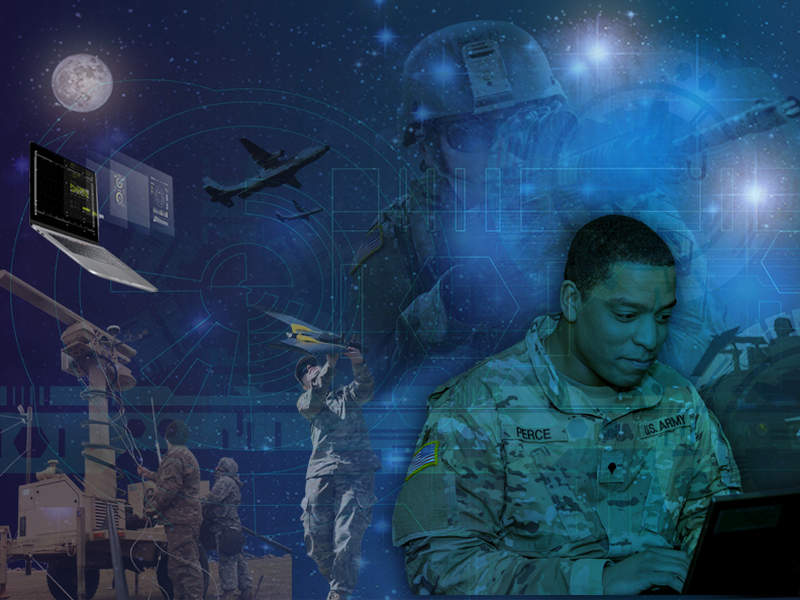
The US Army has invested $30m to leverage big data analytics, machine learning and artificial intelligence (AI) to develop smarter robots that would replace soldiers for specialist tasks.
The investment will be used to build unmanned ground and aerial vehicles such as future vertical lift and the next-generation combat vehicle.
Go deeper with GlobalData


Discover B2B Marketing That Performs
Combine business intelligence and editorial excellence to reach engaged professionals across 36 leading media platforms.
US Army Research, Development and Engineering Command (RDECOM) commander major general Cedric T Wins said: “It’s time for robots to replace soldiers for certain specialised tasks involving dull, dirty or dangerous work and to reduce their cognitive load.”
In addition, the army has taken two significant steps to increase the use of advanced robotics, added Wins.
Firstly, Army Materiel Command unit RDECOM will fall under Army Futures Command (AFC), which will enlist the talent and resources of approximately 10,000 RDECOM engineers and scientists, along with its network of partnerships throughout industry and academia.
Under the second step, the army command has entered the US Department of Defense’s (DoD) algorithmic warfare cross-functional team, which has been code-named Project Maven.
Win added: “To maximise big data, you need a very, very, very robust high-performance computing capability, focused on being able to deal with the volume of information, harness the speed by which data can be generated; and be able to deal with the diversity of data to make it meaningful and informative for the user. And then having the ability to trust the information and verify and validate that data and then make it useful.”
The Project Maven has been designed to be completed in two phases. Phase I of the project involves research on developing computer decision algorithms that would help evaluate full-motion video input.
Phase II of Project Maven is focused on improvements from the first phase by enhancing the scope, scale, and speed of the process in order to assess data more quickly and effectively.
In addition, the US Army intends to use AI, machine learning and big-data analytics to transform the mission command during combat.



