
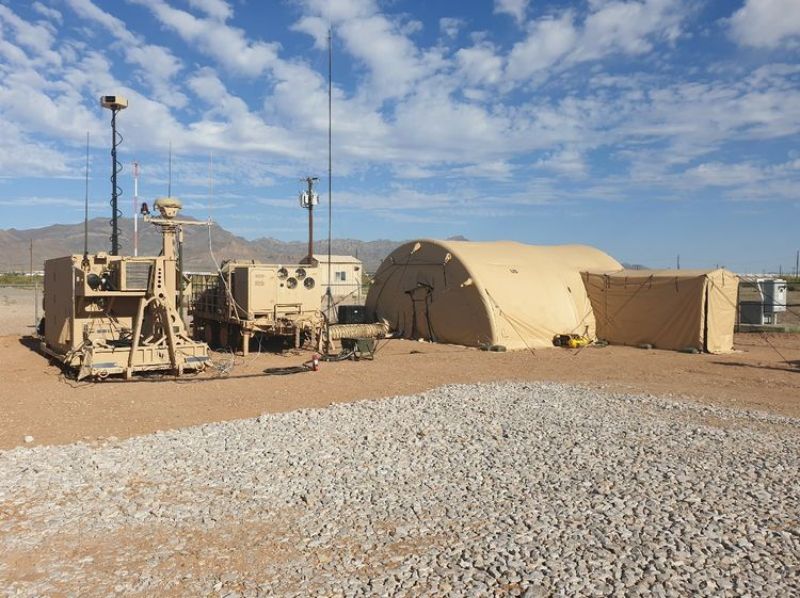
The US Army has conducted a flight test of the Northrop Grumman-developed Integrated Battle Command System (IBCS) at the White Sands Missile Range, New Mexico.
Utilising several sensors, the IBCS engaged and intercepted multiple targets in adverse environmental conditions. The test was carried out as part of the IBCS Limited User Test (LUT).
Go deeper with GlobalData


Discover B2B Marketing That Performs
Combine business intelligence and editorial excellence to reach engaged professionals across 36 leading media platforms.
Northrop Grumman combat systems and mission readiness vice-president and general manager Kenn Todorov said: “We are extremely pleased with how IBCS performed during this flight test.
“We have been working on an extraordinary command and control system in partnership with the US Army, and our goals are the same, to get this capability into the hands of the warfighter as soon as possible.”
The test was conducted by the soldiers from the US Army 3rd Battalion, 43rd Air Defense Artillery (ADA) Regiment.
The defence laydown included an Air and Missile Defence task force with two Battery and one Battalion engagement operations centres, two Patriot and Sentinel radars, and three Patriot Advanced Capability Three (PAC-3) launchers.
The launchers were connected at the component level to the IBCS Integrated Fire Control Network (IFCN).
During the test, two cruise missile surrogate threats were launched towards defended assets. The missiles were manoeuvred to fly at low altitudes through a mountain range.
The two IBCS-controlled PAC-3 missiles intercepted both threats. The IBCS integrated all real-time data into a single composite track for each threat.
IBCS was able to carry out all functions even though it was subjected to contested environment conditions, which were designed to disrupt the IFCN network. This subsequently indicated the system’s resilience.
The LUT features multiple tests and is designed to simulate realistic warfighting operations to determine the efficacy of the systems and ensure that it will perform as intended under rigorous circumstances.
It is conducted to appraise a Milestone C decision, which will then move the IBCS programme into the production and operational testing phase.
IBCS enables continuous tracking and early detection, which aim to enhance warfighting capabilities.
Northrop Grumman recently secured a contract to support the US Defense Advanced Research Projects Agency (DARPA) Strategic Technology Office’s (STO) Gamebreaker programme.



